-
Glass Fused To Steel Tanks (896)
-
Stainless Steel Tanks (434)
-
Fusion Bonded Epoxy Tanks (652)
-
Galvanized Steel Tanks (321)
-
Aluminum Dome Roofs (1336)
-
Wastewater Storage Tanks (280)
-
Welded Steel Tanks (457)
-
Pressure Vessels (326)
-
Anaerobic Digester (202)
-
Industrial Water Tanks (349)
-
Glass Lined Steel Tanks (180)
-
Bolted Steel Tanks (389)
-
Sludge Storage Tank (115)
-
Biogas Storage Tank (173)
-
Leachate Storage Tanks (133)
-
Agricultural Water Storage Tanks (179)
-
Fire Water Tank (166)
-
Grain Storage Silos (146)
-
Biogas Projects (424)
-
Wastewater Treatment Projects (1682)
-
Double Membrane Roof (223)
|
What Is a Stainless Steel Reactor? Grades, Design & Applications
| Place of Origin: | China |
| Brand Name: | Center Enamel |
| Certification: | ISO 9001,CE, NSF/ANSI 61, WRAS, ISO 28765, LFGB, BSCI, ISO 45001 |
| Minimum Order Quantity: | 1 Sets |
| Price: | 2000 |
| Delivery Time: | 2 months |
| Payment Terms: | L/C,T/T |
| Supply Ability: | 200 sets / days |
|
Detail Information |
|||
Product Description
What Is a Stainless Steel Reactor? Grades, Design & Applications
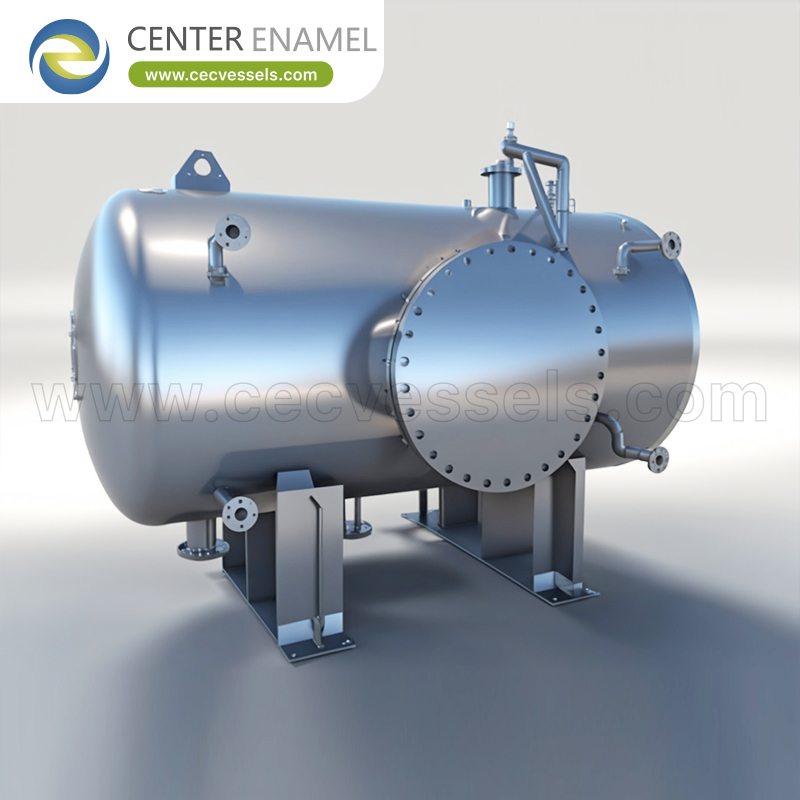
Answering the core question: What is a stainless steel reactor, and why is 316L the default material of the world's chemical, food, and pharmaceutical plants? A stainless steel reactor is a corrosion-resistant pressure vessel fabricated from austenitic stainless steel—most commonly grade 316L—for conducting reactions where product purity and equipment longevity matter. The alloy's minimum 10.5% chromium forms a self-healing passive oxide layer that protects the wall, while 2–3% molybdenum in 316L adds resistance to pitting in chloride-bearing media. With electropolished internals achieving surface finishes of Ra ≤ 0.8 µm, stainless reactors meet the hygienic standards of food, beverage, and pharmaceutical manufacturing while delivering 30+ years of service in general chemical duty.
1. Core Design Principles of Stainless Steel Reactors
Stainless reactor engineering revolves around metallurgy, fabrication, and surface quality:
- Passivation and Corrosion Immunity: Chromium content above 10.5% spontaneously forms a chromium-oxide film that re-passivates after scratching—granting stainless steel broad immunity to the acids, salts, and solvents that consume carbon steel, provided the grade matches the media.
- Weldability and Fabrication Discipline: Low-carbon L-grades (304L, 316L) prevent sensitization weld decay, avoiding chromium-carbide precipitation at weld boundaries. Full weld penetration, pickling, and passivation of welds preserve corrosion resistance across the entire pressure envelope.
- Hygienic Surface Engineering: Mechanical polish and electropolishing smooth internal surfaces to Ra ≤ 0.8 µm—eliminating microbial harborage and product adhesion, enabling validated CIP (clean-in-place) and SIP (steam-in-place) regimes demanded by food and GMP pharmaceutical service.
2. Major Stainless Steel Grades for Reactors
Grade selection matches the media, temperature, and purity target:
- Grade 304 / 304L: The economical general-purpose austenitic grade (18% chromium, 8% nickel) suited to mild chemicals, food products, and atmospheric service where chloride exposure is minimal.
- Grade 316 / 316L: The industry standard: added molybdenum delivers pitting resistance in chloride and organic-acid media, making 316L the default choice for pharmaceutical, bioprocessing, and most chemical reactors.
- High-Alloy Grades (904L, Duplex, Nickel Alloys): For aggressive service—hot concentrated acids, high chloride brines, or severe corrosion—904L, duplex 2205, or nickel alloys like Hastelloy C-276 extend vessel life where standard austenitics would fail within years.
Stainless Steel Reactor Grades Comparison Matrix
Grade |
Key Alloying Elements |
Corrosion Resistance Profile |
Typical Reactor Application |
304 / 304L |
18% Cr, 8% Ni |
Good general resistance; vulnerable to chlorides |
Food, beverages, mild chemical processing |
316 / 316L |
16% Cr, 10% Ni, 2–3% Mo |
Excellent including pitting resistance in chlorides |
Pharma, biotech, chemical and fine chemicals |
904L / Duplex / Alloy C-276 |
Elevated Mo, Cu, Ni or dual-phase structure |
Outstanding in hot acids and high-chloride media |
Aggressive acid, brine and specialty service |
Frequently Asked Questions (FAQ)
Q: What is a stainless steel reactor?
A: A stainless steel reactor is a corrosion-resistant pressure vessel—typically fabricated in 316L austenitic stainless steel with electropolished internals—engineered for chemical, food, and pharmaceutical reactions where product purity and long equipment life are essential.
Q: Why is 316L the most common reactor grade?
A: 316L's molybdenum addition resists pitting and crevice corrosion in chloride-bearing and organic-acid media, its low carbon content preserves corrosion resistance at welds, and it accepts electropolishing to hygienic finishes—an unmatched combination for general chemical and GMP service.
Q: What is the difference between 304 and 316L reactors?
A: Both are austenitic, but 316L adds 2–3% molybdenum, roughly doubling pitting resistance in chloride environments; 304 is more economical for mild, chloride-free duty while 316L covers pharmaceutical and most chemical applications.
Q: When should a reactor upgrade beyond 316L?
A: When the media is aggressive—hot sulfuric or phosphoric acid, high-chloride brines above 60°C, or halide service—engineers specify 904L, duplex stainless, or nickel alloys to prevent rapid wall loss and contamination of the product.