-
Glass Fused To Steel Tanks (896)
-
Stainless Steel Tanks (434)
-
Fusion Bonded Epoxy Tanks (639)
-
Galvanized Steel Tanks (321)
-
Aluminum Dome Roofs (1336)
-
Wastewater Storage Tanks (280)
-
Welded Steel Tanks (457)
-
Pressure Vessels (310)
-
Anaerobic Digester (202)
-
Industrial Water Tanks (349)
-
Glass Lined Steel Tanks (180)
-
Bolted Steel Tanks (389)
-
Sludge Storage Tank (115)
-
Biogas Storage Tank (173)
-
Leachate Storage Tanks (133)
-
Agricultural Water Storage Tanks (179)
-
Fire Water Tank (166)
-
Grain Storage Silos (146)
-
Biogas Projects (424)
-
Wastewater Treatment Projects (1670)
-
Double Membrane Roof (223)

|
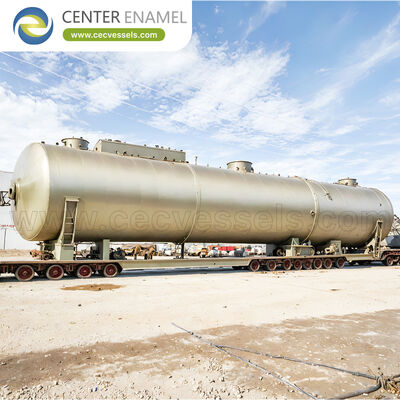
China Industrial Steam Condenser Manufacturer Delivering Advanced Thermal Solutions And Structural Reliability For Power Generation Applications
| Place of Origin: | China |
| Brand Name: | Center Enamel |
| Certification: | ISO 9001,CE, NSF/ANSI 61, WRAS, ISO 28765, LFGB, BSCI, ISO 45001 |
| Minimum Order Quantity: | 1 Sets |
| Price: | 2000 |
| Delivery Time: | 2 months |
| Payment Terms: | L/C,T/T |
| Supply Ability: | 200 sets / days |
|
Detail Information |
|||
Product Description
China Industrial Steam Condenser Manufacturer Delivering Advanced Thermal Solutions And Structural Reliability For Power Generation Applications
A steam condenser is the heat-rejection device at the heart of a steam power plant: it converts turbine exhaust steam back into water while maintaining the low back-pressure that makes the Rankine cycle efficient. An industrial steam condenser manufacturer for power generation must deliver not only thermal performance but also structural reliability across decades of thermal cycling.
For utility and large industrial power generation, the condenser determines vacuum, feedwater quality and auxiliary power consumption. Selecting a manufacturer is therefore less about a single component price and more about lifecycle thermal and structural assurance.
This article explains what a power-generation steam condenser is, how it works, the design and material choices that drive reliability, where it is applied, and the selection and acceptance criteria buyers should use when sourcing from a China industrial steam condenser manufacturer.
What A Power-Generation Steam Condenser Is
A steam condenser is a shell-and-tube or air-cooled heat exchanger that receives exhaust steam from a turbine and condenses it, usually against cooling water or ambient air. In surface condensers the steam and cooling water never mix; the condensate is returned to the boiler feed system.
Two broad families serve power generation: water-cooled surface condensers (dominant in utility plants with cooling-water access) and air-cooled condensers (ACC) used where water is scarce. Both rely on large surface areas, precise tube-bundle geometry and a leak-tight shell.
How It Works And Why Vacuum Matters
Condensing the exhaust steam at a low absolute pressure reduces the turbine back-pressure, which increases the work extracted per kilogram of steam. The condenser therefore directly improves net plant output and heat rate.
Maintaining vacuum depends on removing non-condensable gases (air ejectors or vacuum pumps), keeping tubes clean and avoiding air in-leakage at joints and manways. Small leaks or fouling can erode vacuum and silently raise auxiliary power draw.
- Heat path: latent heat from condensing steam transfers through the tube wall to cooling water or air; condensate drains to the hotwell.
- Air removal: non-condensables are extracted to preserve the low-pressure envelope and protect tube surfaces from oxygen corrosion.
Key Design And Material Considerations
Tube material is the single biggest reliability decision. Admiralty brass, cupronickel, titanium and stainless steels each suit different cooling waters; seawater and brackish duties push toward titanium or high-alloy stainless with confirmed corrosion allowance.
The shell, water box and support structure must absorb thermal growth and foundation settlement without inducing stress at nozzles. For a China industrial steam condenser manufacturer, weld procedure qualification, post-weld heat treatment and hydrostatic testing to code are the evidence of structural discipline.
- Code basis: ASME Section VIII, EN 13445 or an agreed client specification governs design pressure, temperature and fabrication.
- Corrosion allowance: assign per medium and environment; coastal or brackish sites justify higher allowance or C5M-class coating.
Application Scenarios In Power Generation
Utility thermal plants, combined-cycle power blocks, industrial captive power, waste-heat recovery and biomass generation all depend on condensers. The common thread is a turbine exhaust that must be condensed economically and reliably.
Geographic and water constraints decide the cooling medium: abundant cooling water favors surface condensers; arid sites favor air-cooled condensers with their own structural and fan-reliability demands.
- Utility scale: large surface condensers with multiple shells and low back-pressure design.
- Industrial captive power: smaller, often process-integrated condensers with tighter footprint.
Selection Criteria For Buyers
Evaluate a manufacturer on demonstrated thermal design capability, material traceability, code certification and a referenced inspection and test plan - not on catalogue claims. Confirm the proposed tube material against your actual cooling-water chemistry.
Request the heat-and-mass balance basis, the cleaning and access philosophy (tube lanes, channel covers), and the structural calculation for supports and nozzle loads. These determine whether the unit will hold vacuum and resist fatigue over its life.
Operational, Lifecycle And Maintenance Considerations
Thermal equipment lives or dies on the details that are invisible at commissioning. For condensers and pressure vessels, the highest-impact lifecycle decisions are material selection at the interface, access for tube or bundle inspection, and a corrosion-allowance philosophy matched to the duty.
A practical preventive program pairs a documented baseline hydraulic and thermal test at acceptance with periodic non-destructive examination of nozzles, shell seams and support saddles. Where the medium is corrosive or the environment is coastal, the external coating system and cathodic-protection details should be specified up front rather than retrofitted.
- Access for inspection: provide sufficient manways, channel covers or bundle pull clearance so internal surfaces can be examined without destructive disassembly.
- Spares strategy: agree on critical spares (gaskets, nozzles, instrument stubs) at the contract stage to avoid long unplanned outages.
- Coating continuity: verify coating specification (for example C5M for semi-marine duty) covers internals, externals and touch-up after hydrotest.
Project Execution, Lead Time And Documentation
A pressure vessel or condenser is a engineered-to-order product, so the commercial discussion should be followed quickly by a technical data sheet, a confirmed code (ASME, EN 13445, GB or client specification) and an inspection and test plan. Early agreement on these inputs protects both schedule and price.
Typical lead time from approved drawing to ex-works shipment is around two months for standard configurations, with MOQ of one unit; complex alloy or large-diameter items are scheduled case by case. Payment is conventionally structured on L/C or T/T terms agreed at contract.
- Documentation pack: includes design calculation, material certificates (EN 10204 3.1 where required), welding procedure qualification, NDE reports, hydrotest record and painting inspection report.
- Third-party inspection: client or nominated inspector attendance at key hold points is arranged in advance to avoid rework loops.
- Logistics: export packing, lift plans and port coordination are confirmed against vessel dimensions and weight before shipment.
Steam Condenser Cooling-Medium Comparison
| Cooling medium | Typical use | Key advantage | Main challenge |
| Cooling water (surface) | Utility plants with water access | High heat-transfer, low back-pressure | Water chemistry drives tube material choice |
| Air (ACC) | Water-scarce sites | Minimal water use | Larger footprint, fan and structural loads |
| Hybrid | Variable climate sites | Flexible part-load control | Higher capital complexity |
Indicative Specification Checklist
| Parameter | Why it matters | Buyer action |
| Design pressure / vacuum | Sets shell and tube rating | Confirm against turbine exhaust envelope |
| Tube material | Controls corrosion and life | Match to cooling-water analysis |
| Heat-transfer area | Sets vacuum and size | Check against heat-and-mass balance |
| Supporting structure | Absorbs thermal growth | Review nozzle-load calculation |
Conclusion
A power-generation steam condenser is a long-life, high-consequence asset: its vacuum performance and structural integrity shape plant efficiency for decades. The right China industrial steam condenser manufacturer is one that proves thermal design, material traceability and code fabrication with documentation rather than adjectives.
Treat the condenser as a system - tubes, shell, supports, air-removal and cleaning - and the selection becomes a reliability decision first and a price decision second.
Project Case Study
| Field | Detail |
| Project / Application | Hubei Chemical Plant - steam distribution system |
| Industry | Chemical manufacturing (China) |
| Vessel Type | Steam separator / distribution cylinder |
| Quantity | 1 unit |
| Dimensions | DN200 x 2000 mm (diameter x length) |
| Material | S30408 (304 stainless steel) |
| Design Temperature | 196 degC |
| Design Pressure | 1.2 MPa |
| Source / Evidence | Company Pressure Vessel Project Case PDF, Project 1 (Hubei Chemical) |
Relevance And Scope Note
This reference is offered as a B-level auxiliary example of steam-side pressure-vessel fabrication: the delivered equipment is a stainless-steel steam separator / distribution cylinder rated at 196 degC and 1.2 MPa, illustrating the workshop's capability to build steam-system pressure parts to a defined code and material specification.
It is not a surface condenser and is not represented as one. The article's condenser guidance stands on its own technical merits; the case demonstrates related steam-system fabrication discipline rather than a condenser supply.
What The Record Shows
The project confirms that stainless steam-system vessels can be produced to a tight dimensional and pressure envelope, with full material certification and a defined design temperature and pressure. That discipline - controlled welding, heat number traceability and pressure testing - transfers directly to condenser shell and channel fabrication.
About The Manufacturer
Center Enamel (Shijiazhuang Zhengzhong Technology Co., Ltd.) designs and fabricates pressure vessels, condensers, heat exchangers and separation equipment for chemical, petrochemical, food, beverage, brewing, metallurgy, oil refining and pharmaceutical service. The manufacturing system operates under ASME, ISO 9001, CE, NSF/ANSI 61, WRAS, ISO 28765, LFGB, BSCI and ISO 45001 certifications.
Documented capabilities cover design pressures from 0.1 to 10 MPa, stainless-steel and carbon-steel construction, and MOQ of one unit with typical lead times around two months under L/C and T/T terms. Every order is released against an approved design drawing, material certificate and inspection plan before fabrication begins.
Frequently Asked Questions (FAQ)
What is the difference between a surface condenser and an air-cooled condenser?
A surface condenser uses cooling water inside tubes with steam outside; an air-cooled condenser rejects heat to ambient air through finned bundles, trading water savings for larger footprint and different structural demands.
Which tube material should a power condenser use?
It depends on cooling-water chemistry: fresh water may allow admiralty brass or stainless, brackish and seawater duties commonly use cupronickel or titanium. The manufacturer should justify the choice against your water analysis.
Why does condenser vacuum affect plant output?
Lower turbine back-pressure increases the enthalpy drop across the turbine, raising net power and improving heat rate; even small vacuum losses measurably reduce efficiency.
What certifications should a condenser manufacturer hold?
ASME (with U-stamp where applicable), ISO 9001 and relevant regional marks; material and welding procedure qualifications are the practical proof of capability.
How long does a custom condenser take to deliver?
Standard configurations are typically around two months from approved drawing to ex-works; alloy or large-diameter units are scheduled case by case after the data sheet and code are confirmed.
What documentation should accompany delivery?
Design calculation, material certificates, welding procedure qualification, NDE reports, hydrostatic test record and coating inspection report.
How is condenser fouling managed?
Through tube-lane access, channel covers for cleaning, and a water-treatment regime; some plants add online or offline cleaning. Access for inspection should be specified at design.
Can a steam condenser handle variable load?
Yes, but part-load vacuum and air-removal sizing should be reviewed; hybrid or multi-shell arrangements help maintain performance across the operating range.
What are the main failure modes to watch?
Tube leaks from corrosion or fouling, air in-leakage at joints, and thermal-fatigue at nozzles or supports - all mitigated by material selection, leak-tight fabrication and a documented inspection plan.