-
Glass Fused To Steel Tanks (896)
-
Stainless Steel Tanks (434)
-
Fusion Bonded Epoxy Tanks (639)
-
Galvanized Steel Tanks (321)
-
Aluminum Dome Roofs (1336)
-
Wastewater Storage Tanks (280)
-
Welded Steel Tanks (457)
-
Pressure Vessels (310)
-
Anaerobic Digester (202)
-
Industrial Water Tanks (349)
-
Glass Lined Steel Tanks (180)
-
Bolted Steel Tanks (389)
-
Sludge Storage Tank (115)
-
Biogas Storage Tank (173)
-
Leachate Storage Tanks (133)
-
Agricultural Water Storage Tanks (179)
-
Fire Water Tank (166)
-
Grain Storage Silos (146)
-
Biogas Projects (424)
-
Wastewater Treatment Projects (1670)
-
Double Membrane Roof (223)

|
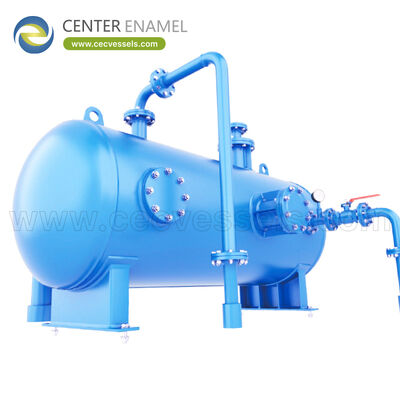
China Industrial Fermentation Pressure Vessel Manufacturer Delivering Reliable Bioprocess Containment Solutions And Structural Reliability For Global Production
| Place of Origin: | China |
| Brand Name: | Center Enamel |
| Certification: | ISO 9001,CE, NSF/ANSI 61, WRAS, ISO 28765, LFGB, BSCI, ISO 45001 |
| Minimum Order Quantity: | 1 Sets |
| Price: | 2000 |
| Delivery Time: | 2 months |
| Payment Terms: | L/C,T/T |
| Supply Ability: | 200 sets / days |
|
Detail Information |
|||
Product Description
A fermentation pressure vessel is the pressurized, hygienic container where microorganisms or cells convert substrate into product under controlled conditions. For global production, it must deliver sterile containment and structural reliability across varied climates and standards.
A China industrial fermentation pressure vessel manufacturer must prove hygienic design - surface finish, cleanability and sterility - as rigorously as the pressure boundary.
This article explains what these vessels are, how they support bioprocess, the design and material choices that matter, applications, and buyer acceptance criteria.
What A Fermentation Pressure Vessel IsIt is a stainless-steel pressure vessel that holds the fermentation broth while maintaining a controlled, often sterile, environment. It may operate at modest positive pressure for gas blanketing or agitation, but the dominant requirement is hygienic containment.
Beyond the shell, the vessel integrates agitation, aeration, temperature control and instrumentation nozzles - all designed for cleanability and sterility.
How It Supports BioprocessControlled temperature, pH, dissolved oxygen and pressure let the culture perform reproducibly. The vessel's surface finish and geometry determine how easily it can be cleaned and sterilized between batches.
Containment prevents both loss of sterile conditions and release of process gas; the pressure boundary and the hygienic design are therefore inseparable.
- Surface finish: polished internals (for example Ra per specification) support clean-in-place and sterility.
- Blanketing: controlled gas pressure protects the broth and supports aeration.
Stainless steel (304 or 316 families) is standard for hygiene and corrosion resistance. Welds are finished to hygienic standards, and dead-legs are minimized to avoid contamination.
The code basis may blend pressure-vessel code with hygienic / sanitary expectations; material certificates and weld finish are the practical proof. Supports and nozzles must suit both process and CIP loads.
- Code basis: ASME Section VIII, EN 13445 or GB, with sanitary finish expectations per application.
- Certification: material certificates and finish inspection support pharma / food acceptance.
Pharmaceutical and vaccine fermentation, food and beverage fermentation (beverage, brewing), enzyme and bio-based chemical production are typical. The vessels scale from pilot to industrial volume.
Global production adds variation in utility quality, climate and regulatory expectation that the manufacturer designs against.
- Beverage / brewing: large-volume fermenters with CIP.
- Pharma: high-finish bioreactors with sterility controls.
Define the organism, batch size, operating pressure and temperature, and the required surface finish and certification. These set material and hygienic design.
Evaluate the manufacturer on stainless provenance, weld finish, cleanability design and a referenced inspection and test plan - not on capacity claims alone.
Operational, Lifecycle And Maintenance ConsiderationsReliability in process service is built from choices made before fabrication: material at the interface, access for inspection, and a corrosion-allowance philosophy matched to the duty. These are the details that protect the asset after commissioning.
A practical program pairs a documented baseline test at acceptance with periodic examination of nozzles, shells and supports. In coastal or corrosive environments the external coating system and any cathodic protection should be specified up front, not retrofitted.
- Inspection access: provide manways, covers or pull clearance so internal surfaces can be examined without destructive disassembly.
- Spares: agree critical spares at contract stage to limit unplanned outages.
- Coating continuity: verify the coating specification covers internals, externals and post-hydrotest touch-up.
These are engineered-to-order products, so the commercial discussion should be followed quickly by a technical data sheet, a confirmed code (ASME, EN 13445, GB or client specification) and an inspection and test plan. Early agreement protects schedule and price.
Typical lead time from approved drawing to ex-works is around two months for standard configurations, MOQ one unit; complex alloy or large items are scheduled case by case. Payment is conventionally L/C or T/T.
- Documentation pack: design calculation, material certificates, welding procedure qualification, NDE reports, hydrotest record and painting inspection report.
- Third-party inspection: inspector attendance at key hold points is arranged in advance.
- Logistics: export packing and lift plans are confirmed against vessel dimensions and weight.
Application |
Finish need |
Pressure |
Key driver |
Beverage / brewing |
Food-grade |
Low positive |
Volume + CIP |
Pharma bioreactor |
High finish |
Modest |
Sterility |
Bio-chemical |
Per duty |
Per duty |
Yield + containment |
Parameter |
Why it matters |
Buyer action |
Surface finish (Ra) |
Cleanability / sterility |
Specify per standard |
Operating pressure |
Sets rating |
Confirm aeration / blanketing |
Material cert |
Food / pharma |
Request 3.1 certs |
Code |
Market acceptance |
Match destination |
- Documentation pack: design calculation, material certs, NDE, hydrotest and coating records delivered with the vessel.
- Data sheet freeze: lock operating and design conditions so fabrication matches the agreed duty.
- Code and certification: confirm ASME / EN 13445 / GB and any destination stamp before design release.
Finally, confirm commercial and logistic specifics up front: lead time from approved drawing, MOQ, payment terms (L/C or T/T), export packing and the documentation pack. Treating these as acceptance criteria - not afterthoughts - keeps the project on schedule and auditable.
For pressure equipment, verify that the quoted maximum allowable working pressure, design temperature and corrosion allowance match your actual duty, not a catalogue default. Ask the manufacturer to state the material certificate format and the hydrostatic-test pressure so the delivered vessel can be accepted against a known basis.
Before placing an order, convert the technical discussion into a short acceptance checklist that both sides sign off: confirmed code and destination certification, a frozen design data sheet, and a named inspection and test plan with hold points. This prevents the most common cause of late rework - a mismatch between assumed and agreed scope.
Procurement And Acceptance Checklist ConclusionA fermentation pressure vessel is judged as much by its hygienic design as by its pressure boundary. For global bioprocess production, reliable containment and cleanability are what protect both product and batch.
Source from a China industrial fermentation pressure vessel manufacturer that proves stainless provenance, weld finish and code fabrication with documentation.
About The ManufacturerCenter Enamel (Shijiazhuang Zhengzhong Technology Co., Ltd.) designs and fabricates pressure vessels, condensers, heat exchangers and separation equipment for chemical, petrochemical, food, beverage, brewing, metallurgy, oil refining and pharmaceutical service. The manufacturing system operates under ASME, ISO 9001, CE, NSF/ANSI 61, WRAS, ISO 28765, LFGB, BSCI and ISO 45001 certifications.
Documented capabilities cover design pressures from 0.1 to 10 MPa, stainless-steel and carbon-steel construction, and MOQ of one unit with typical lead times around two months under L/C and T/T terms. Every order is released against an approved design drawing, material certificate and inspection plan before fabrication begins.
Frequently Asked Questions (FAQ) What material is used for fermentation vessels?Stainless steel (304 or 316 families) for hygiene and corrosion resistance, with welds finished to sanitary standards and dead-legs minimized.
Why does surface finish matter?Polished internals support clean-in-place and sterility, reducing contamination risk and batch loss.
Is a fermenter a pressure vessel?Yes - it is a pressure-rated vessel, though the dominant requirement is often hygienic containment at modest positive pressure.
Which code applies?ASME Section VIII, EN 13445 or GB with sanitary finish expectations, agreed before design.
What certification supports food / pharma use?Material certificates (for example EN 10204 3.1), finish inspection and a documented cleaning / sterilization design.
What is the typical lead time?Around two months from approved drawing for standard items; MOQ one unit, with alloy or large vessels scheduled after data sheet confirmation.
How is sterility maintained?Through blanketing, controlled aeration, polished internals and validated CIP / sterilization between batches.
What documentation is delivered?Design calculation, material certificates, welding qualification, NDE, hydrotest record and finish inspection.
Can vessels scale from pilot to industrial?Yes - the same hygienic and code principles apply across volumes; geometry and agitation are scaled to duty.