-
Glass Fused To Steel Tanks (896)
-
Stainless Steel Tanks (434)
-
Fusion Bonded Epoxy Tanks (639)
-
Galvanized Steel Tanks (321)
-
Aluminum Dome Roofs (1336)
-
Wastewater Storage Tanks (280)
-
Welded Steel Tanks (457)
-
Pressure Vessels (310)
-
Anaerobic Digester (202)
-
Industrial Water Tanks (349)
-
Glass Lined Steel Tanks (180)
-
Bolted Steel Tanks (389)
-
Sludge Storage Tank (115)
-
Biogas Storage Tank (173)
-
Leachate Storage Tanks (133)
-
Agricultural Water Storage Tanks (179)
-
Fire Water Tank (166)
-
Grain Storage Silos (146)
-
Biogas Projects (424)
-
Wastewater Treatment Projects (1670)
-
Double Membrane Roof (223)

|
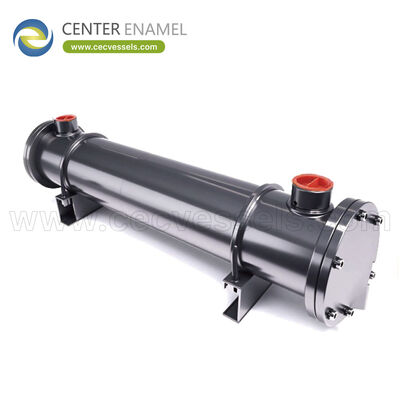
China Desalination Heat Exchanger Manufacturer Providing Reliable Thermal Transfer Solutions For Water Treatment Applications
| Place of Origin: | China |
| Brand Name: | Center Enamel |
| Certification: | ISO 9001,CE, NSF/ANSI 61, WRAS, ISO 28765, LFGB, BSCI, ISO 45001 |
| Minimum Order Quantity: | 1 Sets |
| Price: | 2000 |
| Delivery Time: | 2 months |
| Payment Terms: | L/C,T/T |
| Supply Ability: | 200 sets / days |
|
Detail Information |
|||
Product Description
China Desalination Heat Exchanger Manufacturer Providing Reliable Thermal Transfer Solutions For Water Treatment Applications
A desalination heat exchanger transfers heat in water-treatment plants - preheating or cooling seawater before reverse osmosis, heating brine, or recovering low-grade heat. For desalination, the exchanger must survive seawater corrosion while delivering reliable thermal transfer.
A China desalination heat exchanger manufacturer must prove material selection (titanium, duplex or stainless) and marine corrosion protection as rigorously as the thermal design.
This article explains what these exchangers are, how they support desalination, the design and material choices that matter, applications, and buyer acceptance criteria.
What A Desalination Heat Exchanger Is
In SWRO and thermal desalination, heat exchangers condition feed and brine: preheating seawater to improve membrane or distillation performance, cooling permeate, or heating brine in thermal processes. They are pressure vessels and heat exchangers under one corrosive duty.
The dominant challenge is seawater and brine corrosion; the thermal design is only as good as the material that survives the medium.
How It Supports Desalination
Feed preheating raises membrane flux or distillation efficiency; brine heating supports thermal recovery; energy recovery and heat integration cut plant power use. The exchanger is where thermal transfer becomes plant performance.
Reliable thermal transfer means stable overall coefficients and cleanable surfaces, since fouling and scaling directly erode performance in seawater service.
- Material first: titanium / duplex / stainless chosen for seawater or brine.
- Cleanability: design supports mechanical or chemical cleaning.
Key Design And Material Considerations
Seawater and brine demand titanium, duplex stainless or high-alloy stainless; carbon steel is limited to protected, non-wetted parts. The external coating system for coastal duty (for example C5M per ISO 12944) protects the shell.
The code basis is ASME Section VIII, EN 13445 or GB. Plate or shell-and-tube configuration is chosen for the duty, pressure and cleanability.
- C5M coating: highest ISO 12944 category for coastal / semi-marine duty.
- Code basis: ASME, EN 13445 or GB depending on destination.
Application Scenarios
SWRO feed preheating and permeate cooling, thermal-desalination brine heating and plant heat recovery are typical. The aim is efficient, corrosion-resistant thermal transfer.
Water-treatment applications add climate and salinity variation that the manufacturer designs against.
- SWRO pretreatment: condition feed for flux and recovery.
- Brine heating: support thermal desalination stages.
Selection Criteria For Buyers
Provide the stream (seawater / brine / permeate), temperatures, pressures and salinity. These define material and configuration.
Evaluate the manufacturer on seawater-material provenance, code fabrication and a referenced inspection and test plan including coating inspection - not on generic heat-transfer claims.
Operational, Lifecycle And Maintenance Considerations
Reliability in process service is built from choices made before fabrication: material at the interface, access for inspection, and a corrosion-allowance philosophy matched to the duty. These are the details that protect the asset after commissioning.
A practical program pairs a documented baseline test at acceptance with periodic examination of nozzles, shells and supports. In coastal or corrosive environments the external coating system and any cathodic protection should be specified up front, not retrofitted.
- Inspection access: provide manways, covers or pull clearance so internal surfaces can be examined without destructive disassembly.
- Spares: agree critical spares at contract stage to limit unplanned outages.
- Coating continuity: verify the coating specification covers internals, externals and post-hydrotest touch-up.
Project Execution, Lead Time And Documentation
These are engineered-to-order products, so the commercial discussion should be followed quickly by a technical data sheet, a confirmed code (ASME, EN 13445, GB or client specification) and an inspection and test plan. Early agreement protects schedule and price.
Typical lead time from approved drawing to ex-works is around two months for standard configurations, MOQ one unit; complex alloy or large items are scheduled case by case. Payment is conventionally L/C or T/T.
- Documentation pack: design calculation, material certificates, welding procedure qualification, NDE reports, hydrotest record and painting inspection report.
- Third-party inspection: inspector attendance at key hold points is arranged in advance.
- Logistics: export packing and lift plans are confirmed against vessel dimensions and weight.
Desalination Exchanger Comparison
Duty |
Stream |
Typical material |
Key concern |
SWRO preheat |
Seawater |
Titanium / duplex |
Corrosion |
Permeate cool |
Low-salinity |
SS / duplex |
Cleanability |
Brine heat |
High salinity |
Titanium / alloy |
Scaling |
Indicative Specification Checklist
Parameter |
Why it matters |
Buyer action |
Stream + salinity |
Sets material |
Provide analysis |
Temperatures / pressure |
Sets design |
Confirm process envelope |
Site corrosivity |
Sets coating |
State ISO 12944 category |
Code |
Market acceptance |
Match destination |
- Documentation pack: design calculation, material certs, NDE, hydrotest and coating records delivered with the vessel.
- Data sheet freeze: lock operating and design conditions so fabrication matches the agreed duty.
- Code and certification: confirm ASME / EN 13445 / GB and any destination stamp before design release.
Finally, confirm commercial and logistic specifics up front: lead time from approved drawing, MOQ, payment terms (L/C or T/T), export packing and the documentation pack. Treating these as acceptance criteria - not afterthoughts - keeps the project on schedule and auditable.
For pressure equipment, verify that the quoted maximum allowable working pressure, design temperature and corrosion allowance match your actual duty, not a catalogue default. Ask the manufacturer to state the material certificate format and the hydrostatic-test pressure so the delivered vessel can be accepted against a known basis.
Before placing an order, convert the technical discussion into a short acceptance checklist that both sides sign off: confirmed code and destination certification, a frozen design data sheet, and a named inspection and test plan with hold points. This prevents the most common cause of late rework - a mismatch between assumed and agreed scope.
Procurement And Acceptance Checklist
Conclusion
A desalination heat exchanger lives where corrosion is the dominant threat; its thermal-transfer value is realized only if the material survives seawater and brine.
A China desalination heat exchanger manufacturer that proves titanium / duplex selection and marine coating with code fabrication delivers reliable thermal transfer for water treatment.
About The Manufacturer
Center Enamel (Shijiazhuang Zhengzhong Technology Co., Ltd.) designs and fabricates pressure vessels, condensers, heat exchangers and separation equipment for chemical, petrochemical, food, beverage, brewing, metallurgy, oil refining and pharmaceutical service. The manufacturing system operates under ASME, ISO 9001, CE, NSF/ANSI 61, WRAS, ISO 28765, LFGB, BSCI and ISO 45001 certifications.
Documented capabilities cover design pressures from 0.1 to 10 MPa, stainless-steel and carbon-steel construction, and MOQ of one unit with typical lead times around two months under L/C and T/T terms. Every order is released against an approved design drawing, material certificate and inspection plan before fabrication begins.
Frequently Asked Questions (FAQ)
What heat exchangers are used in desalination?
Shell-and-tube and plate exchangers for SWRO feed preheating and permeate cooling, and brine heating or plant heat recovery in thermal desalination.
Why is titanium or duplex used?
Seawater and brine are aggressively corrosive; titanium, duplex stainless or high-alloy stainless resist them where carbon steel cannot.
What does C5M coating mean?
The highest ISO 12944 corrosivity category for coastal / semi-marine duty, realistic for desalination sites; it protects the external shell.
Which code applies?
ASME Section VIII, EN 13445 or GB depending on destination and client specification.
How is fouling handled?
Through material choice and a cleanable design (mechanical or chemical) specified for the duty.
What is a typical lead time?
Around two months from approved drawing for standard items; MOQ one unit, with alloy or large vessels scheduled after data sheet confirmation.
What documentation is delivered?
Design calculation, material certificates, welding qualification, NDE, hydrotest record and coating inspection.
Can one exchanger serve multiple streams?
Only if thermal and material compatibility are validated; mixing streams without review risks corrosion or contamination.
What inspection is recommended?
Baseline hydrotest plus periodic NDE, with coating and tube / plate condition monitored in the aggressive environment.
Suggested CTA: Send your stream, salinity and temperatures, and we will return a code-compliant desalination heat exchanger specification with material and coating plan.