-
Glass Fused To Steel Tanks (807)
-
Stainless Steel Tanks (434)
-
Fusion Bonded Epoxy Tanks (622)
-
Galvanized Steel Tanks (321)
-
Aluminum Dome Roofs (1336)
-
Wastewater Storage Tanks (280)
-
Welded Steel Tanks (457)
-
Pressure Vessels (295)
-
Anaerobic Digester (202)
-
Industrial Water Tanks (349)
-
Glass Lined Steel Tanks (180)
-
Bolted Steel Tanks (389)
-
Sludge Storage Tank (115)
-
Biogas Storage Tank (173)
-
Leachate Storage Tanks (133)
-
Agricultural Water Storage Tanks (179)
-
Fire Water Tank (166)
-
Grain Storage Silos (146)
-
Biogas Projects (424)
-
Wastewater Treatment Projects (1570)
-
Double Membrane Roof (223)

|
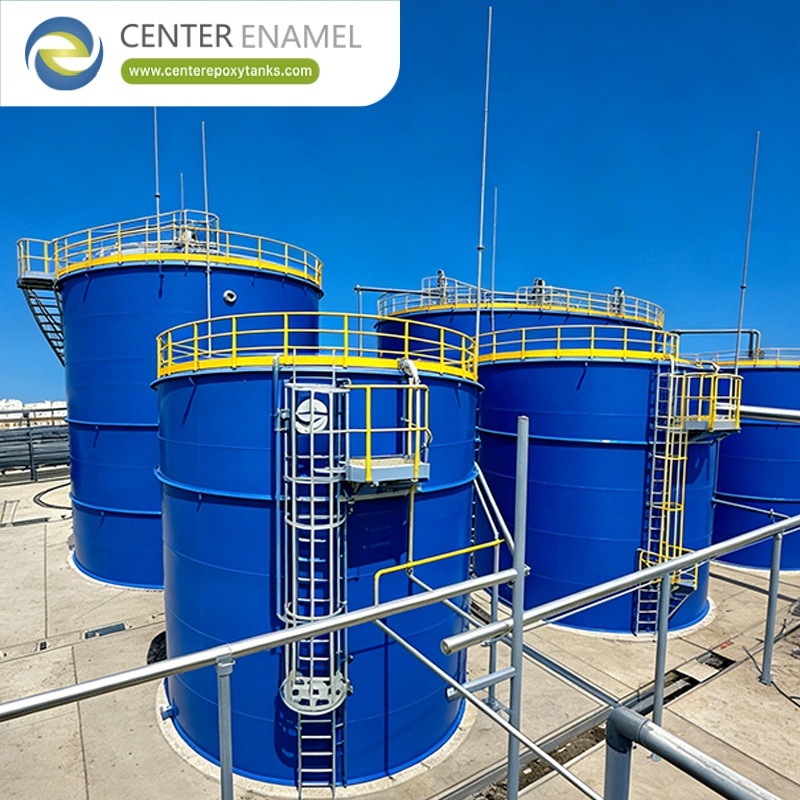
Sludge Enamel Steel Tanks: Corrosion, Sealing, and Supplier Selection
| Place of Origin: | China |
| Brand Name: | CEC TANKS |
| Certification: | ISO 9001:2008, AWWA D103 , OSHA , BSCI |
| Model Number: | W201691123005 |
| Minimum Order Quantity: | 1set |
| Price: | $5000~$20000 one set |
| Packaging Details: | PE poly-foam between each two steel plates ; wooden pallet and wooden box |
| Delivery Time: | 0-60 days after deposit received |
| Payment Terms: | L/C,T/T |
| Supply Ability: | 60 sets per month |
|
Detail Information |
|||
| Place of Origin | China | Brand Name | CEC TANKS |
|---|---|---|---|
| Certification | ISO 9001:2008, AWWA D103 , OSHA , BSCI | Model Number | W201691123005 |
| Steel Plates Thickness: | 3mm To 12mm , Depends On The Tank Structure | Corrosion Integrity: | Excellent |
| Chemical Resistance: | Excellent | Capacity: | 20 M3 To 18,000 M3 |
| Service Life: | ≥30 Years | Permeability: | Gas / Liquid Impermeable |
| Highlight: | sludge enamel steel tanks with corrosion resistance,fusion bonded epoxy tanks for sealing,sludge tank supplier selection guide |
||
Product Description
Sludge Enamel Steel Tanks: Corrosion, Sealing, and Supplier Selection
Sludge is where tanks go to die early. Raw and digested sludge are corrosive and abrasive, and the gas space above the liquid -rich in hydrogen sulfide - is often worse than the liquid. An enamel (Glass-Fused-to-Steel, GFS) tank is a common answer because its glass face is inert to exactly that chemistry. This article covers the corrosion logic, the sealing that makes it work, and how to pick a supplier who will not ship you a liability.
A sludge enamel steel (GFS) tank resists early failure because the vitreous enamel face is inert to the corrosive, H2S-rich sludge environment, and a sealed bolted roof controls odor and the attacking gas space. When selecting a supplier, require a 100% 1500 V holiday test, ISO 28765 design, 5-15 W/m3 mixing provisions, and a reference of delivered sludge tanks - not just a low price.
Why Sludge Attacks Ordinary Tanks
Sludge combines abrasion from grit, corrosives from sulfides, and a gas space loaded with H2S that condenses into acid on the wall above the liquid line. Painted and thinly coated tanks fail first at that liquid/gas interface. GFS presents an inert glass face to both zones, so the attack has nothing organic to break down.
- Gas space above liquid is often the worst zone.
- H2S condenses to acid on the wall.
- Inert glass face resists both liquid and gas.
Sealing and Mixing
A sludge tank must be sealed to control odor and the H2S gas, and mixed to keep solids in suspension. Plan 5-15 W/m3 of installed mixing power via submersible or jet mixers, sized to the tank volume and sludge rheology. The mixer must be serviceable without emptying the tank.
- Sealed roof controls odor and gas attack.
- 5-15 W/m3 mixing prevents settling and crusting.
- Service access for mixers without draining.
Supplier Selection Checklist
Require the lining controls that prove quality: 100% 1500 V holiday test, ISO 28765 design, documented enamel thickness (0.25-0.45 mm per face) and panel traceability. Ask specifically for delivered sludge tanks, because sludge is a harder duty than water.
| Check | Why it matters |
| 100% 1500 V holiday test | No pinholes in the lining. |
| ISO 28765 design | Engineered GFS shell. |
| Enamel thickness 0.25-0.45 mm | Coverage without firing risk. |
| Mixing provision 5-15 W/m3 | Keeps sludge in suspension. |
| Delivered sludge references | Proves the harder duty. |
Project Reference
Delivered sludge-handling tanks show the family: the HK Veolia Landfill Leachate Treatment Project (2019) included sludge holding and thickened-sludge tanks with GFS roofs among a multi-tank leachate train, and the China Landfill Leachate Project (2023, Beijing) used large GFS tanks in an aggressive leachate environment.
- HK Veolia 2019: sludge holding + thickened-sludge tanks, GFS roofs.
- China Landfill Leachate 2023: large GFS tanks, aggressive duty.
Company Expertise
Center Enamel builds GFS sludge holding tanks with a 100% 1500 V holiday-tested shell, ISO 28765 design and bolted erection that reaches small and large volumes alike. The sealed-roof, mixed-sludge logic is the same whether the tank is 200 m3 or 20,000 m3.
Frequently Asked Questions
Why is GFS better than painted steel for sludge?
The inert glass face resists the H2S-rich gas space and abrasive sludge, where painted coatings blister and fail at the liquid line.
Do sludge tanks need a roof?
A sealed roof controls odor and the corrosive gas space; open sludge tanks are rare except where the process explicitly calls for it.
How much mixing does a sludge tank need?
Plan 5-15 W/m3 of installed mixing power via submersible or jet mixers, sized to volume and sludge rheology.
What holiday test should I require?
A 100% surface 1500 V holiday (spark) test - not sampling - so every pinhole is found before shipment.
Can a small sludge buffer be GFS?
Yes; bolted GFS reaches small volumes (e.g., 200 m3 class) without custom fabrication, with the same lining controls.
Which standard governs the design?
ISO 28765 for the GFS design, with the bolted structure per AWWA D103-09.
Conclusion
Sludge enamel steel tanks work because the inert glass face and a sealed roof defeat the two things that kill ordinary tanks - the H2S gas space and the settled, crusting sludge. Select the supplier on the lining proof and delivered sludge references, not the headline price.
Suggested CTA: Tell us your sludge type, solids content and footprint and we will specify a sealed, mixed GFS sludge tank with the lining records to prove it.