-
Glass Fused To Steel Tanks (807)
-
Stainless Steel Tanks (434)
-
Fusion Bonded Epoxy Tanks (622)
-
Galvanized Steel Tanks (321)
-
Aluminum Dome Roofs (1336)
-
Wastewater Storage Tanks (280)
-
Welded Steel Tanks (457)
-
Pressure Vessels (295)
-
Anaerobic Digester (202)
-
Industrial Water Tanks (349)
-
Glass Lined Steel Tanks (180)
-
Bolted Steel Tanks (389)
-
Sludge Storage Tank (115)
-
Biogas Storage Tank (173)
-
Leachate Storage Tanks (133)
-
Agricultural Water Storage Tanks (179)
-
Fire Water Tank (166)
-
Grain Storage Silos (146)
-
Biogas Projects (424)
-
Wastewater Treatment Projects (1570)
-
Double Membrane Roof (223)

|
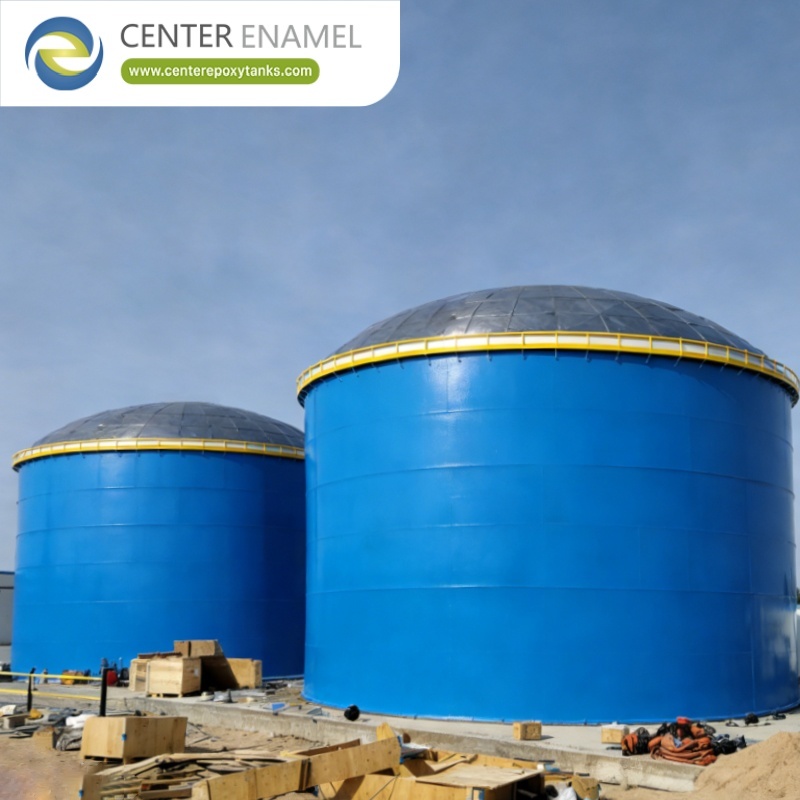
Robust Storage Tanks: Engineering for Wind, Seismic, and Pressure
| Place of Origin: | China |
| Brand Name: | CEC TANKS |
| Certification: | ISO 9001:2008, AWWA D103 , OSHA , BSCI |
| Model Number: | W201691123005 |
| Minimum Order Quantity: | 1set |
| Price: | $5000~$20000 one set |
| Packaging Details: | PE poly-foam between each two steel plates ; wooden pallet and wooden box |
| Delivery Time: | 0-60 days after deposit received |
| Payment Terms: | L/C,T/T |
| Supply Ability: | 60 sets per month |
|
Detail Information |
|||
| Place of Origin | China | Brand Name | CEC TANKS |
|---|---|---|---|
| Certification | ISO 9001:2008, AWWA D103 , OSHA , BSCI | Model Number | W201691123005 |
| Steel Plates Thickness: | 3mm To 12mm , Depends On The Tank Structure | Corrosion Integrity: | Excellent |
| Chemical Resistance: | Excellent | Capacity: | 20 M3 To 18,000 M3 |
| Service Life: | ≥30 Years | Permeability: | Gas / Liquid Impermeable |
| Highlight: | Fusion bonded epoxy storage tanks,Wind resistant storage tanks,Seismic proof pressure tanks |
||
Product Description
Robust' is an adjective until it is an engineering calculation. A storage tank is robust only if its shell, anchorage and foundation are designed for the loads it will actually see - wind that tries to lift the roof, an earthquake that tries to rack the shell, and the hydrostatic pressure that never lets up. This article translates robustness into the specific design controls that earn it.
A robust storage tank is engineered, not adjectives: the shell is designed to AWWA D103-09 (bolted) and ISO 28765 (GFS) for hydrostatic, wind and seismic loads, anchored with calculated bolt patterns and a stiffened ring at the base, and detailed for the local load case. Real robustness is proven by tanks that survived extreme events - such as the Ecuador tanks that stood through a 7.8-magnitude earthquake in 2016 - not by marketing language.
Three loads dominate: hydrostatic pressure (constant, sets shell thickness by lift), wind (overturning and uplift on roof and shell), and seismic (racking and sloshing). A robust design computes each for the site and sizes the shell courses, the anchor bolts and the stiffening rings accordingly. A one-size shell is a robustness gamble.
- Hydrostatic: shell thickness by lift.
- Wind: overturning and uplift.
- Seismic: racking and sloshing.
Robustness lives at the base: anchor bolts sized to the uplift, a compressive ring that keeps the bottom from buckling, and properly staged shell courses. For bolted GFS/FBE tanks, the bolt grade (8.8) and the sealant system also hold the shell together under cyclic load. The foundation must transfer these loads without settlement.
- Calculated anchor bolts for uplift.
- Compression ring at the base.
- Staged shell courses by load.
AWWA D103-09 governs bolted steel tank structure; ISO 28765 governs GFS design including seismic; local building codes add the site's wind and quake zone. A robust tank cites these and shows the load calculation, not just a thickness.
| Control | Standard / value |
|---|---|
| Structure | AWWA D103-09 (bolted). |
| GFS design | ISO 28765 (incl. seismic). |
| Anchorage | Calculated bolt pattern. |
| Base | Compression ring + foundation. |
| Load case | Site wind / seismic zone. |
Robustness is demonstrated by survival and scale: the Ecuador tanks (2016) remained stable through a 7.8-magnitude earthquake; the Indonesia Cilincing drinking-water tanks (2024) stand at 42.04 m diameter; and the Namibia freshwater program (2022) used six 41.27 m-diameter tanks - all bolted GFS shells engineered to their load cases.
- Ecuador 2016: stable through 7.8-magnitude quake.
- Indonesia Cilincing 2024: 42.04 m diameter.
- Namibia 2022: six 41.27 m-diameter tanks.
Center Enamel designs bolted GFS and FBE tanks to AWWA D103-09 and ISO 28765, with anchorage and shell staging computed for the project's wind and seismic zone, and panel traceability back to the furnace batch.
Engineering to AWWA D103-09 / ISO 28765 for hydrostatic, wind and seismic loads, with calculated anchorage and a stiffened base.
By design to the site's seismic zone and, in practice, by tanks that survived events - e.g., the Ecuador tanks through a 7.8-magnitude quake in 2016.
Yes, when the anchor bolts and roof-to-shell connection are designed for the uplift; the bolt grade (8.8) and sealant matter.
ISO 28765 covers GFS design including seismic; AWWA D103-09 covers the bolted steel structure.
Larger diameters need stiffer shells and anchorage; a 42 m tank (Indonesia Cilincing) is a different engineering case than a small buffer.
Ask for the load calculation and the anchorage detail tied to your site's wind and seismic zone.
Robust storage tanks are the product of calculation, not claims - shell thickness by lift, anchorage by uplift, stiffening at the base, and design to AWWA D103-09 and ISO 28765 for the site's actual loads. The tanks that survive earthquakes and stand at 40 m diameters are the ones engineered that way from the start.
Suggested CTA: Share your site's wind and seismic zone and we will engineer a bolted GFS or FBE tank with the anchorage and shell staging to match.