-
Glass Fused To Steel Tanks (807)
-
Stainless Steel Tanks (434)
-
Fusion Bonded Epoxy Tanks (622)
-
Galvanized Steel Tanks (321)
-
Aluminum Dome Roofs (1336)
-
Wastewater Storage Tanks (280)
-
Welded Steel Tanks (457)
-
Pressure Vessels (295)
-
Anaerobic Digester (202)
-
Industrial Water Tanks (349)
-
Glass Lined Steel Tanks (180)
-
Bolted Steel Tanks (389)
-
Sludge Storage Tank (115)
-
Biogas Storage Tank (173)
-
Leachate Storage Tanks (133)
-
Agricultural Water Storage Tanks (179)
-
Fire Water Tank (166)
-
Grain Storage Silos (146)
-
Biogas Projects (424)
-
Wastewater Treatment Projects (1570)
-
Double Membrane Roof (223)

|
How to Choose a Bolted Steel Tank Supplier: 7 Criteria to Audit
| Place of Origin: | China |
| Brand Name: | CEC TANKS |
| Certification: | ISO 9001:2008, AWWA D103 , OSHA , BSCI |
| Model Number: | W201691123005 |
| Minimum Order Quantity: | 1set |
| Price: | $5000~$20000 one set |
| Packaging Details: | PE poly-foam between each two steel plates ; wooden pallet and wooden box |
| Delivery Time: | 0-60 days after deposit received |
| Payment Terms: | L/C,T/T |
| Supply Ability: | 60 sets per month |
|
Detail Information |
|||
| Place of Origin | China | Brand Name | CEC TANKS |
|---|---|---|---|
| Certification | ISO 9001:2008, AWWA D103 , OSHA , BSCI | Model Number | W201691123005 |
| Steel Plates Thickness: | 3mm To 12mm , Depends On The Tank Structure | Corrosion Integrity: | Excellent |
| Chemical Resistance: | Excellent | Capacity: | 20 M3 To 18,000 M3 |
| Service Life: | ≥30 Years | Permeability: | Gas / Liquid Impermeable |
| Highlight: | bolted steel tank supplier criteria,fusion bonded epoxy tank selection,steel tank supplier audit guide |
||
Product Description
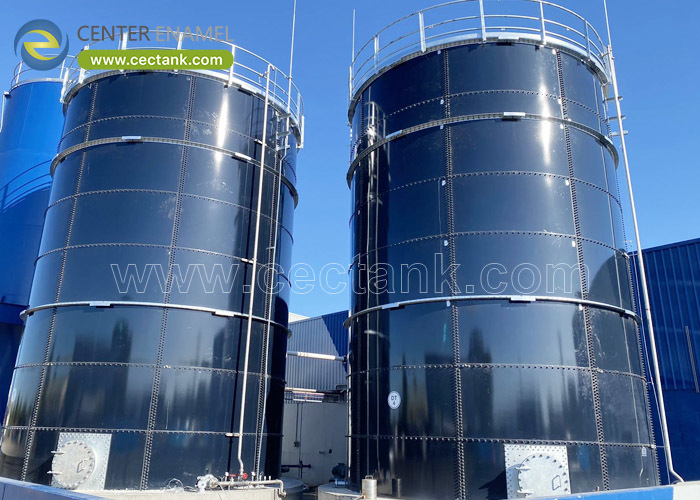
How to Choose a Bolted Steel Tank Supplier: 7 Criteria to Audit
Choosing a bolted steel tank supplier is less about the lowest quote and more about whether the supplier controls the variables that decide whether the tank still works in year fifteen. A bolted shell looks simple, but the enamel firing, the bolt grade, the sealant and the panel traceability are where good and bad suppliers diverge. This guide gives seven criteria you can actually audit before you issue a purchase order.
Vet a bolted steel tank supplier on seven things: in-house steel and coating control, a 100% 1500 V holiday (spark) test record, design to ISO 28765 / AWWA D103-09, 8.8-grade bolt specification, panel traceability, a reference list of delivered tanks in your climate, and proven export crating and documentation. Price is the last item, not the first.
1. Who Controls the Steel and the Coating
A tank is only as good as the line that makes its panels. The strongest signal is a supplier that owns the enameling or Fusion-Bonded Epoxy (FBE) line and the furnace, rather than buying coated panels from a third party. In-house control lets the supplier show you the kiln temperature curve and the coating batch record - documents that prove the glass-to-steel bond was actually managed.
- Ask who owns the enamel/FBE line and furnace.
- Request the firing-temperature curve for a recent batch.
- Prefer suppliers that also run their own steel plate QA.
2. The Holiday Test Is Non-Negotiable
A 100% 1500 V holiday (spark) test finds every pinhole across the entire coated surface. A supplier that spot-checks or cannot produce the test record is asking you to trust an unverified lining. For a tank that holds water, wastewater or process liquid, one missed pinhole becomes a corrosion site.
- Require 100% surface holiday testing at 1500 V.
- Ask for the test record tied to your panel numbers.
- Treat 'we inspect visually' as a red flag.
3. Standards and Design Authority
The supplier should design to ISO 28765 for Glass-Fused-to-Steel (GFS) and AWWA D103-09 for the bolted structure, and be able to show the calculation basis for wind, seismic and the liquid load. A supplier that 'builds to experience' without the design standard is a liability on a code-review project.
| Criterion | What to ask for | Why it matters |
|---|---|---|
| Design standard | ISO 28765 + AWWA D103-09 | Code acceptance and safety. |
| Load calc | Wind / seismic / hydrostatic basis | Confirms the shell is engineered. |
| Bolts | 8.8-grade specification | Holds the shell under load. |
| Traceability | Panel-to-batch numbering | Defect maps back to a furnace run. |
4. References in Your Climate and Media
A supplier's delivered record matters more than its brochure. Look for tanks in a climate and duty like yours - tropical drinking water, cold-climate wastewater, or aggressive industrial effluent. Center Enamel's delivered record spans large GFS installations such as the Indonesia Cilincing drinking-water tanks at 21,088 m3 (2024), the Italy Sardinia water project at 30,549 m3 (2025), and the Namibia freshwater program of six 11,230 m3 tanks (2022).
- Indonesia Cilincing 2024: 21,088 m3 drinking water, aluminum dome roof.
- Italy Sardinia 2025: 30,549 m3, largest GFS by an Asian supplier.
- Namibia 2022: six GFS tanks at 11,230 m3 each.
5. Export Readiness
International projects fail on documentation and packing as often as on engineering. Confirm the supplier crates panels to survive ocean freight, provides mill certificates and coating data, and can coordinate Incoterms and inspection. A supplier with a 100+ country export base has already absorbed these lessons.
Company Expertise
Center Enamel (founded 2008, China's first GFS tank manufacturer) operates its own enameling and FBE coating, designs to ISO 28765 / AWWA D103-09, runs 100% 1500 V holiday testing with panel traceability, and has exported bolted tanks across multiple continents and climates.
Frequently Asked Questions
What should I ask a bolted steel tank supplier first?
Ask who owns the coating line and furnace, and request the 1500 V holiday-test record and kiln curve for a recent batch. Those answer whether the lining is actually controlled.
Is AWWA D103-09 enough on its own?
It governs the bolted steel structure. For GFS you also need ISO 28765 for the enamel design; for the lining you need the coating test records. Use both.
Why do references in my climate matter?
A tank that performs in a temperate warehouse yard may fail in tropical humidity or freeze-thaw cycles. References in a similar duty prove the design was validated where you will use it.
What bolt grade should a bolted tank use?
8.8-grade bolts are the standard for the shell; the sealant and washer system matter just as much for leak tightness.
How are panels packed for export?
Proper crating protects the coated faces from impact and moisture during ocean freight; ask for the packing method and a photo of a loaded container.
Does a lower price mean lower quality?
Not always, but a price far below market usually means skipped QA (no holiday test, thinner enamel, untraced panels). Audit the process, not just the number.
Conclusion
A bolted steel tank supplier is chosen on process control, not price. Audit the coating line, the holiday test, the design standard, the references and the export readiness - and the right supplier becomes obvious before you compare numbers.
Suggested CTA: Send us your duty, climate and volume and we will share our coating records, design basis and a reference list matched to your project.