-
Glass Fused To Steel Tanks (807)
-
Stainless Steel Tanks (434)
-
Fusion Bonded Epoxy Tanks (622)
-
Galvanized Steel Tanks (321)
-
Aluminum Dome Roofs (1336)
-
Wastewater Storage Tanks (280)
-
Welded Steel Tanks (457)
-
Pressure Vessels (295)
-
Anaerobic Digester (202)
-
Industrial Water Tanks (349)
-
Glass Lined Steel Tanks (180)
-
Bolted Steel Tanks (389)
-
Sludge Storage Tank (115)
-
Biogas Storage Tank (173)
-
Leachate Storage Tanks (133)
-
Agricultural Water Storage Tanks (179)
-
Fire Water Tank (166)
-
Grain Storage Silos (146)
-
Biogas Projects (424)
-
Wastewater Treatment Projects (1570)
-
Double Membrane Roof (223)


|
Low-Maintenance Storage Tanks: Designing for Lifecycle Cost
| Place of Origin: | China |
| Brand Name: | CEC TANKS |
| Certification: | ISO 9001:2008, AWWA D103 , OSHA , BSCI |
| Model Number: | W201691123005 |
| Minimum Order Quantity: | 1set |
| Price: | $5000~$20000 one set |
| Packaging Details: | PE poly-foam between each two steel plates ; wooden pallet and wooden box |
| Delivery Time: | 0-60 days after deposit received |
| Payment Terms: | L/C,T/T |
| Supply Ability: | 60 sets per month |
|
Detail Information |
|||
| Place of Origin | China | Brand Name | CEC TANKS |
|---|---|---|---|
| Certification | ISO 9001:2008, AWWA D103 , OSHA , BSCI | Model Number | W201691123005 |
| Steel Plates Thickness: | 3mm To 12mm , Depends On The Tank Structure | Corrosion Integrity: | Excellent |
| Chemical Resistance: | Excellent | Capacity: | 20 M3 To 18,000 M3 |
| Service Life: | ≥30 Years | Permeability: | Gas / Liquid Impermeable |
| Highlight: | low-maintenance fusion bonded epoxy tanks,storage tanks with lifecycle cost design,fusion bonded epoxy storage tanks |
||
Product Description
The purchase price of a storage tank is the smallest number in its lifetime cost. Repainting, liner replacement, leak repair and unplanned downtime accumulate for decades, and the tank that looked cheap at bid often costs the most by year ten. This article reframes 'low maintenance' as a design decision and shows which choices actually reduce lifetime cost.
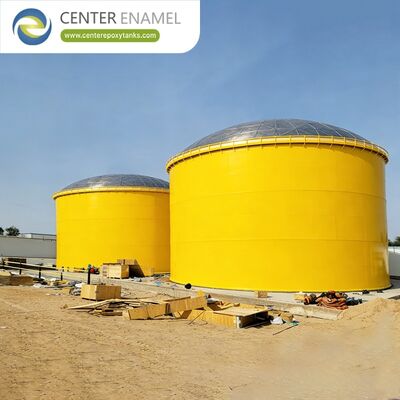
A genuinely low-maintenance storage tank is designed for lifecycle cost, not purchase price: an inert, fused coating (GFS enamel or FBE) that does not need periodic repainting, a bolted shell whose panels can be replaced individually, and a roof (aluminum dome or sealed GFS) that limits debris and corrosion. The savings come from eliminating recoats and from inspectable, field-serviceable construction - not from buying the lightest shell.
For a coated steel tank, the dominant lifetime cost is re-coating the interior after the original lining fails, plus the labor and downtime to do it. Bolted welded tanks with painted interiors face this on a 10-20 year cycle. A fused GFS or FBE lining, being inert glass or cross-linked epoxy, removes the repaint cycle for the design life.
- Re-coating is the biggest lifetime cost.
- Painted interiors fail on a 10-20 year cycle.
- Fused linings remove the repaint cycle.
A bolted tank lets a single damaged panel be unbolted and replaced without cutting the shell, and the coating is factory-applied rather than field-sprayed (where quality is hardest to control). Welded tanks need field coating at seams and are harder to repair locally. For lifecycle cost, factory-applied fused lining plus replaceable panels wins.
- Factory-applied lining beats field spray.
- Bolted panels are individually replaceable.
- Welded seams need field coating and repair.
A roof limits algae, debris and evaporation and protects the shell from weather; an aluminum geodesic dome or sealed GFS roof is effectively maintenance-light. Design for inspection access so any issue is caught early, before it becomes a failure.
| Choice | Lifecycle effect |
|---|---|
| GFS / FBE fused lining | No repaint cycle; lowest coating OPEX. |
| Bolted, replaceable panels | Local repair, no shell cut. |
| Aluminum dome / sealed roof | Low upkeep, weather protection. |
| Field-sprayed welded | Recurring repaint and seam repair. |
Low-upkeep bolted GFS tanks are in long service: the Indonesia Cilincing drinking-water tanks (21,088 m3, 2024, aluminum dome roof), the Australia water storage tanks (2 x 11,260 m3, 2020), and the Namibia freshwater program (six 11,230 m3 tanks, 2022) all rely on the inert enamel face and factory-applied lining to avoid recurring recoats.
- Indonesia Cilincing 2024: 21,088 m3, aluminum dome.
- Australia 2020: 2 x 11,260 m3.
- Namibia 2022: six 11,230 m3 tanks.
Center Enamel supplies GFS and FBE bolted tanks with factory-fused linings, ISO 28765 / AWWA D103-09 design, and field-replaceable panels. The inert enamel face is the core of a low-maintenance specification because it removes the repaint cycle that drives lifetime cost.
Usually not - the purchase price is small versus decades of recoating, repair and downtime. Compare lifecycle cost, not bid price.
The fused glass face is inert and factory-applied, so it does not need the periodic repainting that painted welded tanks require.
Yes - a damaged panel can be unbolted and replaced without cutting the shell, and the lining is applied in the factory where quality is controllable.
A roof limits debris, algae and weather attack; an aluminum dome or sealed GFS roof is effectively maintenance-light.
Plan periodic visual and holiday checks at accessible points; design the tank with inspection access so small issues are caught early.
A fused GFS or FBE lining sized to the media typically outlasts field-sprayed paint and avoids the repaint cycle entirely.
Low maintenance is a design outcome, not a label. Specify a fused, inert lining, a bolted and field-replaceable shell, and a protective roof, and the tank's lifetime cost drops because the expensive thing - recoating - never happens.
Suggested CTA: Send us your media and duty cycle and we will specify a low-maintenance GFS or FBE tank built for lifecycle cost, not just bid price.