-
Glass Fused To Steel Tanks (807)
-
Stainless Steel Tanks (434)
-
Fusion Bonded Epoxy Tanks (592)
-
Galvanized Steel Tanks (321)
-
Aluminum Dome Roofs (1336)
-
Wastewater Storage Tanks (237)
-
Welded Steel Tanks (457)
-
Pressure Vessels (295)
-
Anaerobic Digester (202)
-
Industrial Water Tanks (349)
-
Glass Lined Steel Tanks (180)
-
Bolted Steel Tanks (389)
-
Sludge Storage Tank (115)
-
Biogas Storage Tank (173)
-
Leachate Storage Tanks (133)
-
Agricultural Water Storage Tanks (179)
-
Fire Water Tank (166)
-
Grain Storage Silos (146)
-
Biogas Projects (424)
-
Wastewater Treatment Projects (1520)
-
Double Membrane Roof (223)
|
Biogas Holder for Anaerobic Digestion: Double-Membrane Gas Storage
| Place of Origin: | China |
| Brand Name: | CEC TANKS |
| Certification: | ISO 9001:2008, AWWA D103 , OSHA , BSCI |
| Model Number: | W20160705009 |
| Minimum Order Quantity: | 1set |
| Price: | $5000~$20000 one set |
| Packaging Details: | PE poly-foam between each two steel plates ; wooden pallet and wooden box |
| Delivery Time: | 0-60 days after deposit received |
| Payment Terms: | L/C,T/T |
| Supply Ability: | 60 sets per month |
|
Detail Information |
|||
Product Description
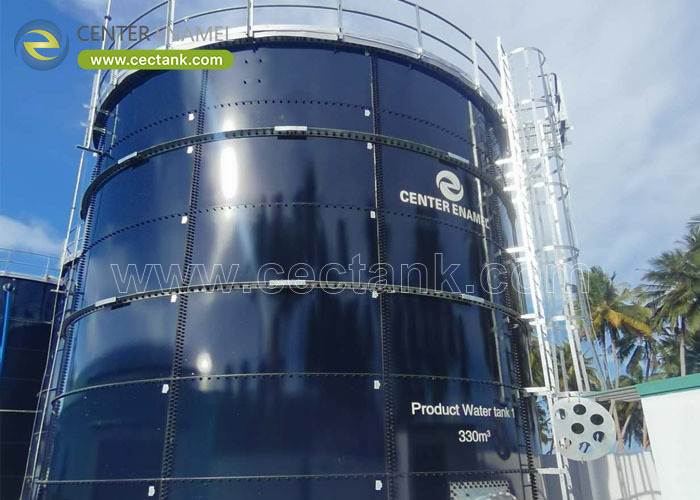
Biogas Holder for Anaerobic Digestion: Double-Membrane Gas Storage
A biogas holder for anaerobic digestion waste is a gas storage system that captures methane at 5-30 mbar above a digester, smoothing supply to the generator or flare. The most common form is a double-membrane holder on a Glass-Fused-to-Steel (GFS) tank. Engineered by Shijiazhuang Zhengzhong Technology Co., Ltd. (Center Enamel) to AWWA D103-09 and ISO 28765, the membrane lasts 10-15 years.
What a Biogas Holder Is
A biogas holder is a gas storage system that sits on top of or beside an anaerobic digester, storing methane at 5-30 mbar to balance generation against use. The double-membrane type uses an inner and outer PVC or PTFE film over a steel tank; the outer membrane is blower-pressurized to keep the gas volume stable for 10-15 years of service.
· Pressure: 5-30 mbar gas.
· Type: double membrane.
· Membrane: PVC or PTFE.
· Life: 10-15 years.
Key Characteristics, Components, and Types
Holders are built as on-tank double-membrane systems, separate steel holders, or flexible gas bags. The steel base is usually a Glass-Fused-to-Steel (GFS) tank with enamel fused at 820-930°C; the membranes are UV-stabilized and rated for the 5-30 mbar pressure. Safety relief and pressure control protect the digester from over-pressure.
· On-tank: double membrane.
· Separate: steel holder.
· Base: GFS enamel tank.
· Safety: relief and control.
Applications and Operating Conditions
They serve farms, food processors, and municipalities capturing biogas from manure, residues, and sludge. Operating at 5-30 mbar with 55-65% methane, the holder must tolerate outdoor UV and temperature swings from -20 to 50°C. The membrane is the wear item, so spare films and inspection are part of the operating plan.
· Sites: farm, food, municipal.
· Gas: 55-65% methane.
· Climate: -20 to 50°C.
· Wear: membrane is the item.
Technical Considerations
Size the holder to the digester's gas swing, typically hours of generation; set pressure at 5-30 mbar with blower control. The GFS base tank is calculated to AWWA D103-09 and ISO 28765, plates holiday-tested at 1500 V. Membrane material is chosen for UV and methane resistance, with a 10-15 year rated life and spare films on hand.
· Size: hours of gas swing.
· Pressure: 5-30 mbar.
· Base: 1500 V tested.
· Membrane: 10-15 year life.
Advantages and Limitations
A double-membrane holder gives low-cost, compact gas storage directly on the digester and smooths supply to the generator. The limitation is membrane life: 10-15 years versus the 30-50 year steel tank, so a replacement budget and spare films are needed. This boundary is an operating-cost decision, not a failure of the system.
· Advantage: compact, low cost.
· Advantage: smooths gas supply.
· Limitation: membrane 10-15 years.
· Boundary: budget spare films.
Design Parameters
The figures below are the load-bearing values a provider should quote per biogas holder system; the steel base reaches 50,000 m3 and the membrane lasts 10-15 years. They let an engineer confirm the tank, pressure, and membrane before ordering.
|
Design parameter |
Typical value or range |
Why it matters |
|
Capacity range |
500-50,000 m3 |
Single-tank throughput |
|
Hydraulic retention |
20-40 days |
Digestion stability |
|
Operating temperature |
35-38 °C |
Mesophilic default |
|
Biogas methane |
55-65 % |
Calorific value |
|
Gas pressure |
5-30 mbar |
Holder and seal design |
|
Mixing energy |
5-15 W/m3 |
Solids suspension |
|
Enamel DFT |
0.25-0.40 mm |
Acid resistance |
|
Holiday test |
1500 V |
Every panel checked |
|
Code basis |
AWWA D103-09 / ISO 28765 |
Design authority |
|
Limitation to check |
Feed pH below 5.5 |
Add correction step |
Comparison and Selection Guide
Against fixed-cone digesters with separate holders and aluminum domes, a double-membrane holder on a GFS tank is the lowest-capital compact option. Use the table to weigh capital cost, gas storage, and membrane life when selecting biogas holders.
|
Option |
Capital cost |
Gas storage |
Membrane life |
Best fit |
|
Membrane roof GFS |
Moderate |
On-tank, 5-30 mbar |
10-15 years |
Compact biogas sites |
|
Fixed cone + holder |
Higher |
Separate holder |
Steel, long |
Large plants |
|
Aluminum dome + holder |
Higher |
Separate holder |
Steel, long |
High vapor sites |
|
Open tank + bag |
Lowest |
External bag |
Short |
Seasonal / low duty |
Best Practices: How to Choose
Specify the 5-30 mbar pressure, the membrane material and rated life, and the ISO 28765 base tank. Require references from operating biogas plants. Shijiazhuang Zhengzhong Technology Co., Ltd. (Center Enamel) issues drawings, NDE records, and inspection packages for the steel base plus membrane specifications.
· Pressure: 5-30 mbar.
· Membrane: UV-rated, 10-15 yr.
· Base: ISO 28765 tank.
· Package: drawings plus NDE.
A biogas holder is a pressure and membrane decision on top of a corrosion-proof tank. Specify the 5-30 mbar control and a rated membrane, and the digester gas is stored safely for the plant's life.
Frequently Asked Questions (FAQ)
What is a biogas holder?
A gas storage system, usually a double-membrane unit on a digester, storing methane at 5-30 mbar to balance generation and use.
How long does the membrane last?
PVC or PTFE membranes are rated 10-15 years; the steel GFS base tank lasts 30-50 years, so spares are budgeted.
Which standard applies to the base tank?
The bolted shell is designed to AWWA D103-09 and ISO 28765, with plant control under ISO 9001 and ISO 45001.
What pressure must it hold?
Biogas is stored at 5-30 mbar; blower control and relief valves keep the digester within safe limits.
Can it be added to an existing digester?
Yes. A double-membrane holder can be fitted to a compatible GFS or steel digester with the right roof connection.
Can it be customized?
Yes. Volume, membrane, pressure, and base tank are engineered per plant, with drawings issued per system.
Key Takeaways
· Biogas holders store methane at 5-30 mbar on the digester.
· Double-membrane is the lowest-capital compact option.
· Membrane life 10-15 years; budget spares.
· Base tank to ISO 28765 with 1500 V test.