-
Glass Fused To Steel Tanks (807)
-
Stainless Steel Tanks (434)
-
Fusion Bonded Epoxy Tanks (592)
-
Galvanized Steel Tanks (321)
-
Aluminum Dome Roofs (1336)
-
Wastewater Storage Tanks (237)
-
Welded Steel Tanks (457)
-
Pressure Vessels (295)
-
Anaerobic Digester (202)
-
Industrial Water Tanks (349)
-
Glass Lined Steel Tanks (180)
-
Bolted Steel Tanks (389)
-
Sludge Storage Tank (115)
-
Biogas Storage Tank (173)
-
Leachate Storage Tanks (133)
-
Agricultural Water Storage Tanks (179)
-
Fire Water Tank (166)
-
Grain Storage Silos (146)
-
Biogas Projects (424)
-
Wastewater Treatment Projects (1520)
-
Double Membrane Roof (223)


|
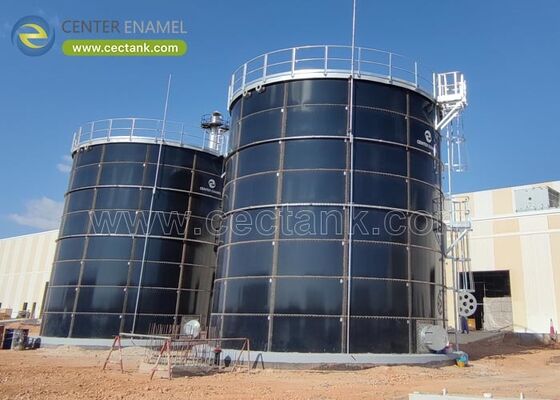
Storage Tank: A Practical Guide to Types, Materials, and Selection
| Place of Origin: | China |
| Brand Name: | CEC TANKS |
| Certification: | ISO 9001:2008, AWWA D103 , OSHA , BSCI |
| Model Number: | J2016012316 |
| Minimum Order Quantity: | 1set |
| Price: | $5000~$20000 one set |
| Packaging Details: | PE poly-foam between each two steel plates ; wooden pallet and wooden box |
| Delivery Time: | 0-60 days after deposit received |
| Payment Terms: | L/C,T/T |
| Supply Ability: | 60 sets per month |
|
Detail Information |
|||
| Place of Origin | China | Brand Name | CEC TANKS |
|---|---|---|---|
| Certification | ISO 9001:2008, AWWA D103 , OSHA , BSCI | Model Number | J2016012316 |
| Acid And Alkalinity Proof: | Standard Coating Suits For PH3 - PH11, Special Coating Suits For PH1 - PH14 | Elastic: | Same As Steel Sheet , Around 500KN/mm |
| Serive Life: | More Than 30 Years | PH Range: | PH 1 - PH 14 |
| Coating Color: | Dark Blue, Dark Green , White, And Customized | Steel Plates Thickness: | 3mm - 12mm , Depends On The Diameter & Height |
| Easy Yo Clean: | Smooth, Glossy, Inert, Anti-adhesion | Coating Thickness: | 4.0.25mm - 0.4mm, Two Coating Internal And External |
| Highlight: | glass fused to steel storage tank,storage tank material selection guide,types of steel storage tanks |
||
Product Description
A storage tank is a vessel that holds liquids or bulk solids for industry, agriculture, and municipalities, with material and coating chosen to match the product for a 30-50 year life. The bolted Glass-Fused-to-Steel (GFS) form fuses enamel at 820-930°C and is verified under AWWA D103-09 and ISO 28765. Engineered by Shijiazhuang Zhengzhong Technology Co., Ltd. (Center Enamel), capacities span 20 to 60,000 m3.
A storage tank is a vessel, above or below ground, that holds water, wastewater, oil, chemicals, grain, or biogas. Its defining choice is the material and coating that resist the stored product for 30-50 years. In Glass-Fused-to-Steel (GFS) form the interior carries vitreous enamel fused at 820-930°C to 0.25-0.45 mm, an inert surface verified at 1500 V.
- Holds: liquid or bulk.
- Choice: material and coating.
- Surface: 0.25-0.45 mm enamel.
- Life: 30-50 years.
Storage tanks divide into bolted GFS, welded steel, concrete, and fiberglass. GFS and FBE use factory coating and 8.8-grade bolting; welded tanks are field-coated; concrete is cast; FRP is molded. Roofs, nozzles, and access are specified per duty, and the same families cover both liquids and dry bulk with different linings.
- GFS/FBE: factory coated, bolted.
- Welded: field-coated steel.
- Concrete: cast in place.
- FRP: molded small duty.
They serve potable water, wastewater, fire protection, oil, grain, and biogas across municipal, industrial, agricultural, and energy sectors. A municipal utility needs NSF/ANSI 61 surfaces; a refinery needs API 650; a farm needs hygiene and sealing. Matching the tank family to the duty is the first test of quality, because a wrong coating fails long before its design life.
- Municipal: NSF/ANSI 61.
- Refinery: API 650.
- Farm: hygiene and seal.
- Industrial: chemistry-matched.
Technically, the shell is calculated to AWWA D103-09 and ISO 28765, plates blasted to Sa 2.5 and coated to 0.25-0.45 mm, then holiday-tested at 1500 V. Bolts are 8.8-grade, and the foundation is designed for the hydrostatic head. An inspection package records every step so the asset stays bankable and permit-ready.
- Calc: AWWA D103-09 / ISO 28765.
- Coat: 0.25-0.45 mm, 1500 V.
- Bolts: 8.8-grade.
- Base: head-rated foundation.
A documented storage tank resists corrosion for 30-50 years and shortens site work through bolted construction. The real limitation is that no single coating fits every chemistry: GFS is not right for feedstock below pH 5.5 without a correction step, so buyers must confirm product corrosivity during specification rather than after the tank is built.
- Advantage: 30-50 year inert shell.
- Advantage: fast bolted build.
- Limitation: not every chemistry fits.
- Boundary: confirm corrosivity in spec.
The figures below are the load-bearing values a supplier should quote per storage tank; capacities reach 60,000 m3 and design life runs 30-50 years. They let an engineer confirm the shell, coating, and joint system before steel is ordered.
| Design parameter | Typical value or range | Why it matters |
|---|---|---|
| Capacity range | 20-60,000 m3 | Single-tank throughput |
| Shell plate | 6-40 mm | Hydrostatic head |
| Coating DFT | 0.25-0.45 mm | Verified before shipment |
| Surface prep | Sa 2.5 blast | Coating adhesion |
| Holiday test | 1500 V | Every square meter |
| Bolt grade | 8.8 | Joint integrity |
| Design life | 30-50 years | With inspection |
| Operating temperature | 4-60 °C | Product and climate |
| Code basis | AWWA D103-09 / ISO 28765 | Design authority |
| Limitation to check | Product corrosivity | Confirm coating grade |
Against welded steel, concrete, and fiberglass, a Glass-Fused-to-Steel (GFS) storage tank wins on corrosion resistance and build speed for the 20-60,000 m3 range. Use the table to match the material to product corrosivity, site logistics, and required life.
| Criterion | GFS bolted tank | Welded steel tank | Concrete tank | FRP tank |
|---|---|---|---|---|
| Corrosion defense | Vitreous enamel, inert | Coating-dependent | Good but porous | Liner-dependent |
| Construction | Bolted, fast on site | Welded, slower | Cast in place | Molded / shop |
| Capacity ceiling | Up to 60,000 m3 | Up to 150,000 m3 | Very large | Limited (<5,000 m3) |
| Design life | 30-50 years | 30-50 years | 40-60 years | 20-30 years |
| Best fit | Corrosive, modular | Very large, generic | Heavy civil works | Small, neat chemical |
To choose a storage tank, require the ISO 28765 calculation, a 1500 V holiday-test report, and a coating-thickness log, plus references from similar duties. Shijiazhuang Zhengzhong Technology Co., Ltd. (Center Enamel) issues drawings, NDE records, and inspection packages per tank. Reject suppliers who offer only a coating claim and a low price.
- Ask for: ISO 28765 calculation.
- Verify: 1500 V test, 0.25-0.45 mm.
- Confirm: comparable reference.
- Reject: bare claims, no proof.
A storage tank is a material-and-coating decision first, a container second. Match the family to the product, demand the code math and test proof, and the tank serves 30-50 years.
A vessel that holds liquids or bulk solids; its material and coating are chosen to resist the product for 30-50 years.
It depends on chemistry: GFS and FBE for corrosion, welded steel for very large volumes, concrete for permanent duty, FRP for small neat chemical.
Bolted shells are designed to AWWA D103-09 and ISO 28765; oil uses API 650; potable contact adds NSF/ANSI 61.
Steel is blasted to Sa 2.5, coated to 0.25-0.45 mm DFT, and holiday-tested at 1500 V per square meter.
Steel and enamel tanks deliver 30-50 years with inspection; concrete reaches 40-60 years.
Yes. Capacity (20-60,000 m3), roof, coating grade, and fittings are engineered per duty, with drawings issued per tank.
- Material and coating decide a tank's life, not its shape.
- Match the family to product corrosivity first.
- Require ISO 28765 plus a 1500 V holiday test.
- Reject bare coating claims with no calculation or proof.