-
Glass Fused To Steel Tanks (807)
-
Stainless Steel Tanks (434)
-
Fusion Bonded Epoxy Tanks (592)
-
Galvanized Steel Tanks (321)
-
Aluminum Dome Roofs (1336)
-
Wastewater Storage Tanks (237)
-
Welded Steel Tanks (457)
-
Pressure Vessels (295)
-
Anaerobic Digester (202)
-
Industrial Water Tanks (349)
-
Glass Lined Steel Tanks (180)
-
Bolted Steel Tanks (389)
-
Sludge Storage Tank (115)
-
Biogas Storage Tank (173)
-
Leachate Storage Tanks (133)
-
Agricultural Water Storage Tanks (179)
-
Fire Water Tank (166)
-
Grain Storage Silos (146)
-
Biogas Projects (424)
-
Wastewater Treatment Projects (1520)
-
Double Membrane Roof (223)
|
SUS304 Bolted Wastewater Tanks from a Factory: Specs and Supply
| Place of Origin: | China |
| Brand Name: | CEC TANKS |
| Certification: | ISO 9001:2008, AWWA D103 , OSHA , BSCI |
| Model Number: | W20161227006 |
| Minimum Order Quantity: | 1set |
| Price: | $5000~$20000 one set |
| Packaging Details: | PE poly-foam between each two steel plates ; wooden pallet and wooden box |
| Delivery Time: | 0-60 days after deposit received |
| Payment Terms: | L/C,T/T |
| Supply Ability: | 60 sets per month |
|
Detail Information |
|||
Product Description
SUS304 Bolted Wastewater Tanks from a Factory: Specs and Supply
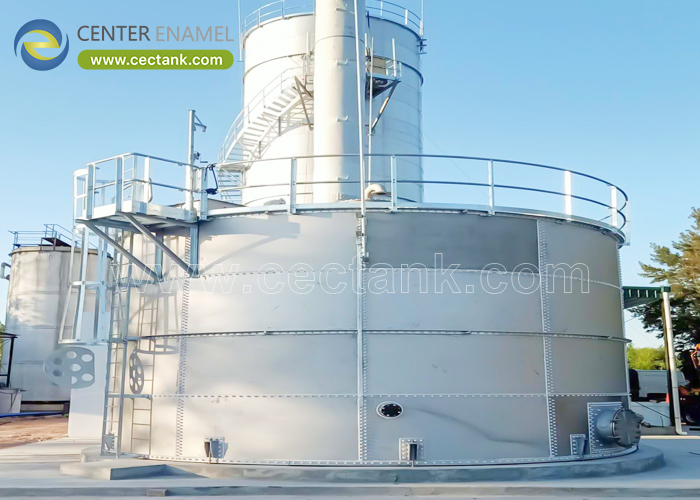
An SUS304 bolted wastewater tank is a stainless steel vessel assembled from factory-fabricated SUS304 panels with A4-80 stainless bolting for hygienic, corrosion-resistant storage. Grade 316L is specified where chlorides are high. Built under EN 1090 and AWWA D103-09 by Shijiazhuang Zhengzhong Technology Co., Ltd. (Center Enamel), these tanks serve food, pharma, and clean-industrial wastewater at 20-5,000 m3.
What an SUS304 Bolted Wastewater Tank Is
An SUS304 bolted wastewater tank is a vessel built from austenitic stainless steel panels of grade SUS304, bolted with A4-80 stainless fasteners and gaskets. The 2B or satin surface resists corrosion for 30-50 years and stays cleanable, which matters for food and pharma effluent. Capacities run 20-5,000 m3, and the shell is calculated to EN 1090 and AWWA D103-09.
- Material: SUS304 austenitic.
- Bolts: A4-80 stainless.
- Finish: 2B / satin.
- Range: 20-5,000 m3.
Key Characteristics, Components, and Types
SUS304 tanks pair with grade 316L where chlorides or pitting risk is high; both use bolted panels, sealed roofs, and hygienic nozzles. Passivation with citric acid reinforces the oxide layer after fabrication. Alternatives are GFS or FBE coated steel, but stainless is chosen when product purity and cleanability outweigh cost for sensitive wastewater streams.
- 304 vs 316L: chloride decision.
- Passivation: citric acid.
- Roof: sealed hygienic.
- Edge: purity and cleanability.
Applications and Operating Conditions
They serve food processing, beverage, dairy, pharmaceutical, and clean-industrial wastewater where stainless contact is required. Operating temperature spans 4-60°C, and the inert surface resists the mild chemicals used in these streams. A factory builds the panels under controlled welding and passivation, so quality is consistent from the first to the last tank.
- Sectors: food, pharma, beverage.
- Temperature: 4-60°C.
- Surface: inert, cleanable.
- Build: factory-controlled.
Technical Considerations
Specify the grade (304 or 316L), wall thickness of 3-12 mm for the head, and passivation after fabrication. The shell is calculated to EN 1090 and AWWA D103-09, and bolts are A4-80 stainless for joint integrity. Even at 20-5,000 m3, inlet, outlet, and mixer sizing follow the same code discipline as larger carbon-steel tanks.
- Grade: 304 or 316L.
- Wall: 3-12 mm.
- Bolts: A4-80 stainless.
- Calc: EN 1090 / AWWA D103-09.
Advantages and Limitations
A stainless SUS304 tank gives a hygienic, corrosion-resistant, low-maintenance vessel with a 30-50 year life and excellent cleanability. The limitation is cost and chloride pitting: 304 is not the right choice in high-chloride streams without upgrading to 316L, and buyers must confirm the chloride level during specification rather than after delivery.
- Advantage: hygienic, 30-50 years.
- Advantage: easy to clean.
- Limitation: cost and pitting.
- Boundary: use 316L for chlorides.
Design Parameters
The figures below are the load-bearing values a factory should quote per SUS304 tank; capacities reach 5,000 m3 and design life runs 30-50 years. They let an engineer confirm the grade, wall, and joint system before stainless panels are cut.
| Design parameter | Typical value or range | Why it matters |
|---|---|---|
| Capacity range | 20-5,000 m3 | Compact to mid wastewater |
| Shell material | SUS304 / 316L | Corrosion-grade choice |
| Wall thickness | 3-12 mm | Pressure and head |
| Surface finish | 2B / satin | Cleanability |
| Design temperature | 4-60 °C | Wastewater range |
| Bolt grade | A4-80 stainless | Joint integrity |
| Design life | 30-50 years | With passivation |
| Code basis | EN 1090 / AWWA D103-09 | Design authority |
| Passivation | Citric acid | Reinforces oxide layer |
| Limitation to check | Chloride and pitting | Confirm grade 316L |
Comparison and Selection Guide
Against GFS and FBE coated steel, an SUS304 bolted tank wins on product purity and cleanability for sensitive wastewater, at higher cost. Use the table to match the material to chloride level, hygiene need, and required life.
| Criterion | GFS bolted tank | Welded steel tank | Concrete tank | FRP tank |
|---|---|---|---|---|
| Corrosion defense | Vitreous enamel, inert | Coating-dependent | Good but porous | Liner-dependent |
| Construction | Bolted, fast on site | Welded, slower | Cast in place | Molded / shop |
| Capacity ceiling | Up to 60,000 m3 | Up to 150,000 m3 | Very large | Limited (<5,000 m3) |
| Design life | 30-50 years | 30-50 years | 40-60 years | 20-30 years |
| Best fit | Corrosive, modular | Very large, generic | Heavy civil works | Small, neat chemical |
Best Practices: Buying from a Factory
Send the effluent datasheet with chloride level, require mill certificates, passivation records, and the EN 1090 calculation. Shijiazhuang Zhengzhong Technology Co., Ltd. (Center Enamel) issues drawings, NDE records, and inspection packages per tank so the stainless build is auditable from factory to site.
- Send: chloride + pH datasheet.
- Require: mill cert, passivation.
- Confirm: EN 1090 math.
- Package: drawings plus NDE.
Conclusion
An SUS304 bolted wastewater tank is a grade and hygiene decision first. Confirm the chloride level, require mill and passivation records, and the stainless vessel performs cleanly for 30-50 years.
Frequently Asked Questions (FAQ)
What is an SUS304 bolted wastewater tank?
A stainless steel vessel of grade SUS304, bolted with A4-80 fasteners, for hygienic wastewater storage of 20-5,000 m3 and a 30-50 year life.
When is 316L needed instead of 304?
Where chlorides are high or pitting is a risk, grade 316L is specified; 304 suits low-chloride, mild-chemical streams.
Which standard applies?
The shell is built to EN 1090 and calculated to AWWA D103-09, with plant control under ISO 9001 and ISO 45001.
How is quality verified?
Mill certificates, citric-acid passivation records, and NDE are issued per tank; bolts are A4-80 stainless.
Is it better than GFS for wastewater?
Stainless wins on purity and cleanability for food and pharma; GFS wins on cost for general corrosive effluent.
Can it be customized?
Yes. Grade, wall, roof, nozzles, and finish are engineered per effluent, with drawings issued per tank.
Key Takeaways
- SUS304 = hygienic, corrosion-grade stainless for sensitive wastewater.
- Use 316L where chlorides or pitting risk is high.
- Require mill certs, passivation, and EN 1090 math.
- Best for food, pharma, and beverage effluent.