-
Glass Fused To Steel Tanks (719)
-
Stainless Steel Tanks (434)
-
Fusion Bonded Epoxy Tanks (592)
-
Galvanized Steel Tanks (321)
-
Aluminum Dome Roofs (1336)
-
Wastewater Storage Tanks (237)
-
Welded Steel Tanks (457)
-
Pressure Vessels (295)
-
Anaerobic Digester (202)
-
Industrial Water Tanks (349)
-
Glass Lined Steel Tanks (180)
-
Bolted Steel Tanks (389)
-
Sludge Storage Tank (115)
-
Biogas Storage Tank (173)
-
Leachate Storage Tanks (133)
-
Agricultural Water Storage Tanks (179)
-
Fire Water Tank (166)
-
Grain Storage Silos (146)
-
Biogas Projects (424)
-
Wastewater Treatment Projects (1420)
-
Double Membrane Roof (223)

|
GFS Tanks and Biogas Plant Design: Modern Swine Wastewater Treatment Solutions in Japan
| Place of Origin: | China |
| Brand Name: | CEC TANKS |
| Certification: | ISO 9001:2008, AWWA D103 , OSHA , BSCI |
| Model Number: | W |
| Minimum Order Quantity: | 1set |
| Price: | $5000~$20000 one set |
| Packaging Details: | PE poly-foam between each two steel plates ; wooden pallet and wooden |
| Delivery Time: | 10-30 days after deposit received |
| Payment Terms: | L/C,T/T |
| Supply Ability: | 60 sets per month |
|
Detail Information |
|||
| Place of Origin | China | Brand Name | CEC TANKS |
|---|---|---|---|
| Certification | ISO 9001:2008, AWWA D103 , OSHA , BSCI | Model Number | W |
| Tank Body Color: | Dark Green / Can Be Customized | Corrosion Integrity: | Excellent |
| Steel Plates Thickness: | 3mm To 12mm , Depends On The Tank Structure | Chemical Resistance: | Excellent |
| Size Of Panel: | 2.4M * 1.2M | Easy To Clean: | Smooth, Glossy, Inert, Anti-adhesion |
| Highlight: | modern swine wastewater treatment solutions,GFS tanks biogas plant design,wastewater treatment projects Japan |
||
Product Description
Japan's swine industry, characterized by medium to large-scale farming operations, faces stringent environmental regulations and significant wastewater treatment challenges. This article explores how advanced GFS Tanks and Biogas Plant Design are transforming Swine Wastewater Treatment across Japan. Through the integration of innovative technologies and high-quality equipment from Center Enamel, Japanese farms are achieving sustainable wastewater management while reducing their environmental footprint and complying with strict national standards.
Swine wastewater in Japan comes from concentrated farming operations, typically housing 300-500 pigs on medium farms and up to 3,000 pigs on large facilities. The wastewater contains substantial organic matter, nitrogen, phosphorus, and pathogens, alongside veterinary antibiotics that persist through conventional treatment processes. Unlike developing countries where small farms dominate, Japan's industrialized swine production creates substantial wastewater volumes requiring sophisticated treatment.
The environmental impact of untreated swine wastewater extends beyond conventional pollutants to include antibiotic residues that conventional treatment methods struggle to remove. This has prompted Japanese researchers to develop advanced treatment technologies, including Anammox processes for efficient nitrogen removal and adsorption methods using activated manganese species for antibiotic elimination. Japan's cold climate, with winter temperatures dropping below freezing, adds complexity to wastewater treatment, requiring insulated systems and cold-adapted biological processes.
The Japanese approach to swine wastewater treatment emphasizes nutrient removal, particularly nitrogen reduction, due to the country's strict environmental standards. The treatment process typically begins with solid-liquid separation and primary clarification, followed by anaerobic digestion for organic matter reduction and biogas recovery. Unlike developing nations where anaerobic treatment dominates, Japan often employs aerobic activated sludge processes for nitrogen removal, though these methods face stability challenges.
Innovative treatment trains incorporate Anammox bacteria for nitrogen removal, significantly reducing electricity consumption compared to conventional nitrification-denitrification processes. Post-treatment polishing through constructed wetland systems has also proven effective, with multistage hybrid wetlands demonstrating reliable performance even in cold climates. These systems provide low-cost, energy-efficient treatment while minimizing space requirements and preventing mosquito breeding.
The UASB process remains fundamental to swine wastewater treatment in Japan, particularly for high-strength influent streams. This technology has proven effective in Japanese studies, achieving substantial COD removal while generating biogas. Laboratory-scale studies have demonstrated the UASB process's capability, with COD removal efficiencies reaching 71% under optimal conditions. The process offers significant advantages, including simple operation, minimal energy requirements, and adaptability to varying organic loads.
Recent innovations in Japanese UASB applications include coupling with electrochemical systems to remove antibiotics and other persistent organic pollutants. Studies have shown that UASB pretreatment effectively removes approximately 62% of antibiotics like chloramphenicol, enhancing the overall treatment efficiency. The process's ability to handle high organic loading rates while maintaining stability has made it an integral component of modern swine wastewater treatment systems.
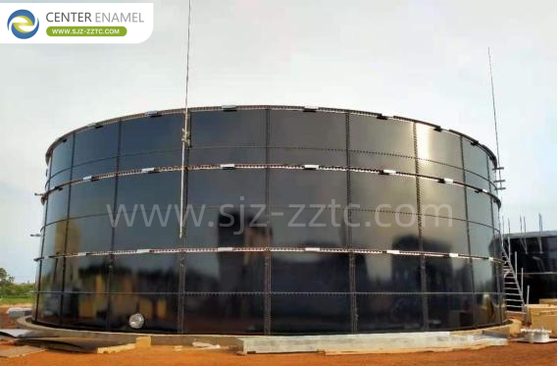
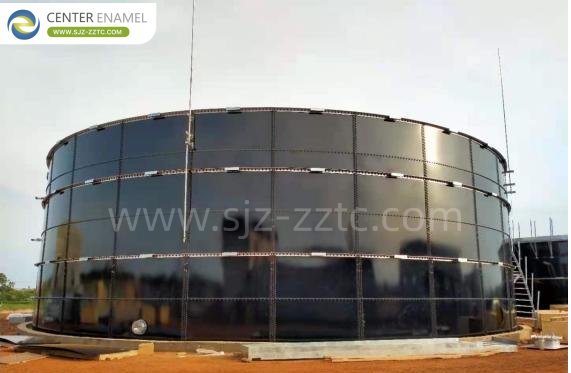
Glass-Fused-to-Steel (GFS) tanks manufactured by Center Enamel represent the optimal storage solution for Japanese biogas projects. The unique manufacturing process, fusing glass to steel at 820-930°C, creates an inert surface that resists the aggressive chemical environment of swine wastewater treatment. This technology has proven particularly valuable in Japan, where the long service life and minimal maintenance requirements align with the country's focus on sustainable infrastructure.
Center Enamel's GFS tanks meet rigorous international standards, including ISO 28765 and AWWA D103-09, ensuring reliability in demanding applications. The tanks' modular design facilitates efficient installation in Japan's often space-constrained sites while maintaining structural integrity under seismic loads. With over 30 years of proven performance and compliance with international standards including NSF/ANSI 61 and WRAS, these tanks provide the durability and safety required for Japanese environmental applications.
Center Enamel's comprehensive product portfolio addresses various Japanese project requirements and budget considerations. GFS tanks offer the premium solution with unmatched corrosion resistance, making them ideal for aggressive anaerobic digestion environments. Galvanized steel tanks provide a cost-effective alternative with durable protective coatings, suitable for less demanding applications requiring reliable corrosion protection.
Fusion Bonded Epoxy (FBE) tanks, developed with AkzoNobel, deliver innovative coating technology for challenging industrial applications. For applications requiring exceptional purity or operating in extremely harsh environments, Center Enamel provides high-quality AISI 304/316 stainless steel tanks. This diverse product range ensures appropriate solutions for various application requirements across Japan's swine industry.
Center Enamel provides multiple tank cover options engineered for Japanese project requirements. The Aluminum Geodesic Dome Roof offers excellent corrosion resistance and expansive clear span capability, with minimal maintenance costs. For air-tight applications, the Glass-Fused-to-Steel Roof provides pressurized operation with odor control, featuring durable cone-shaped designs suitable for demanding applications.
For biogas collection and anaerobic digestion applications, the Single and Double Membrane Roof solutions provide superior air-tightness. The Aluminum Alloy Trough Deck Roof offers economical protection against Japan's diverse weather conditions, including heavy snowfall. Stainless steel roofs deliver exceptional corrosion resistance for harsh environments, while FRP roofs provide practical solutions for non-air-tight applications.
A complete treatment system includes essential support equipment working in coordination. Ground Type Gas Holders provide biogas storage, while emergency torches ensure safe flaring when required. Dehydration and desulfurization systems remove moisture and hydrogen sulfide, protecting downstream equipment and optimizing biogas quality for energy utilization.
Solid-liquid separators play a vital role in primary treatment, reducing suspended solids and protecting subsequent biological processes. Submersible mixers maintain solids suspension in storage tanks, while lifting pumps ensure reliable flow through treatment trains. These components integrate seamlessly with the main treatment processes to ensure consistent, reliable operation throughout the year.
Center Enamel serves as a comprehensive solution provider for Japanese swine wastewater treatment projects. The company offers complete project services, from engineering design through equipment manufacturing and construction, ensuring seamless project execution. Key advantages include:
Extensive global experience with successful wastewater and biogas projects across diverse climates and industries. Their comprehensive service model includes design, procurement, construction, commissioning, and ongoing support, providing turnkey solutions that meet Japanese quality standards.
Technical excellence through their advanced manufacturing center, with annual production capacity supporting projects of any scale. International certifications including ISO 9001:2015, ISO 14001:2015, WRAS, NSF, and EN ISO 28765 provide assurance of quality and environmental compliance, essential for Japanese regulatory requirements.
Swine wastewater treatment in Japan demands sophisticated solutions combining advanced technology with robust equipment capable of operating in challenging climatic conditions. GFS Tanks and Biogas Plant Design innovations are enabling Japanese farms to achieve sustainable wastewater management while generating valuable renewable energy. Center Enamel's comprehensive solutions, combining UASB technology with high-quality storage equipment, provide the reliability and performance needed to meet Japan's stringent environmental standards while advancing circular economy principles in agriculture.