-
Glass Fused To Steel Tanks (734)
-
Stainless Steel Tanks (434)
-
Fusion Bonded Epoxy Tanks (592)
-
Galvanized Steel Tanks (321)
-
Aluminum Dome Roofs (1336)
-
Wastewater Storage Tanks (237)
-
Welded Steel Tanks (457)
-
Pressure Vessels (295)
-
Anaerobic Digester (202)
-
Industrial Water Tanks (349)
-
Glass Lined Steel Tanks (180)
-
Bolted Steel Tanks (389)
-
Sludge Storage Tank (115)
-
Biogas Storage Tank (173)
-
Leachate Storage Tanks (133)
-
Agricultural Water Storage Tanks (179)
-
Fire Water Tank (166)
-
Grain Storage Silos (146)
-
Biogas Projects (424)
-
Wastewater Treatment Projects (1430)
-
Double Membrane Roof (223)


|
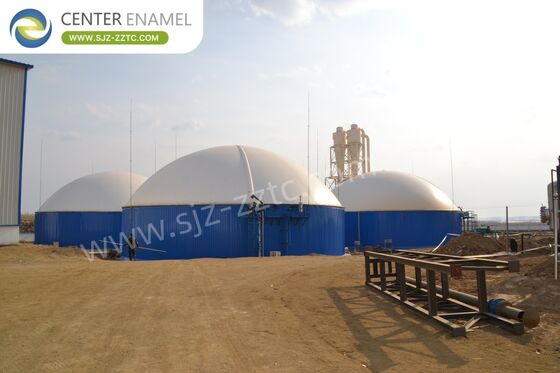
GFS Tanks and Anaerobic Digestion for Papua New Guinea Palm Oil Wastewater Treatment
| Place of Origin: | China |
| Brand Name: | CEC TANKS |
| Certification: | ISO 9001:2008, AWWA D103 , OSHA , BSCI |
| Model Number: | W |
| Minimum Order Quantity: | 1set |
| Price: | $5000~$20000 one set |
| Packaging Details: | PE poly-foam between each two steel plates ; wooden pallet and wooden |
| Delivery Time: | 10-30 days after deposit received |
| Payment Terms: | L/C,T/T |
| Supply Ability: | 60 sets per month |
|
Detail Information |
|||
| Place of Origin | China | Brand Name | CEC TANKS |
|---|---|---|---|
| Certification | ISO 9001:2008, AWWA D103 , OSHA , BSCI | Model Number | W |
| Tank Body Color: | Dark Green / Can Be Customized | Corrosion Integrity: | Excellent |
| Steel Plates Thickness: | 3mm To 12mm , Depends On The Tank Structure | Chemical Resistance: | Excellent |
| Size Of Panel: | 2.4M * 1.2M | Easy To Clean: | Smooth, Glossy, Inert, Anti-adhesion |
| Highlight: | GFS tanks for palm oil wastewater,anaerobic digestion wastewater treatment,palm oil wastewater treatment projects |
||
Product Description
Papua New Guinea's emerging palm oil industry presents unique opportunities for sustainable development, with palm oil mills operating across the country seeking effective Palm Oil Mill Effluent (POME) treatment solutions. As the industry expands, the need for efficient anaerobic digestion systems becomes critical. This article examines how Glass-Fused-to-Steel (GFS) Tanks and advanced Anaerobic Digestion technologies provide comprehensive treatment solutions for Papua New Guinea's palm oil mills, enabling environmental compliance, renewable energy generation, and economic returns.
Papua New Guinea's palm oil industry, with mills located primarily in coastal regions, generates significant POME during oil extraction. The processing of fresh fruit bunches through rinsing, pressing, and clarification stages produces wastewater characterized by high organic content, with COD typically ranging from 44,000 to 83,000 ppm and BOD from 14,000 to 34,000 ppm. The acidic nature of POME (pH 3.5–4.2) and elevated temperatures of 60–80°C require specialized treatment systems. With each ton of fresh fruit bunches processed generating approximately 0.7 to 1 m³ of POME, effective management is essential for protecting PNG's pristine water resources, particularly given the country's high biodiversity and sensitive coastal ecosystems.
POME treatment in Papua New Guinea follows an established process that ensures environmental compliance while recovering valuable energy. Initial pretreatment involves mechanical bar screens and oil separators that remove large suspended solids, floating debris, and grease. Regulating tanks balance flow fluctuations, temperature, and pH to create consistent conditions for anaerobic digestion. The conditioned wastewater then enters the anaerobic digester for biological treatment in an oxygen-free environment. Studies in Papua New Guinea have identified three main treatment options: Anaerobic Digester Tank (ADT) systems, Covered Lagoon (CL) systems with biogas capture, and traditional Open Pond (OP) systems. While OP systems require extensive land area, ADT and CL systems effectively capture biogas for energy generation, offering both environmental and economic benefits.
Anaerobic digestion is the preferred technology for POME treatment, with the UASB process offering proven high-rate treatment for Papua New Guinea's mills. In UASB reactors, wastewater flows upward through a dense granular sludge bed where microorganisms efficiently convert organic pollutants into methane-rich biogas, achieving over 90% COD removal at hydraulic retention times as low as 5 days. The biodegradability index of POME (BOD/COD typically exceeding 0.45) confirms its suitability for biological treatment. For mills with high solids content, the USR process provides an effective alternative, maintaining a dense sludge bed using upflow hydraulic mixing without mechanical stirring. Research has shown that under optimized conditions, methane yields can reach up to 559.80 mL-CH₄/g-VS, representing approximately 2.68 times higher production than non-optimized conditions.
Glass-Fused-to-Steel (GFS) Tanks provide the ideal containment solution for POME treatment systems in Papua New Guinea's challenging tropical environment. Manufactured through a fusion process at 830–850°C, GFS tanks create a hard, inert barrier that is impermeable to liquids and vapours, offering excellent impact and abrasion resistance. The GFS coating exhibits strong resistance to algae and bacterial growth and is unaffected by UV rays. Their modular, bolted assembly enables fast on-site erection without welding, particularly advantageous for PNG's remote mill locations. With decades of field-proven performance and over 100,000 installations globally, GFS tanks provide long-term durability and minimal maintenance requirements.
Papua New Guinea's palm oil mills benefit from diverse storage and cover solutions tailored to specific treatment requirements. Center Enamel offers GFS Tanks providing superior corrosion resistance for aggressive environments. Galvanized Steel Tanks deliver tough, wear-resistant protection through a galvanizing process. Fusion Bonded Epoxy (FBE) Tanks, developed with AkzoNobel, provide innovative coating technology. High-quality AISI 304/316 Stainless Steel Tanks meet stringent requirements for demanding applications. Cover options include Aluminum Geodesic Dome Roofs for corrosion resistance and broad span capabilities; Glass-Fused-to-Steel Roofs for air-tight pressurized structures suitable for odor control; Single and Double Membrane Roofs optimized for anaerobic digestion and biogas collection; Aluminum Alloy Trough Deck Roofs for economical water storage; Stainless Steel Roofs for superior anti-corrosion performance; and FRP Roofs for non-air-tight applications.
Comprehensive POME treatment requires integrated supporting equipment for reliable operation. Gas Holders provide safe, dependable biogas storage for energy utilization. Lagoons/Black Membrane systems offer economical large-capacity storage. Hot Water Boilers maintain optimal digestion temperatures. Emergency Torch Systems ensure safe biogas pressure management. Lifting Pumps handle high-solid wastewater effectively. Dehydration and Desulfurization Tanks purify biogas by removing moisture and hydrogen sulfide. Screw Sludge Dewatering Machines provide efficient solid-liquid separation. Each component contributes to a complete treatment system that maximizes energy recovery and minimizes environmental impact.
Center Enamel serves as a trusted EPC Contractor providing comprehensive POME treatment solutions for Papua New Guinea's palm oil industry. The company delivers complete turnkey services encompassing engineering design, procurement, construction, and commissioning. With certifications including CE/EN1090, ISO 9001, NSF61, WRAS, and EN28765, quality assurance is maintained throughout project execution. Design standards incorporate AWWA D103, OSHA, EN28765, and EuroCode requirements. Center Enamel's comprehensive approach includes:
- Site assessment and characterization studies adapted to PNG's tropical conditions
- Selection of appropriate anaerobic technology (UASB or USR)
- Detailed engineering of reactors, tanks, and auxiliary systems
- Civil and mechanical construction management
- Equipment installation and system integration
- Biological startup and performance testing
- Operator training for ongoing operation
- Comprehensive after-sales support
Palm oil mill effluent treatment in Papua New Guinea represents an important opportunity for sustainable development. GFS Tanks provide robust containment for anaerobic digestion with exceptional corrosion resistance and rapid installation. Anaerobic technologies achieve high organic removal efficiency while producing biogas for power generation. As a professional EPC Contractor, Center Enamel delivers complete one-stop solutions enabling PNG's palm oil mills to meet environmental regulations, generate renewable energy, and create long-term economic value through the circular economy approach to organic waste management.