-
Glass Fused To Steel Tanks (617)
-
Stainless Steel Tanks (434)
-
Fusion Bonded Epoxy Tanks (592)
-
Galvanized Steel Tanks (321)
-
Aluminum Dome Roofs (1336)
-
Wastewater Storage Tanks (237)
-
Welded Steel Tanks (457)
-
Pressure Vessels (295)
-
Anaerobic Digester (202)
-
Industrial Water Tanks (349)
-
Glass Lined Steel Tanks (180)
-
Bolted Steel Tanks (389)
-
Sludge Storage Tank (115)
-
Biogas Storage Tank (173)
-
Leachate Storage Tanks (133)
-
Agricultural Water Storage Tanks (179)
-
Fire Water Tank (166)
-
Grain Storage Silos (146)
-
Biogas Projects (424)
-
Wastewater Treatment Projects (1303)
-
Double Membrane Roof (223)


|
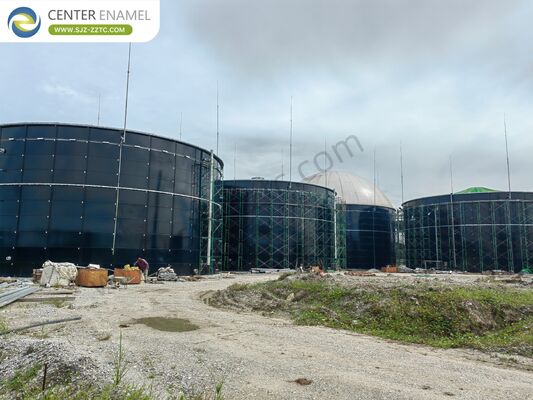
Reliable Biogas Power Plant and GFS Tanks for Solid Waste to Biogas in Thailand
| Place of Origin: | China |
| Brand Name: | CEC TANKS |
| Certification: | ISO 9001:2008, AWWA D103 , OSHA , BSCI |
| Model Number: | W |
| Minimum Order Quantity: | 1set |
| Price: | $5000~$20000 one set |
| Packaging Details: | PE poly-foam between each two steel plates ; wooden pallet and wooden |
| Delivery Time: | 10-30 days after deposit received |
| Payment Terms: | L/C,T/T |
| Supply Ability: | 60 sets per month |
|
Detail Information |
|||
| Place of Origin | China | Brand Name | CEC TANKS |
|---|---|---|---|
| Certification | ISO 9001:2008, AWWA D103 , OSHA , BSCI | Model Number | W |
| Tank Body Color: | Dark Green / Can Be Customized | Corrosion Integrity: | Excellent |
| Steel Plates Thickness: | 3mm To 12mm , Depends On The Tank Structure | Chemical Resistance: | Excellent |
| Size Of Panel: | 2.4M * 1.2M | Easy To Clean: | Smooth, Glossy, Inert, Anti-adhesion |
| Highlight: | biogas power plant for solid waste,GFS tanks for biogas production,wastewater treatment biogas plant Thailand |
||
Product Description
Thailand faces growing challenges in managing solid waste from municipal, agricultural, and industrial sources, with organic waste from palm oil mills, cassava processing plants, livestock farms, and food processing industries generating substantial environmental concerns. Converting solid waste into biogas through advanced anaerobic digestion offers a sustainable solution for waste management and renewable energy production. This article explores how professional Biogas Power Plant solutions and premium GFS Tanks provide integrated systems for transforming solid waste into valuable biogas energy across Thailand.
Solid waste in Thailand consists primarily of municipal solid waste (MSW) generated in urban areas like Bangkok, Chiang Mai, and Khon Kaen, alongside significant agricultural and industrial organic waste streams. Traditional waste treatment methods have relied on landfilling and incineration, which generate substantial environmental burdens—studies show that landfilling is the major contributor to environmental impact for Thailand's waste management. The adoption of mechanical-biological treatment with incineration (S3) resulted in emissions of 0.519–0.568 t-CO₂-Eq. per functional unit. Conventional disposal practices create environmental and public health concerns, with decomposing organic matter releasing methane, a potent greenhouse gas, while producing toxic leachate that contaminates soil and groundwater. These challenges have prompted Thai authorities to seek sustainable alternatives that transform solid waste into biogas through modern anaerobic digestion technology.
The biological conversion of solid waste into biogas follows a sophisticated anaerobic digestion pathway involving four essential stages performed by specialized microorganisms. The process begins with hydrolysis, where microorganisms secrete enzymes to break down complex organic polymers in solid waste—such as cellulose, starch, and protein—into soluble monomers. During acidogenesis, acid-forming bacteria convert these soluble substances into volatile fatty acids and alcohols. The acetogenesis stage transforms these intermediates into acetic acid, hydrogen, and carbon dioxide. Finally, methanogenic archaea convert these substrates into biogas, typically containing 55–70% methane. This biological process offers transformative benefits for Thailand's waste management landscape. Capturing biogas enables renewable electricity generation—Thailand's integrated MSW treatment scenarios show energy generation improvements of 69–201% compared to baseline scenarios. The nutrient-rich digestate serves as organic fertilizer, supporting Thailand's agricultural sector while closing the nutrient cycle.
The Continuous Stirred-Tank Reactor (CSTR) serves as the fundamental processing unit for converting solid waste into biogas through advanced anaerobic digestion. This technology operates by maintaining fermentation materials and microorganisms in a completely mixed state within a sealed reactor, ensuring optimal contact between organic substrate and the microbial community. The CSTR system incorporates mechanical stirring devices that continuously agitate the reactor contents, creating uniform distribution of nutrients, temperature, and pH conditions throughout the reactor. CSTR systems prevent stratification and crusting, making them highly suitable for high-solid and high-viscosity organic waste characteristic of Thai agricultural and municipal solid waste. Research shows that CSTR systems effectively degrade high-suspended-solids organic matter, with the continuous feeding approach maintaining stable fermentation conditions and delivering consistent biogas yields.
Glass-Fused-to-Steel (GFS) tanks represent the premium coating technology for biogas storage and digestion applications, delivering the combined benefits of steel's structural strength and glass's exceptional corrosion resistance. The manufacturing process involves firing at approximately 820°C–930°C, creating an inert, inorganic bond that forms a double coating layer on both interior and exterior surfaces. This technology provides superior protection against the corrosive environment of anaerobic digestion while offering operational lifespans exceeding 30 years with minimal maintenance requirements. The Double Membrane Roof is the preferred solution for biogas power plant applications under normal working conditions. Advantages include direct cost reduction compared to traditional roofs, significant floor area savings by eliminating ground-mounted gas holders, and integrated gas storage directly atop the GFS tank. Double membrane roofs achieve 99.9% methane containment with 15–20+ year service life, making them essential for safety and environmental compliance.
- Aluminum Geodesic Dome Roof offers advanced corrosion resistance and expansive clear span capability with efficient, cost-effective construction and minimal maintenance needs.
- Glass-Fused-to-Steel Roof delivers air-tightness for pressurized structures with cone-shaped design incorporating external and internal beams for demanding applications requiring superior corrosion protection.
- Single and Double Membrane Roof systems provide superior options for anaerobic digestion with integrated design offering cost-effective solutions for biogas collection and odor control.
- Aluminum Alloy Trough Deck Roof serves as an economical option for water storage applications, effectively protecting against rain and wind without air-tightness requirements.
- Stainless Steel Roof offers exceptional anti-corrosion performance and extended service life for harsh environments with air-tightness suitable for pressurized structures.
- FRP Roof provides practical solutions for non-air-tight applications including drinking water, agriculture, fire water, and wastewater storage.
- Gas Holders provide essential storage capacity for biogas generated during anaerobic digestion, balancing supply with fluctuating demand from power generation equipment.
- Solid-liquid Separators process digestate material to separate liquid fertilizer from solid components—both of which have agricultural value for Thai farms.
- Torch Systems ensure safe biogas combustion during maintenance or excess gas production periods, automatically burning excess biogas to prevent unsafe pressure buildup.
- Lifting Pumps facilitate consistent wastewater transfer throughout the treatment system, moving feedstock from collection tanks to the CSTR and recirculating digestate for mixing and heating.
- Dehydration and Desulfurization Tanks purify raw biogas by removing moisture and corrosive hydrogen sulfide, ensuring clean energy output and protecting downstream power generation equipment.
- Screw Sludge Dewatering Machines efficiently manage residual solids, reducing waste volumes and preparing materials for fertilizer production or final disposal.
- Complete EPC Capabilities delivers integrated engineering, procurement, and construction services ensuring seamless project execution from conceptual design through commissioning.
- Customized Engineering Design conducts on-site assessments to match anaerobic processes, tank sizes, and system layouts with waste characteristics and energy demand for Thailand's diverse conditions.
- International Certifications including CE/EN1090, ISO9001, NSF61, and AWWA D103 guarantee compliance with global standards for safety and performance.
- Diverse Product Portfolio encompassing GFS tanks, multiple roof options, and all supporting biogas equipment enables comprehensive system delivery from a single, reliable source.
- Proven Longevity with GFS tanks offering operational lifespans exceeding 30 years and minimal maintenance requirements—exceptional value for Thailand's long-term infrastructure investments.
- Regional Experience with successful biogas project delivery across Thailand, including distillers grains biogas projects and agricultural waste applications, providing valuable knowledge of local conditions and waste characteristics.
The transformation of solid waste into biogas using GFS tanks and comprehensive Biogas Power Plant solutions offers Thailand a practical pathway to address critical waste management challenges while generating renewable energy. By diverting organic waste from landfills and incineration, this approach reduces greenhouse gas emissions, produces valuable energy resources, and creates nutrient-rich fertilizer from digestate. Studies confirm that integrated waste treatment with anaerobic digestion provides environmental credits and reduces carbon footprints compared to conventional methods. The combination of CSTR technology, premium GFS tanks, and comprehensive supporting equipment ensures efficient and reliable biogas power generation for Thailand's sustainable energy future.