-
Glass Fused To Steel Tanks (596)
-
Stainless Steel Tanks (434)
-
Fusion Bonded Epoxy Tanks (592)
-
Galvanized Steel Tanks (321)
-
Aluminum Dome Roofs (1336)
-
Wastewater Storage Tanks (232)
-
Welded Steel Tanks (457)
-
Pressure Vessels (295)
-
Anaerobic Digester (202)
-
Industrial Water Tanks (349)
-
Glass Lined Steel Tanks (180)
-
Bolted Steel Tanks (389)
-
Sludge Storage Tank (115)
-
Biogas Storage Tank (173)
-
Leachate Storage Tanks (133)
-
Agricultural Water Storage Tanks (179)
-
Fire Water Tank (166)
-
Grain Storage Silos (146)
-
Biogas Projects (424)
-
Wastewater Treatment Projects (1228)
-
Double Membrane Roof (223)

|
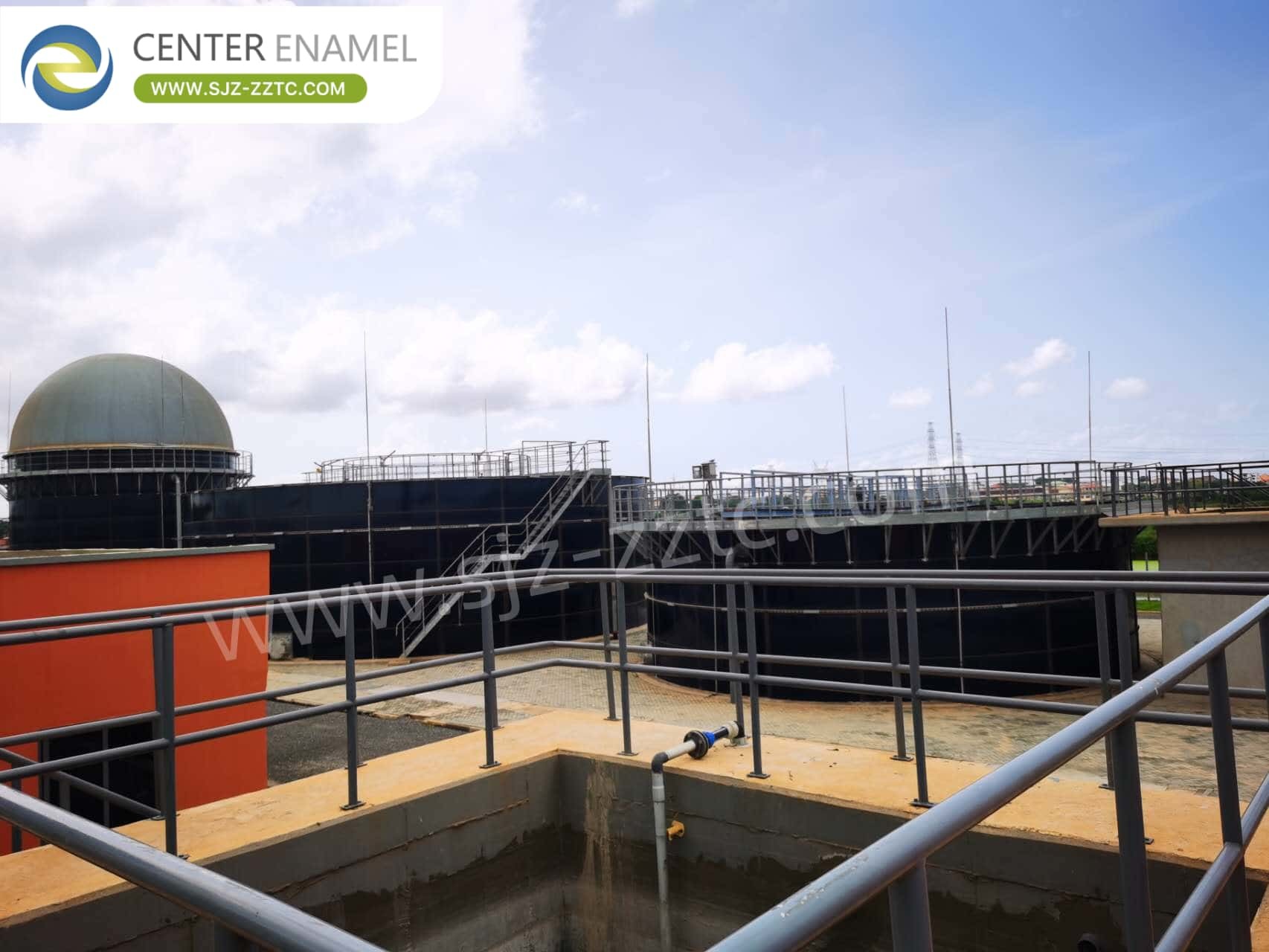
Sustainable Cow Dung Biogas Solutions in Australia with GFS Tanks and CSTR Technology
| Place of Origin: | China |
| Brand Name: | CEC TANKS |
| Certification: | ISO 9001:2008, AWWA D103 , OSHA , BSCI |
| Model Number: | W |
| Minimum Order Quantity: | 1set |
| Price: | $5000~$20000 one set |
| Packaging Details: | PE poly-foam between each two steel plates ; wooden pallet and wooden |
| Delivery Time: | 10-30 days after deposit received |
| Payment Terms: | L/C,T/T |
| Supply Ability: | 60 sets per month |
|
Detail Information |
|||
| Place of Origin | China | Brand Name | CEC TANKS |
|---|---|---|---|
| Certification | ISO 9001:2008, AWWA D103 , OSHA , BSCI | Model Number | W |
| Tank Body Color: | Dark Green / Can Be Customized | Corrosion Integrity: | Excellent |
| Steel Plates Thickness: | 3mm To 12mm , Depends On The Tank Structure | Chemical Resistance: | Excellent |
| Size Of Panel: | 2.4M * 1.2M | Easy To Clean: | Smooth, Glossy, Inert, Anti-adhesion |
| Highlight: | sustainable cow dung biogas solutions,biogas solutions with GFS tanks,CSTR technology biogas solutions |
||
Product Description
Sustainable Cow Dung Biogas Solutions in Australia with GFS Tanks and CSTR Technology
Australia's extensive dairy and beef industries generate significant manure volumes, presenting environmental challenges that can be turned into renewable energy opportunities. This article examines how modern anaerobic digestion, driven by the CSTR process and durable GFS Tanks, converts cow dung into biogas and valuable fertilizer. It outlines the comprehensive Cow Dung Treatment solutions offered by a professional Biogas Solution Provider, covering the full project spectrum from waste reception and biological digestion to gas purification, energy generation, and digestate management for sustainable agricultural operations.
Addressing Australia's Livestock Waste Management Challenge
Australia is a global leader in beef and dairy production, with cattle grazing across vast expanses from the tropical north to the temperate south. States such as Queensland, New South Wales, and Victoria host large-scale feedlots and dairy farms that produce enormous quantities of manure daily. While this waste is a natural byproduct of agricultural productivity, its management poses significant environmental challenges. Uncontrolled manure storage leads to the release of methane and nitrous oxide—potent greenhouse gases—while nutrient runoff contaminates waterways and contributes to algal blooms. Odor emissions affect nearby communities, and the accumulation of pathogens presents health risks. Furthermore, Australia's variable climate, with its cycles of drought and flood, complicates traditional manure management methods. There is growing recognition within the agricultural sector that modern Cow Dung Treatment technologies offer a solution, transforming a liability into a valuable resource for on-farm energy generation and soil fertility improvement.
The Biogas Conversion Process in Detail
The transformation of cow dung into biogas follows a systematic process designed to maximize efficiency and product quality. The process begins with feedstock collection and preparation, where manure is gathered from feedlots or dairy sheds and conveyed to a mixing area. Here, it is combined with water or recycled process liquid to create a pumpable slurry with a consistent solids content, essential for smooth operation. This homogenized mixture then passes through a mechanical bar screen to remove inorganic debris such as stones, sand, and bedding material that could abrade or block equipment. The prepared substrate is continuously fed into the anaerobic digester, where the biological process occurs in a temperature-controlled, oxygen-free environment. Over a retention period of approximately 15 to 30 days, a complex microbial community breaks down the organic matter, producing biogas. The biogas is collected from the top of the tank and directed to a gas treatment unit where moisture and hydrogen sulfide are removed, ensuring suitability for combustion. The treated gas is then stored in a gas holder before use. Concurrently, the digestate is discharged from the reactor; after processing through a solid-liquid separator, the solid fraction can be composted or used as bedding, while the liquid fraction, rich in plant nutrients, is stored for application to crops as a bio-fertilizer, closing the nutrient loop.
The Core Technology: CSTR Anaerobic Digester
At the heart of modern biogas facilities is the Continuous Stirred-Tank Reactor (CSTR), an advanced anaerobic treatment technology specifically designed for high-solids and high-concentration substrates like cow dung. The CSTR is a sealed, insulated tank equipped with a mechanical stirring system that operates continuously to maintain a completely mixed environment. This constant agitation ensures that the incoming feedstock, active microbial population, and nutrients are uniformly distributed, preventing dead zones, eliminating stratification, and maintaining a consistent temperature profile. By operating at a carefully controlled temperature, typically in the mesophilic range of 35-38°C or thermophilic range of 50-55°C, the CSTR creates optimal conditions for methanogenic bacteria, resulting in high biogas yields and stable, predictable production rates. The CSTR is a core processing unit that converts organic waste into biogas and digestate through the action of anaerobic microorganisms. This stage not only achieves waste reduction and stabilization, but also generates renewable energy - biogas. Its robust design and continuous feeding regime make it particularly well-suited for the intensive operations common in Australian feedlots and large dairy farms.
Critical Infrastructure: GFS Tanks and Double Membrane Roof
GFS Tanks, or Glass-Fused-to-Steel tanks, represent the gold standard for containment in biogas applications, providing a durable and long-lasting solution for anaerobic digesters and storage vessels. These tanks are manufactured through a high-temperature enameling process where specialized glass coating is fused to steel panels at temperatures between 820°C and 930°C. This fusion creates an inert, inorganic bond that combines the strength, resilience, and flexibility of steel with the outstanding corrosion resistance of glass. The resulting surface is smooth, non-porous, and highly resistant to the acidic conditions, organic acids, and abrasive slurries present in anaerobic digesters, ensuring integrity over decades of operation with minimal maintenance. GFS Tanks are engineered to meet stringent international design standards and offer a superior containment solution for Australia's varying climatic conditions. Coupled with Double Membrane Roofs, the system provides complete air-tightness essential for biogas collection, odor control, and safe gas storage. This roof design functions as an integrated gas holder, dynamically adjusting its volume to accommodate fluctuations in biogas production, thereby eliminating the need for separate gas storage infrastructure and significantly reducing the project's land and capital requirements.
Diverse Storage and Cover Solutions
Center Enamel offers a broad portfolio of alternative storage tanks and roof covers, providing flexibility to meet the specific needs of different project environments and budget considerations:
Storage Tank Types:
- Galvanized Steel Tanks: Using a hot-dip galvanizing process, these tanks receive a tough, wear-resistant protective coating that offers reliable corrosion resistance for various liquid storage applications.
- Fusion Bonded Epoxy Tanks: Developed with AkzoNobel, these tanks feature an innovative FBE coating that provides excellent chemical resistance and a smooth, cleanable surface, suitable for specific water and wastewater applications.
- Stainless Steel Tanks: Manufactured from high-grade AISI 304 and 316 stainless steel, these tanks are designed for demanding environments requiring exceptional corrosion resistance and purity.
Cover Systems:
- Aluminum Geodesic Dome Roofs: Featuring advanced corrosion resistance and expansive clear span capability, these lightweight structures provide cost-effective, low-maintenance coverage.
- Glass-Fused-to-Steel Roofs: Providing air-tightness and suitable for pressurized structures with effective odor control.
- Aluminum Alloy Trough Deck Roofs: A cost-effective option for weather protection and odor control where complete air-tightness is not required.
- Stainless Steel Roofs: Offering superior corrosion resistance, air-tightness, and long service life for harsh environments.
- FRP Roofs: Versatile covers, available in dome or flat designs, suitable for applications not requiring air-tightness.
Comprehensive Biogas Ancillary Equipment
A complete biogas plant relies on a range of supporting equipment for efficient and safe operation. Center Enamel supplies all necessary components, including Gas Holders for temporary gas storage, Black Membrane covers for storage ponds, Solid-Liquid Separators for digestate processing, and Torch Systems for safe flaring of excess biogas. Additional equipment includes Lifting Pumps for slurry transfer, Dehydration and Desulfurization Tanks to condition raw biogas by removing moisture and corrosive gases, and Screw Sludge Dewatering Machines for effective sludge volume reduction. This comprehensive equipment suite ensures integrated, efficient plant performance from waste reception to energy production.
Center Enamel: Your Complete Biogas Solution Provider
Choosing the right partner is critical for the success of any biogas project. Center Enamel stands as a leading Biogas Solution Provider with extensive experience in delivering turnkey solutions across Australia and worldwide. Our commitment to quality and innovation provides distinct advantages:
- Manufacturing Leadership: As the largest manufacturer of GFS Tanks in Asia, we have a production capacity of 250,000 sheets per year, enabling us to deliver equipment for projects of any scale with reliable supply and quality.
- International Certifications: Our products meet the highest global standards, including CE/EN1090, ISO 9001, ISO 14001, NSF/ANSI 61, WRAS, and EN/ISO 28765. Designs comply with AWWA D103, OSHA, and EuroCode, ensuring safety, quality, and compliance.
- Proprietary Coating Technology: As one of the few manufacturers producing its own enamel frit, we maintain strict quality control over our glass coatings. Our patented two-coat, two-firing process delivers superior adhesion and extended tank service life.
- Integrated EPC Services: As a complete Biogas Solution Provider, we offer full turnkey engineering, procurement, and construction services. From initial feasibility studies and detailed engineering to manufacturing, logistics, and on-site supervision, we manage the entire project lifecycle to ensure success.
Australia's livestock sector faces a significant waste management challenge that also represents a substantial renewable energy opportunity. Through the adoption of advanced anaerobic digestion technologies like the CSTR process and the use of durable GFS Tanks, cow dung can be efficiently transformed into clean biogas and valuable fertilizer. Center Enamel, as a professional Biogas Solution Provider, brings the technology, expertise, and infrastructure necessary to support Australian farmers and producers in achieving environmental sustainability, energy independence, and economic benefit from their agricultural waste.
FAQs
1. How does anaerobic digestion help reduce greenhouse gas emissions?
Anaerobic digestion captures methane that would otherwise be released into the atmosphere from decomposing manure and converts it into a usable fuel. This methane, when burned for energy, is converted to carbon dioxide, which has a much lower global warming potential, thereby significantly reducing the farm's overall greenhouse gas footprint.
2. Can biogas be used for electricity generation on farms?
Yes, biogas can be used to fuel combined heat and power (CHP) generators or microturbines to produce electricity and heat. The electricity can power farm operations, reducing reliance on the grid, and surplus power can often be sold back to the local electricity network, creating an additional revenue stream.
3. What is the fertilizer value of the digestate from cow dung?
The digestate produced from anaerobic digestion retains all the essential plant nutrients from the original manure—particularly nitrogen, phosphorus, and potassium—in a form that is more readily available to plants. It also improves soil structure, water retention, and biological activity, making it a superior organic fertilizer compared to raw manure.