-
Glass Fused To Steel Tanks (596)
-
Stainless Steel Tanks (434)
-
Fusion Bonded Epoxy Tanks (592)
-
Galvanized Steel Tanks (321)
-
Aluminum Dome Roofs (1336)
-
Wastewater Storage Tanks (232)
-
Welded Steel Tanks (457)
-
Pressure Vessels (295)
-
Anaerobic Digester (202)
-
Industrial Water Tanks (349)
-
Glass Lined Steel Tanks (180)
-
Bolted Steel Tanks (389)
-
Sludge Storage Tank (115)
-
Biogas Storage Tank (173)
-
Leachate Storage Tanks (133)
-
Agricultural Water Storage Tanks (179)
-
Fire Water Tank (166)
-
Grain Storage Silos (146)
-
Biogas Projects (424)
-
Wastewater Treatment Projects (1228)
-
Double Membrane Roof (223)


|
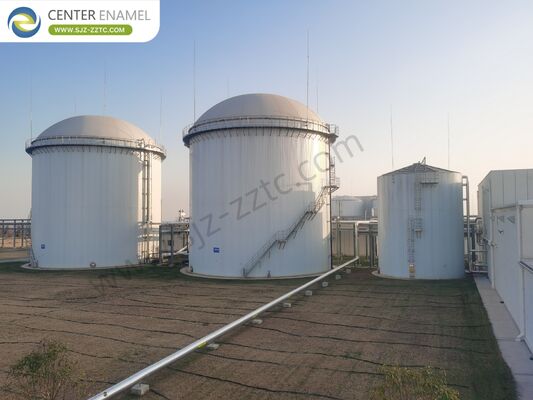
Advanced Biogas Plant Project Design and GFS Tanks for Sudan Sugarcane Bagasse Treatment
| Place of Origin: | China |
| Brand Name: | CEC TANKS |
| Certification: | ISO 9001:2008, AWWA D103 , OSHA , BSCI |
| Model Number: | W |
| Minimum Order Quantity: | 1set |
| Price: | $5000~$20000 one set |
| Packaging Details: | PE poly-foam between each two steel plates ; wooden pallet and wooden |
| Delivery Time: | 10-30 days after deposit received |
| Payment Terms: | L/C,T/T |
| Supply Ability: | 60 sets per month |
|
Detail Information |
|||
| Place of Origin | China | Brand Name | CEC TANKS |
|---|---|---|---|
| Certification | ISO 9001:2008, AWWA D103 , OSHA , BSCI | Model Number | W |
| Tank Body Color: | Dark Green / Can Be Customized | Corrosion Integrity: | Excellent |
| Steel Plates Thickness: | 3mm To 12mm , Depends On The Tank Structure | Chemical Resistance: | Excellent |
| Size Of Panel: | 2.4M * 1.2M | Easy To Clean: | Smooth, Glossy, Inert, Anti-adhesion |
| Highlight: | biogas plant design for sugarcane bagasse,GFS tanks for wastewater treatment,biogas project Sudan with warranty |
||
Product Description
This article explores the implementation of advanced biogas engineering solutions in Sudan to tackle complex agricultural waste management challenges. By utilizing high-durability GFS tanks and optimized anaerobic digestion workflows, agricultural facilities can efficiently transform raw biomass waste into valuable renewable energy. This comprehensive approach advances environmental protection while strengthening local energy security. Discover how modern engineering technologies empower sustainable waste processing and resource recovery across industrial installations.
Sugarcane bagasse represents a major fibrous byproduct generated during sugar milling and cane juice extraction operations. In Sudan, the prominent commercial status of the sugar industry results in massive volumes of residual bagasse that require careful environmental management. Primary challenges include the risk of spontaneous combustion in poorly managed storage stockpiles, high disposal costs, and the missed opportunity of recovering clean energy from rich organic matter. Overcoming these hurdles demands advanced, engineered waste management strategies. Traditional burning or open dumping practices fail to capture the valuable energy embedded within the fibrous biomass. Effective sugarcane bagasse treatment is therefore crucial to minimize environmental footprints while converting an operational liability into a sustainable economic asset for the agricultural sector.
The conversion of agricultural biomass into renewable biogas relies on a sophisticated biological breakdown mechanism known as anaerobic digestion, executed by specialized microbial consortia in an oxygen-free environment. When pretreated biomass feedstock is introduced into a closed, temperature-controlled vessel, these microorganisms metabolize complex polysaccharides, systematically breaking down structural polymers into simpler gaseous components, primarily methane and carbon dioxide. Beyond energy generation, this biochemical stabilization process effectively eliminates harmful pathogens, producing a sanitized and environmentally safe effluent. The overall success of this conversion process is governed by several critical parameters, including optimal substrate loading rates, maintained alkalinity, and precise internal temperature management. By sustaining these parameters, anaerobic digestion systems deliver a consistent and predictable output of high-energy biogas. This transformation embodies a true circular economy model, capturing clean fuel from what was once discarded waste.
Following the primary anaerobic fermentation process, the raw biogas must undergo a rigorous purification and conditioning stage to ensure safe and efficient downstream utilization. Raw biogas generally contains unwanted moisture vapor and corrosive hydrogen sulfide impurities, both of which must be extracted to prevent mechanical wear and extend the lifespan of utilization equipment. Specialized dehydration units and desulfurization towers are integrated into the process flow to clean the gas, which is subsequently measured and routed into secure gas storage holders. The fully treated biogas is then ready for diverse applications. It can be burned directly within industrial boilers to supply thermal energy for farm operations or local processing plants, or utilized in combined heat and power generators to produce electricity. Alternatively, it can be upgraded to high-purity standards for use as compressed natural gas vehicle fuel. This pivotal stage maximizes the commercial return on investment for the entire waste-to-energy project lifecycle.
The Continuous Stirred-Tank Reactor stands out as the premier technological solution for high-solids anaerobic digestion in industrial biogas engineering. Designed as a closed containment unit, the CSTR guarantees that incoming biomass substrates and anaerobic bacteria achieve intimate contact through continuous mixing. Fitted with a robust mechanical agitation apparatus, the reactor prevents sedimentation and floating crust formation, maintaining a homogeneous suspension throughout the entire volume. This uniform mixing is exceptionally important for high-solids agricultural slurries, ensuring that microorganisms can efficiently access nutrients without dead zones. By operating under tightly regulated temperature regimes with continuous feeding schedules, the CSTR process accelerates organic degradation, maximizes pathogen reduction, and stabilizes the digested output. This advanced level of process control ensures steady biogas generation rates, making it the preferred core technology for large-scale agricultural waste treatment facilities.
Glass-Fused-to-Steel tanks paired with integrated double membrane roofs constitute the gold standard for modern biogas containment and digestion infrastructure. GFS technology fuses specialized glass enamel onto high-strength structural steel plates at extreme temperatures, forming an inseparable inorganic bond that delivers superior tensile strength, flexibility, and exceptional resistance to chemical corrosion compared to conventional painted or welded steel tanks. This durability is critical for withstanding the aggressive biological and chemical conditions inside a biogas reactor. The double membrane roof serves a dual purpose, functioning as an airtight protective cover for gas capture while providing a flexible outer storage canopy that expands and contracts with shifting gas volumes. This integrated architectural design optimizes capital expenditure by eliminating separate external gas holders and reduces the overall structural footprint. Together, these components ensure long-term structural reliability, safety, and environmental compliance.
Center Enamel manufactures an extensive range of specialized storage tanks and protective roofing systems tailored to industrial specifications:
- Galvanized Steel Tanks: Constructed using advanced galvanizing techniques to create a tough, resilient protective surface layer that resists atmospheric and soil-induced corrosion.
- Fusion Bonded Epoxy Tanks: Developed through technical collaborations with premier coating manufacturers, providing smooth, durable, and chemically resistant internal and external barriers.
- Stainless Steel Tanks: Fabricated from high-grade AISI 304 and 316 stainless steel materials, engineered to handle extreme environmental conditions and high-purity liquid storage.
- Aluminum Geodesic Dome Roofs: Lightweight, clear-span structural roofs offering excellent load-bearing capacity, minimal maintenance, and complete corrosion resistance.
- Aluminum Alloy Trough Deck Roofs: Cost-effective covering options designed for basic weather protection and odor control in applications where airtight sealing is unnecessary.
- FRP Roofs: Versatile fiberglass-reinforced plastic structures utilized for water and wastewater installations requiring lightweight, corrosion-free overhead protection.
In addition to core digestion tanks, Center Enamel provides a comprehensive array of auxiliary equipment required for fully integrated biogas plants:
- Gas Holders: Specially engineered double-membrane spherical or cylindrical structures designed for safe, low-pressure biogas storage.
- Black Membrane Systems: Durable geosynthetic lining materials deployed for large-scale wastewater containment and environmental protection lagoons.
- Solid-liquid Separators: High-efficiency mechanical presses that separate digestate into solid organic fertilizer and liquid nutrient streams.
- Torch Systems: Safe and reliable combustion flare units equipped for emergency pressure relief and controlled excess gas burning.
- Lifting Pumps: Heavy-duty submersible pumps designed for reliable slurry transport and high-viscosity substrate handling.
- Dehydration and Desulfurization Tanks: Purpose-built industrial vessels designed to strip water vapor and hydrogen sulfide from raw biogas.
- Screw Sludge Dewatering Machines: Compact mechanical dewatering systems optimized for continuous sludge thickening and volume reduction.
Center Enamel operates as a globally recognized, premier one-stop solution provider specializing in agricultural waste biogas treatment and comprehensive environmental engineering projects. Drawing upon decades of specialized industry experience, the company delivers a fully integrated scope of services covering every phase of project execution, from preliminary process design and engineering consulting to precision manufacturing and on-site installation support. Center Enamel's supply capabilities feature complete process packages and rugged equipment lines, anchored by their industry-leading GFS tanks. Maintaining strict compliance with major international standards such as CE/EN1090, ISO9001, NSF61, and WARS, Center Enamel ensures uncompromised quality, structural integrity, and environmental safety across all deployments. With a proven operational footprint spanning over 100 countries, the company demonstrates deep expertise in the water, wastewater, and renewable energy sectors. For agricultural producers and environmental developers in Sudan looking to modernize waste management practices and generate green energy, Center Enamel delivers the advanced engineering capabilities and reliable equipment necessary to build successful, long-lasting biogas facilities.
In conclusion, implementing professional biogas engineering solutions for agricultural waste treatment is a vital step toward achieving sustainable agricultural development in Sudan. By deploying advanced anaerobic digestion technologies like CSTR reactors, corrosion-proof GFS tanks, and comprehensive processing equipment, facility operators can effectively convert problematic waste into clean, renewable energy. Center Enamel's unwavering commitment to delivering integrated, high-performance solutions enables agricultural enterprises to meet strict environmental regulations while improving energy self-sufficiency. Investing in these state-of-the-art bio-energy systems fosters a cleaner, more productive, and economically resilient future for the agricultural sector.
- Q: What role does enzymatic hydrolysis play in enhancing the biomethane potential of sugarcane bagasse?
- A: Specific enzymes break down complex carbohydrate polymers into simple fermentable sugars, accelerating microbial digestion and increasing overall gas yield.
- Q: Why is moisture control crucial during the storage and initial preparation of fibrous bagasse feedstock?
- A: Proper moisture management prevents premature aerobic decomposition and spontaneous heating while ensuring optimal slurry consistency for reactor loading.
- Q: How does anaerobic digestion of agricultural residue contribute to localized soil nutrient restoration?
- A: The residual digestate retains essential minerals and organic matter, creating a high-quality organic fertilizer that replaces synthetic chemical inputs.