-
Glass Fused To Steel Tanks (596)
-
Stainless Steel Tanks (434)
-
Fusion Bonded Epoxy Tanks (592)
-
Galvanized Steel Tanks (321)
-
Aluminum Dome Roofs (1336)
-
Wastewater Storage Tanks (232)
-
Welded Steel Tanks (457)
-
Pressure Vessels (295)
-
Anaerobic Digester (202)
-
Industrial Water Tanks (349)
-
Glass Lined Steel Tanks (180)
-
Bolted Steel Tanks (389)
-
Sludge Storage Tank (115)
-
Biogas Storage Tank (173)
-
Leachate Storage Tanks (133)
-
Agricultural Water Storage Tanks (179)
-
Fire Water Tank (166)
-
Grain Storage Silos (146)
-
Biogas Projects (424)
-
Wastewater Treatment Projects (1228)
-
Double Membrane Roof (223)

|
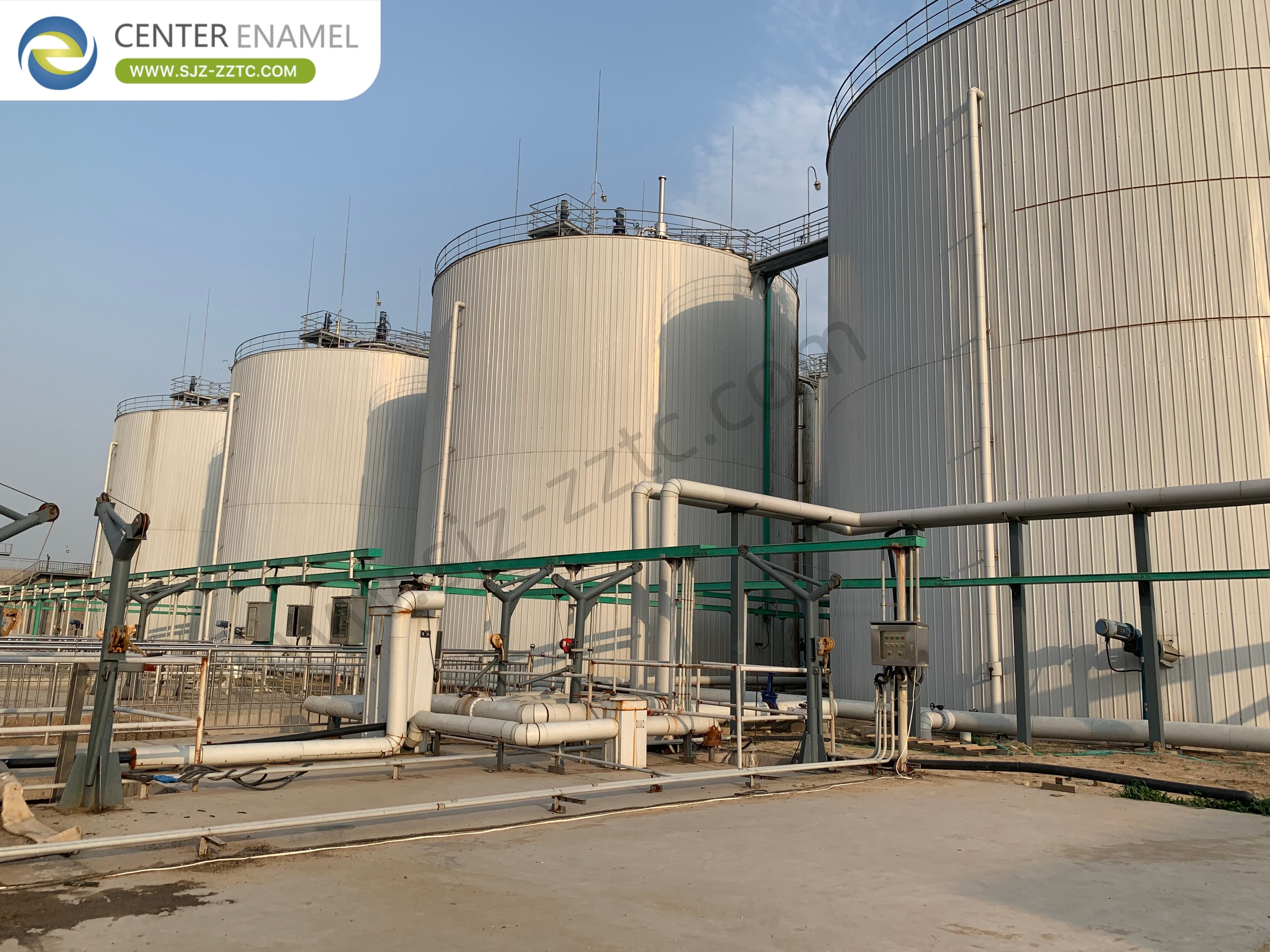
Cow Dung Biogas Projects in Pakistan: Sustainable Energy Solutions with GFS Tanks
| Place of Origin: | China |
| Brand Name: | CEC TANKS |
| Certification: | ISO 9001:2008, AWWA D103 , OSHA , BSCI |
| Model Number: | W |
| Minimum Order Quantity: | 1set |
| Price: | $5000~$20000 one set |
| Packaging Details: | PE poly-foam between each two steel plates ; wooden pallet and wooden |
| Delivery Time: | 10-30 days after deposit received |
| Payment Terms: | L/C,T/T |
| Supply Ability: | 60 sets per month |
|
Detail Information |
|||
| Place of Origin | China | Brand Name | CEC TANKS |
|---|---|---|---|
| Certification | ISO 9001:2008, AWWA D103 , OSHA , BSCI | Model Number | W |
| Tank Body Color: | Dark Green / Can Be Customized | Corrosion Integrity: | Excellent |
| Steel Plates Thickness: | 3mm To 12mm , Depends On The Tank Structure | Chemical Resistance: | Excellent |
| Size Of Panel: | 2.4M * 1.2M | Easy To Clean: | Smooth, Glossy, Inert, Anti-adhesion |
| Highlight: | Cow dung biogas sustainable energy,Biogas projects with GFS tanks,Wastewater treatment biogas solutions |
||
Product Description
Pakistan's agricultural sector is the backbone of its economy, supporting a vast livestock population that includes millions of cattle. This abundance of livestock, while essential for rural livelihoods, presents a significant environmental challenge. The accumulation of cow dung in farming regions across Punjab, Sindh, and Khyber Pakhtunkhwa has led to severe environmental issues, including groundwater contamination, soil degradation, and the uncontrolled release of methane—a potent greenhouse gas. Traditional disposal methods often prove inadequate, failing to mitigate health risks and missing an opportunity to convert this waste into a valuable resource. There is an urgent need for modern infrastructure that can process this organic waste effectively, turning a significant environmental burden into a sustainable energy source for Pakistan's growing energy needs.
The conversion of cow dung into biogas offers a scientifically sound and environmentally friendly solution. This transformative process utilizes anaerobic digestion, where specialized microorganisms break down organic matter in a controlled, oxygen-free environment. The result is biogas, a clean-burning fuel primarily composed of methane, which can be used for cooking, heating, electricity generation, and even as vehicle fuel after purification. Beyond energy generation, the process also produces digestate, a nutrient-rich bio-fertilizer that can replace chemical alternatives, improving soil health and crop yields while completing the agricultural nutrient cycle.
Center Enamel serves as a premier Biogas Project Contractor, providing comprehensive, professional design solutions tailored specifically to the infrastructure needs of biogas projects in Pakistan. Our team conducts thorough site assessments to understand the specific volume of waste and energy requirements, ensuring each plant is engineered for maximum output. By focusing on site-specific hydraulic retention times and material handling flow, we minimize operational downtime and maximize the lifecycle of the facility, ensuring a long-term, reliable energy solution for Pakistani agricultural stakeholders.
At the heart of modern biogas plants lies the Continuous Stirred-Tank Reactor (CSTR). This advanced anaerobic treatment technology is specifically designed to handle high-concentration organic slurries like cow dung. The CSTR is a closed containment unit equipped with a powerful mechanical stirring device, ensuring that incoming manure substrates and anaerobic bacteria achieve intimate contact within a temperature-controlled environment.
By maintaining a homogeneous mixture and operating under tightly regulated temperature regimes with continuous feeding schedules, the CSTR process significantly enhances the degradation rate of organic matter. Research has demonstrated that stirring can substantially increase methane yield, attributed to uniform microbial activity and enhanced degradation of organic compounds. This process ensures a stable and optimized biogas yield compared to conventional, unmixed lagoon or batch systems, making it the premier technological solution for high-solids anaerobic digestion in industrial biogas engineering. The CSTR is a core processing unit that not only achieves waste reduction and stabilization but also generates renewable energy, embodying a true circular economy model.
Center Enamel utilizes high-performance Glass-Fused-to-Steel (GFS) Tanks, which provide an inert and durable storage environment essential for anaerobic processes. The GFS technology involves firing glass enamel onto high-strength structural steel plates at extreme temperatures (820°C to 930°C). This process creates an inseparable inorganic bond that combines the strength and flexibility of steel with the exceptional corrosion resistance of glass, ensuring structural integrity against the harsh chemical environments of fermentation.
These tanks are paired with specialized Double Membrane Roofs. This combination is highly favored for biogas applications due to its excellent air-tightness and odor control. The double membrane roof serves a dual purpose, functioning as an airtight protective cover for gas capture while providing a flexible outer storage canopy that expands and contracts with shifting gas volumes. This integrated architectural design is cost-effective and space-efficient, significantly reducing the structural footprint and optimizing capital expenditure by eliminating the need for separate external gas holders.
Beyond GFS Tanks and double membrane roofs, Center Enamel manufactures an extensive range of specialized storage tanks and protective roofing systems tailored to industrial specifications. The company's capabilities include:
- Storage Tanks:
- Galvanized Steel Tanks:
- Constructed using advanced galvanizing techniques to create a tough, resilient protective surface layer that resists atmospheric and soil-induced corrosion.
- Fusion Bonded Epoxy (FBE) Tanks:
- Developed through technical collaborations with leading coating manufacturers like AkzoNobel, these tanks provide a smooth, durable, and chemically resistant barrier.
- Stainless Steel Tanks:
- Fabricated from high-grade AISI 304 and 316 stainless steel materials, engineered to handle extreme environmental conditions and high-purity liquid storage.
- Cover Solutions:
- Aluminum Geodesic Dome Roofs:
- Lightweight, self-supporting structures offering expansive clear span capability and excellent corrosion resistance without the need for painting.
- Aluminum Alloy Trough Deck Roofs:
- Cost-effective covering options designed for basic weather protection and odor control in applications where airtight sealing is unnecessary.
- FRP (Fiber Reinforced Plastic) Roofs:
- Versatile structures utilized for water and wastewater installations requiring lightweight, corrosion-free overhead protection, available in dome or flat designs.
Center Enamel provides a complete range of ancillary equipment essential for a fully functional biogas plant. This includes Gas Holders for temporary gas storage, Solid-Liquid Separators for processing digestate, and Torch Systems for safe flaring of excess gas. Other critical components are Lifting Pumps, Dehydration and Desulfurization units to condition the raw biogas, and Screw Sludge Dewatering Machines. These systems work in tandem to ensure the efficient and safe operation of the entire biogas plant, from waste reception to energy output.
Selecting the right partner is critical for the success of a biogas project. Center Enamel stands out as a premier Biogas Project Contractor with a proven track record in Pakistan and globally. Our integrated EPC approach offers distinct advantages:
- Manufacturing Leadership:
- We are the largest manufacturer of GFS Tanks in Asia, with a vast R&D and production base and over 36 years of industry experience. This scale ensures we can handle projects of any size and complexity.
- Global Compliance:
- Our tanks and processes are certified to meet rigorous international standards, including CE/EN1090, ISO 9001, NSF/ANSI 61, WRAS, and EN/ISO 28765. Designs adhere to AWWA D103, OSHA, and EuroCode, ensuring world-class quality and safety.
- Proprietary Technology:
- We are one of the few manufacturers that produces its own enamel frit, enabling precise quality control and unparalleled durability. Our innovative enameling technology boasts over 20 patents.
- Comprehensive EPC Services:
- We provide a true turnkey solution, offering engineering, procurement, and construction services. From initial site analysis to global logistics and expert assembly supervision, we ensure every project performs exactly as intended.
In summary, the Cow Dung Treatment challenge in Pakistan represents a significant opportunity. By leveraging proven technologies like the CSTR process and durable GFS Tanks, agricultural waste can be transformed into a source of renewable energy and valuable fertilizer. Center Enamel, as a professional Biogas Project Contractor, provides the expertise, equipment, and engineering excellence to make these projects a success, driving environmental sustainability and energy independence for the nation.
1. What is the CSTR process and why is it suitable for cow dung treatment?
The Continuous Stirred-Tank Reactor (CSTR) is an anaerobic digestion technology that continuously mixes organic waste like cow dung with microorganisms in a sealed tank. This constant mixing ensures uniform temperature and bacterial activity, leading to more efficient breakdown of the organic matter and higher biogas yields compared to other methods, making it ideal for high-solids waste.
2. How do GFS tanks benefit a biogas project?
Glass-Fused-to-Steel (GFS) tanks provide a superior storage solution due to their exceptional corrosion resistance. The glass coating is fused to the steel at high temperatures, creating an inert, durable barrier that protects the tank from the acidic and corrosive environment of anaerobic digestion. This results in a long-lasting, low-maintenance infrastructure, essential for the project's economic viability.
3. What other equipment is needed for a complete biogas plant?
A complete biogas plant requires more than just a digester. It typically includes a Gas Holder for storing biogas, a Torch System for flaring excess gas, Dehydration and Desulfurization units to purify the biogas, Solid-Liquid Separators to process the digestate into fertilizer, and pumps for efficient material handling.