-
Glass Fused To Steel Tanks (596)
-
Stainless Steel Tanks (434)
-
Fusion Bonded Epoxy Tanks (592)
-
Galvanized Steel Tanks (321)
-
Aluminum Dome Roofs (1336)
-
Wastewater Storage Tanks (232)
-
Welded Steel Tanks (457)
-
Pressure Vessels (295)
-
Anaerobic Digester (202)
-
Industrial Water Tanks (349)
-
Glass Lined Steel Tanks (180)
-
Bolted Steel Tanks (389)
-
Sludge Storage Tank (115)
-
Biogas Storage Tank (173)
-
Leachate Storage Tanks (133)
-
Agricultural Water Storage Tanks (179)
-
Fire Water Tank (166)
-
Grain Storage Silos (146)
-
Biogas Projects (424)
-
Wastewater Treatment Projects (1228)
-
Double Membrane Roof (223)

|
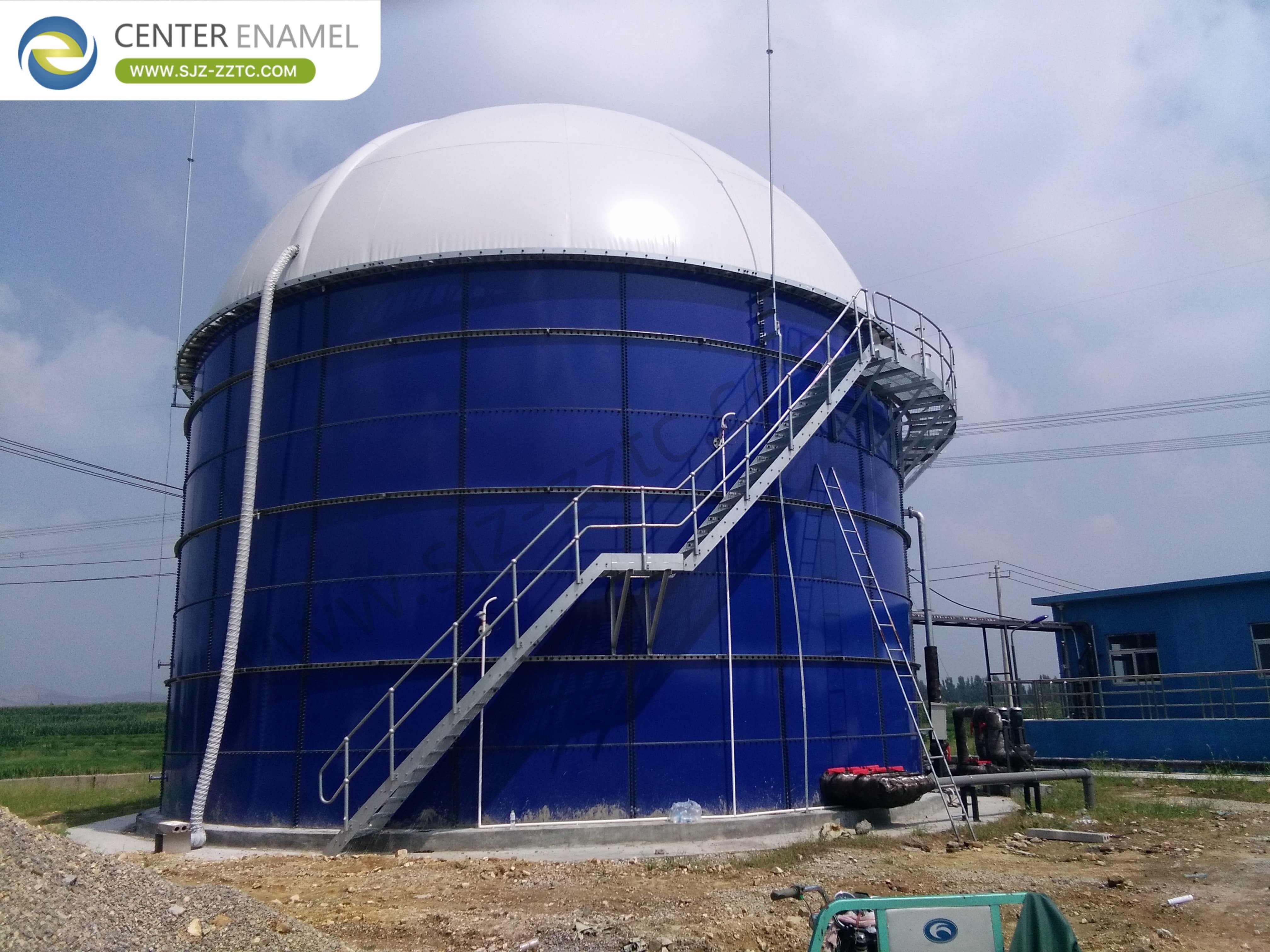
Leading Cow Dung Biogas Projects in Chad with GFS Tanks and CSTR Technology
| Place of Origin: | China |
| Brand Name: | CEC TANKS |
| Certification: | ISO 9001:2008, AWWA D103 , OSHA , BSCI |
| Model Number: | W |
| Minimum Order Quantity: | 1set |
| Price: | $5000~$20000 one set |
| Packaging Details: | PE poly-foam between each two steel plates ; wooden pallet and wooden |
| Delivery Time: | 10-30 days after deposit received |
| Payment Terms: | L/C,T/T |
| Supply Ability: | 60 sets per month |
|
Detail Information |
|||
| Place of Origin | China | Brand Name | CEC TANKS |
|---|---|---|---|
| Certification | ISO 9001:2008, AWWA D103 , OSHA , BSCI | Model Number | W |
| Tank Body Color: | Dark Green / Can Be Customized | Corrosion Integrity: | Excellent |
| Steel Plates Thickness: | 3mm To 12mm , Depends On The Tank Structure | Chemical Resistance: | Excellent |
| Size Of Panel: | 2.4M * 1.2M | Easy To Clean: | Smooth, Glossy, Inert, Anti-adhesion |
| Highlight: | Cow dung biogas project Chad,GFS tanks wastewater treatment,CSTR technology biogas plant |
||
Product Description
Chad's vast cattle population generates enormous quantities of manure, creating environmental and health challenges while also offering a renewable energy opportunity. This article explores how advanced anaerobic digestion technology, centered on the CSTR process and durable GFS Tanks, transforms cow dung into clean biogas and valuable fertilizer. It details the comprehensive Cow Dung Treatment solutions provided by a professional Biogas Solution Provider, covering the full project lifecycle from waste reception and digestion to gas utilization and digestate management for sustainable agricultural development.
Chad is home to one of the largest livestock populations in Africa, with cattle serving as the backbone of the rural economy and a vital cultural asset. In regions such as Logone Occidental, Moyen-Chari, and the Sahelian belt, millions of cattle produce vast quantities of manure daily. While traditionally used as a low-grade fuel for cooking, the majority of this cow dung is left to decompose in the open, creating a multitude of environmental and public health problems. The uncontrolled decomposition releases methane, a potent greenhouse gas contributing to climate change, while runoff from manure piles contaminates local water sources, leading to waterborne diseases and ecosystem degradation. Additionally, the foul odors attract pests and reduce the quality of life for rural communities. As Chad faces increasing pressures from desertification and climate variability, the need for sustainable, modern Cow Dung Treatment solutions has become more urgent than ever, offering a pathway to mitigate environmental damage while generating economic and energy benefits.
The scientific conversion of cow dung into biogas follows a carefully managed sequence of steps, each essential for maximizing energy recovery. The process begins with feedstock collection, where manure is gathered from cattle pens and transported to the treatment facility. Here, the dung is mixed with water to create a pumpable slurry with a consistent solids content, ensuring smooth handling through the system. This homogenized mixture then passes through screening equipment to remove inorganic debris like stones and bedding material that could damage downstream machinery. The prepared substrate is continuously fed into the anaerobic digester, a sealed, oxygen-free vessel where the biological breakdown takes place. Within this controlled environment, specific groups of microorganisms decompose the organic matter over a retention period of several weeks. The biogas produced—composed primarily of methane and carbon dioxide—rises and is collected from the top of the tank, while the residual digestate is discharged from the bottom. The digestate is then processed for use as a nutrient-rich soil amendment, completing the agricultural nutrient cycle and reducing the need for expensive chemical fertilizers.
The Continuous Stirred-Tank Reactor (CSTR) is the technological heart of a modern biogas plant, purpose-built to handle high-solids organic substrates like cow dung with exceptional efficiency. The CSTR is a fully enclosed tank equipped with a mechanical stirring mechanism that operates continuously. This constant agitation ensures that the incoming manure, active microbial population, and nutrients are thoroughly mixed, preventing solids from settling at the bottom, eliminating scum formation on the surface, and maintaining a uniform temperature throughout the reactor. By operating at a controlled temperature, typically in the mesophilic range of 35-38°C, the CSTR optimizes the activity of methanogenic bacteria, resulting in high biogas yields and stable, predictable gas production. The CSTR is a core processing unit that converts organic waste into biogas and digestate through the action of anaerobic microorganisms. This stage not only achieves waste reduction and stabilization, but also generates renewable energy - biogas. The continuous feeding regime makes it ideal for daily manure production, and its resilience and reliability make it the preferred choice for large-scale projects.
GFS Tanks, or Glass-Fused-to-Steel tanks, serve as the premier containment solution for anaerobic digesters and storage applications in biogas projects. These tanks are manufactured through a high-temperature fusion process where specially formulated glass enamel is bonded to steel panels at temperatures between 820°C and 930°C. This creates an inert, inorganic bond that combines the structural strength of steel with the exceptional corrosion resistance of glass. The resulting surface is smooth, non-porous, and highly resistant to the acidic conditions and abrasive slurries inside a digester, ensuring decades of reliable service with minimal maintenance. GFS Tanks are engineered to international standards and provide an impermeable barrier against gas and liquid leakage. To complement the tanks and ensure efficient gas capture, Double Membrane Roofs are employed. This innovative roof design provides complete air-tightness, which is essential for safe biogas collection and odor control. The double membrane roof acts as an integrated gas holder, dynamically adjusting its volume to accommodate production fluctuations, thereby eliminating the need for a separate gas storage structure and reducing the overall land footprint and capital costs.
Beyond GFS Tanks and double membrane roofs, Center Enamel manufactures a comprehensive portfolio of alternative storage tanks and covering systems to meet the varied demands of different project environments:
Galvanized Steel Tanks: Constructed using a hot-dip galvanizing process, these tanks provide a tough, wear-resistant protective coating, offering reliable corrosion resistance for various liquid storage applications.
Fusion Bonded Epoxy Tanks: Developed in collaboration with AkzoNobel, these tanks feature an advanced FBE coating technology that provides superior chemical resistance and a smooth, easy-to-clean surface, ideal for specific water and wastewater applications.
Stainless Steel Tanks: Fabricated from high-grade AISI 304 and 316 stainless steel, these tanks are engineered for applications demanding maximum corrosion resistance and high purity, suitable for harsh environments or sensitive liquid storage.
Aluminum Geodesic Dome Roofs: Lightweight, self-supporting structures that offer expansive clear spans, advanced corrosion resistance, and minimal maintenance costs.
Glass-Fused-to-Steel Roofs: Air-tight, cone-shaped roofs suitable for pressurized structures, providing effective odor containment and gas collection.
Aluminum Alloy Trough Deck Roofs: A cost-effective solution for weather protection and odor control in applications not requiring complete air-tightness.
Stainless Steel Roofs: Offering exceptional corrosion resistance, air-tightness, and a long service life for demanding environmental conditions.
FRP Roofs: Versatile, corrosion-resistant covers available in dome or flat configurations, suitable for water and wastewater storage where air-tightness is not required.
A fully operational biogas facility depends on a suite of ancillary equipment to ensure efficient and safe performance. Center Enamel supplies all essential components, including Gas Holders for temporary biogas storage, Black Membrane for covering storage lagoons, and Solid-Liquid Separators for processing digestate into solid and liquid fractions. Torch Systems provide a safety mechanism for flaring excess gas during maintenance or periods of low demand. Additional critical equipment includes Lifting Pumps for material transfer, Dehydration and Desulfurization Tanks to condition raw biogas by removing moisture and hydrogen sulfide, and Screw Sludge Dewatering Machines to reduce the volume of liquid waste. This integrated equipment suite ensures that every stage of the biogas process operates seamlessly, from waste reception to gas utilization and digestate management.
Selecting the right partner is essential for the long-term success of any biogas project. Center Enamel distinguishes itself as a premier Biogas Solution Provider with a proven track record across Africa and worldwide. Our integrated approach delivers significant advantages:
- Manufacturing Excellence: We are the largest manufacturer of GFS Tanks in Asia, with a production capacity of 250,000 sheets annually. This scale ensures reliable supply and the ability to handle projects of any size and complexity.
- Global Certification and Compliance: Our products meet rigorous international standards including CE/EN1090, ISO 9001, ISO 14001, NSF/ANSI 61, WRAS, and EN/ISO 28765. Designs adhere to AWWA D103, OSHA, and EuroCode, guaranteeing world-class quality and safety.
- Proprietary Enamel Technology: We are one of the few manufacturers that produces its own enamel frit, ensuring strict quality control and superior coating performance. Our patented two-coat, two-firing process delivers exceptional adhesion and longevity.
- Comprehensive EPC Services: As a complete Biogas Solution Provider, we offer turnkey services covering engineering, procurement, and construction. From feasibility studies and custom design to logistics, site supervision, and commissioning, we manage every aspect of the project lifecycle.
Chad's extensive cattle population generates a significant waste stream that, with the right technology, can become a cornerstone of rural development and renewable energy generation. Through advanced anaerobic digestion using the CSTR process and durable GFS Tanks, cow dung can be transformed from an environmental burden into a source of clean energy and high-quality fertilizer. Center Enamel, as a professional Biogas Solution Provider, brings the technology, infrastructure, and expertise needed to make this transformation a reality, supporting Chad's journey toward greater sustainability and energy independence.
1. What is anaerobic digestion and how does it work with cow dung?
Anaerobic digestion is a natural biological process where microorganisms break down organic matter like cow dung in an oxygen-free environment. This produces biogas (mainly methane) for energy use and digestate, a nutrient-rich liquid that can be used as fertilizer for crops.
2. What is the CSTR process?
The Continuous Stirred-Tank Reactor (CSTR) is an advanced anaerobic digestion system that continuously mixes cow dung with microorganisms in a sealed, temperature-controlled tank. The constant stirring ensures uniform conditions, maximizing biogas production and making it ideal for high-solids feedstocks.
3. What are the main outputs of a biogas plant besides biogas?
Besides biogas, the anaerobic digestion process produces digestate, a stabilized organic material rich in nutrients. This can be separated into solid and liquid fractions, both of which are excellent organic fertilizers for improving soil health and crop yields, completing the agricultural nutrient cycle.