-
Glass Fused To Steel Tanks (596)
-
Stainless Steel Tanks (434)
-
Fusion Bonded Epoxy Tanks (592)
-
Galvanized Steel Tanks (321)
-
Aluminum Dome Roofs (1336)
-
Wastewater Storage Tanks (232)
-
Welded Steel Tanks (457)
-
Pressure Vessels (295)
-
Anaerobic Digester (202)
-
Industrial Water Tanks (349)
-
Glass Lined Steel Tanks (180)
-
Bolted Steel Tanks (389)
-
Sludge Storage Tank (115)
-
Biogas Storage Tank (173)
-
Leachate Storage Tanks (133)
-
Agricultural Water Storage Tanks (179)
-
Fire Water Tank (166)
-
Grain Storage Silos (146)
-
Biogas Projects (424)
-
Wastewater Treatment Projects (1228)
-
Double Membrane Roof (223)

|
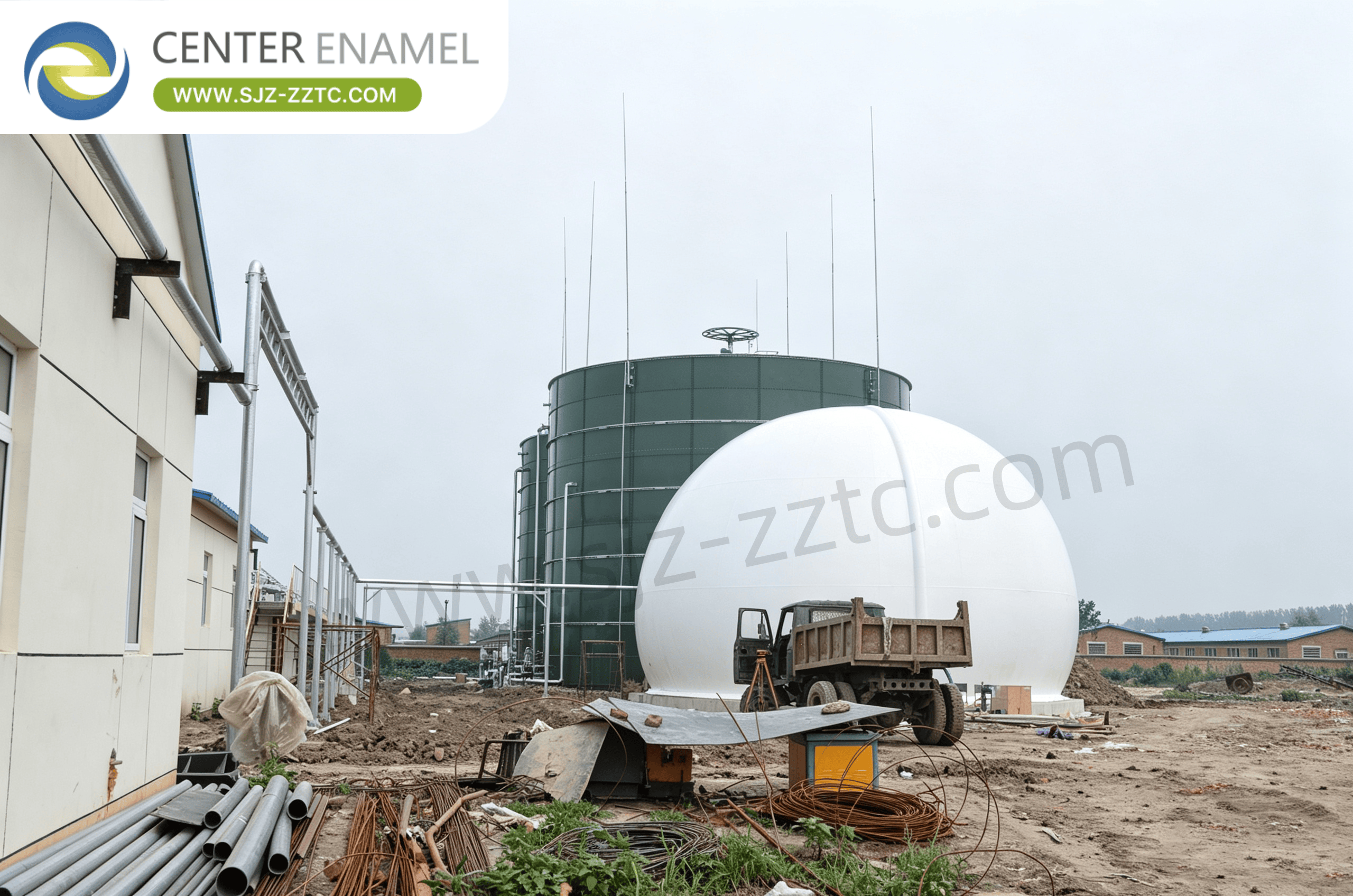
Sustainable Cow Dung Biogas Solutions in Thailand with GFS Tanks and CSTR Technology
| Place of Origin: | China |
| Brand Name: | CEC TANKS |
| Certification: | ISO 9001:2008, AWWA D103 , OSHA , BSCI |
| Model Number: | W |
| Minimum Order Quantity: | 1set |
| Price: | $5000~$20000 one set |
| Packaging Details: | PE poly-foam between each two steel plates ; wooden pallet and wooden |
| Delivery Time: | 10-30 days after deposit received |
| Payment Terms: | L/C,T/T |
| Supply Ability: | 60 sets per month |
|
Detail Information |
|||
| Place of Origin | China | Brand Name | CEC TANKS |
|---|---|---|---|
| Certification | ISO 9001:2008, AWWA D103 , OSHA , BSCI | Model Number | W |
| Tank Body Color: | Dark Green / Can Be Customized | Corrosion Integrity: | Excellent |
| Steel Plates Thickness: | 3mm To 12mm , Depends On The Tank Structure | Chemical Resistance: | Excellent |
| Size Of Panel: | 2.4M * 1.2M | Easy To Clean: | Smooth, Glossy, Inert, Anti-adhesion |
| Highlight: | sustainable cow dung biogas solutions,biogas solutions with GFS tanks,CSTR technology biogas solutions |
||
Product Description
Thailand's thriving agricultural and livestock sectors are cornerstones of its economy, with a substantial cattle population concentrated in regions like Nakhon Ratchasima, Khon Kaen, and Chiang Mai. This abundance of livestock, while economically vital, generates immense quantities of manure that pose a significant environmental and public health challenge. Untreated cow dung contributes to the pollution of rivers and groundwater, releases foul odors, and emits substantial amounts of methane—a powerful greenhouse gas that exacerbates climate change. For many Thai farmers, traditional manure management practices, such as stockpiling or spreading raw waste on fields, are increasingly inadequate, leading to soil nutrient imbalances, pathogen spread, and attracting pests. There is a growing recognition of the need for advanced Cow Dung Treatment technologies that can mitigate these environmental impacts while providing tangible economic and energy benefits to rural communities.
Biogas technology offers a proven, sustainable pathway to convert this waste burden into a valuable asset. The process of anaerobic digestion involves a series of biological reactions where microorganisms decompose organic matter in an oxygen-free environment, generating biogas as a byproduct. This biogas, primarily methane, is a versatile and clean fuel that can replace wood, charcoal, or LPG for cooking and heating, power generators for electricity, or be upgraded to biomethane for vehicle fuel. Simultaneously, the digestion process produces a stabilized, nutrient-rich digestate that significantly outperforms raw manure as a fertilizer, improving soil structure, water retention, and crop yields. By adopting biogas systems, Thai agricultural communities can reduce their environmental footprint, lower energy costs, and create new revenue streams from the sale of surplus energy or organic fertilizers, fostering a robust and circular rural economy.
Center Enamel provides professional design and engineering solutions as a premier Biogas Project Contractor tailored to Thailand's agricultural infrastructure. Our experts evaluate each site's specific waste volume, composition, and energy goals to design a system that ensures peak performance and financial return. We focus on optimizing hydraulic retention times and feedstock handling to minimize operational costs and maximize the facility's productive lifespan, delivering a sustainable energy solution for Thai agricultural enterprises.
Transforming cow dung into biogas follows a systematic and controlled process designed to maximize efficiency and yield. The first step is feedstock preparation, where raw manure is collected and mixed with water or recirculated liquid to form a pumpable slurry. This mixture is often passed through a mechanical bar screen to remove large debris that could damage downstream equipment. The prepared feedstock is then continuously or semi-continuously fed into the primary digestion unit. Inside this anaerobic reactor, a carefully balanced microbial ecosystem works to break down the organic matter over a retention period that typically ranges from 15 to 30 days. The biogas generated is collected from the top of the reactor, routed through a desulfurization and dehydration system to remove impurities, and then stored in a gas holder before final utilization. The spent digestate is continuously discharged from the reactor; after passing through a solid-liquid separation system, the liquid portion can be returned to the farm for flushing or irrigation, and the solid fiber is processed into a stable, organic soil amendment suitable for farmland application. This integrated approach ensures that every component of the manure is utilized productively.
At the heart of modern biogas facilities is the Continuous Stirred-Tank Reactor (CSTR), a state-of-the-art anaerobic digestion technology specifically engineered to handle challenging feedstocks like cow dung. The CSTR is a closed, insulated tank equipped with a robust mechanical stirring system. This continuous mixing ensures that the incoming substrate, active microbial population, and nutrients are thoroughly homogenized, preventing stratification, eliminating dead zones, and accelerating the biological conversion process. Precise temperature control, typically maintained in the mesophilic range (35-38°C) suitable for Thailand's climate, optimizes the activity of methanogenic bacteria.
The CSTR is a core processing unit that converts organic waste into biogas and digestate through the action of anaerobic microorganisms. This stage not only achieves waste reduction and stabilization, but also generates renewable energy—biogas. The continuous feeding regime allows for a steady, predictable production of biogas, which is essential for applications requiring a constant energy supply, such as electricity generation for the grid or industrial heat. The CSTR's superior mixing, consistent operating conditions, and ability to handle high-solids and high-suspended-solids wastewater make it the industry benchmark for reliable and efficient biogas production from agricultural residues like cattle manure.
Center Enamel deploys superior Glass-Fused-to-Steel (GFS) Tanks as the foundation of robust and durable biogas plant infrastructure. Manufactured through a high-temperature fusion process where a specially formulated glass enamel is bonded to steel sheets, our GFS Tanks deliver an exceptional combination of structural integrity and chemical resistance. The inert, glass-like coating provides an impervious barrier against the corrosive gases, organic acids, and abrasive solids present in anaerobic digesters. This results in a tank that maintains its integrity over decades, requiring minimal maintenance compared to other tank types and offering a far superior lifecycle cost. The smooth surface also inhibits bacterial adhesion and encrustation, ensuring efficient system operation.
For efficient gas collection and storage, Center Enamel offers specialized Double Membrane Roofs, making them a superior option for anaerobic digestion processes and biogas applications. This design provides complete air-tightness, crucial for the safe capture and containment of biogas while preventing odor escape. The double membrane structure also acts as an integrated gas holder, dynamically adjusting its volume to accommodate fluctuations in gas production. This integrated gas holder configuration is a highly space-efficient solution that eliminates the need for a separate, ground-mounted gas storage tank, significantly saving land and reducing construction costs, which is particularly beneficial for projects with limited available space.
In addition to GFS Tanks and double membrane roofs, Center Enamel provides a range of alternative tank types and covering systems, allowing for customized solutions based on project-specific requirements and environmental conditions:
- Storage Tank Alternatives:
- Galvanized Steel Tanks: Coated using a hot-dip galvanizing process, these tanks are protected by a durable, wear-resistant layer of zinc, providing robust corrosion protection for various liquid storage needs.
- Fusion Bonded Epoxy Tanks: In collaboration with AkzoNobel, our FBE tanks feature an advanced, chemically inert coating that offers excellent resistance to a wide range of chemicals, solvents, and corrosive agents.
- Stainless Steel Tanks: Available in high-grade AISI 304 and 316 stainless steel, these tanks offer exceptional resistance to corrosion and are ideal for environments requiring high purity or where extremely corrosive conditions exist.
- Covering Systems:
- Aluminum Geodesic Dome Roofs: Features clear span design, exceptional corrosion resistance, and minimal maintenance needs, suitable for large-diameter tanks.
- Glass-Fused-to-Steel Roofs: Provide air-tightness and are suitable for pressurized structures requiring odor control.
- Aluminum Alloy Trough Deck Roofs: Provide a cost-effective covering solution for rainwater and wind protection while offering some odor control.
- Stainless Steel Roofs: Offer excellent corrosion resistance, air-tightness, and a long service life for demanding applications.
- FRP Roofs: A versatile, lightweight option for applications like water storage where air-tightness is not required.
Center Enamel supplies a full array of supporting equipment crucial for a complete and functional biogas installation. This includes Gas Holders for safe temporary gas storage, Black Membrane for lagoon covers, Solid-Liquid Separators for efficient digestate management, and Torch Systems for emergency gas flaring. Additionally, we provide Lifting Pumps for slurry transfer, Dehydration and Desulfurization Tanks for biogas conditioning, and Screw Sludge Dewatering Machines for reducing sludge volume, ensuring a fully integrated and highly efficient plant operation.
As a trusted Biogas Project Contractor, Center Enamel offers a complete turnkey solution for biogas projects in Thailand. Our extensive experience and integrated approach ensure project success from concept to commissioning:
- Manufacturing Prowess: As the largest GFS Tanks manufacturer in Asia, with a production capacity of 250,000 sheets per year and a global footprint spanning over 100 countries, we bring unmatched scale and supply chain reliability.
- Stringent Quality Assurance: Our products hold internationally recognized certifications including CE/EN1090, ISO 9001, ISO 14001, NSF/ANSI 61, WRAS, and EN/ISO 28765. We adhere to design standards such as AWWA D103, OSHA, and EuroCode, ensuring the highest levels of safety and quality.
- In-house R&D and Innovation: We are one of the few companies that produces its own enamel frit, enabling us to develop advanced glass formulations that enhance corrosion resistance, adhesion, and overall tank longevity. Our patented 2C2F coating technology is a testament to our commitment to quality.
- Full EPC Project Delivery: Our comprehensive services encompass initial consultation, feasibility studies, detailed process and structural engineering, precise manufacturing, international logistics, and expert on-site installation supervision. We manage the entire lifecycle, ensuring a seamless, hassle-free experience and a plant that performs exactly as specified.
Thailand's agricultural sector possesses immense potential to lead the way in renewable energy production through the sustainable treatment of livestock waste. The adoption of advanced technologies like the CSTR and high-quality GFS Tanks enables the efficient conversion of cow dung from a pollutant into a source of clean energy and bio-fertilizer. As a premier Biogas Project Contractor, Center Enamel is dedicated to providing the cutting-edge technology, robust equipment, and professional project management necessary to develop successful biogas projects. Our solutions help Thai farmers and industries reduce waste, lower emissions, improve energy independence, and contribute to a more sustainable and prosperous future.
1. What is the role of the CSTR in a cow dung biogas project?
The CSTR, or Continuous Stirred-Tank Reactor, is the core biological engine of the biogas plant. It is a sealed, continuously mixed tank where cow dung is maintained at a constant temperature to promote optimal microbial activity. The continuous stirring ensures efficient contact between the bacteria and the organic matter, maximizing biogas yields and ensuring a consistent, stable production.
2. Why are GFS Tanks a preferred choice for biogas applications?
GFS Tanks are preferred because they offer the best combination of strength, durability, and corrosion resistance. The unique glass-fused-to-steel coating creates an inert, non-porous surface that can withstand the acidic and abrasive environment inside a digester for decades without significant corrosion or the need for frequent repainting. This makes them a highly reliable and cost-effective long-term investment.
3. What happens to the cow dung after it has been digested?
After anaerobic digestion, the remaining material is called digestate. This is a stable, nutrient-rich material that is an excellent organic fertilizer. It is typically passed through a solid-liquid separator. The solid fiber can be used as a soil amendment or bedding, while the liquid fraction, which contains valuable nutrients like nitrogen, phosphorus, and potassium, can be applied directly to crops as a liquid fertilizer, completing the nutrient cycle.