-
Glass Fused To Steel Tanks (896)
-
Stainless Steel Tanks (434)
-
Fusion Bonded Epoxy Tanks (660)
-
Galvanized Steel Tanks (321)
-
Aluminum Dome Roofs (1346)
-
Wastewater Storage Tanks (280)
-
Welded Steel Tanks (457)
-
Pressure Vessels (534)
-
Anaerobic Digester (217)
-
Industrial Water Tanks (424)
-
Glass Lined Steel Tanks (180)
-
Bolted Steel Tanks (389)
-
Sludge Storage Tank (115)
-
Biogas Storage Tank (173)
-
Leachate Storage Tanks (133)
-
Agricultural Water Storage Tanks (179)
-
Fire Water Tank (166)
-
Grain Storage Silos (146)
-
Biogas Projects (424)
-
Wastewater Treatment Projects (1882)
-
Double Membrane Roof (223)
|
Pressure Vessel Turnkey Delivery Scope And Acceptance
| Place of Origin: | China |
| Brand Name: | Center Enamel |
| Certification: | ISO 9001,CE, NSF/ANSI 61, WRAS, ISO 28765, LFGB, BSCI, ISO 45001 |
| Minimum Order Quantity: | 1 Sets |
| Price: | 2000 |
| Delivery Time: | 2 months |
| Payment Terms: | L/C,T/T |
| Supply Ability: | 200 sets / days |
|
Detail Information |
|||
Product Description
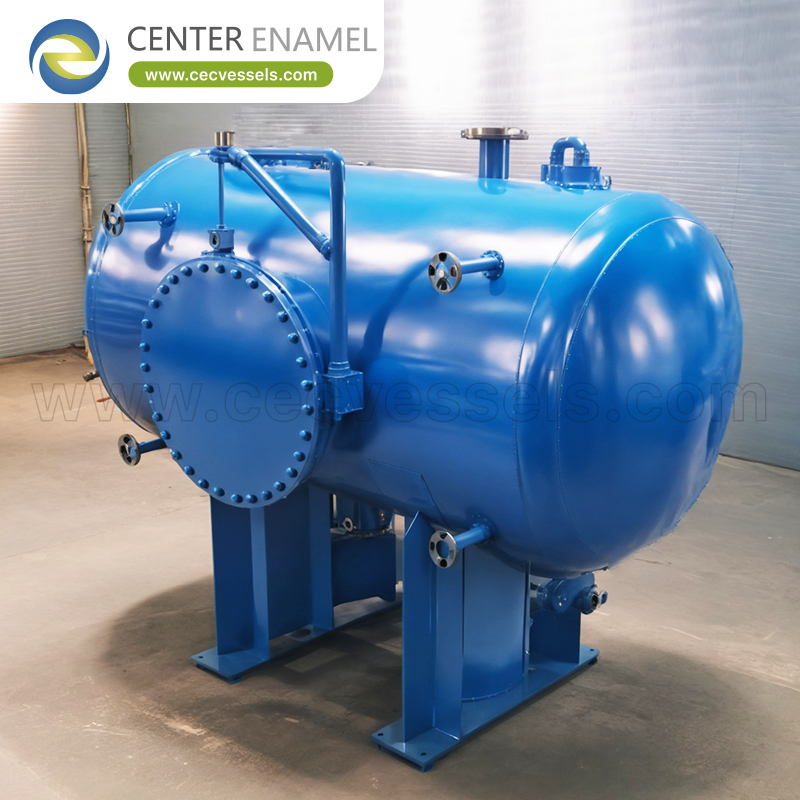
Pressure Vessel Turnkey Delivery Scope And Acceptance
Turnkey delivery means the supplier is responsible for a complete, operable package handed over ready to run, rather than delivering a vessel for the buyer to install and integrate.
This page explains the turnkey model for a pressure vessel project, what a complete scope includes, how acceptance is defined and where an unclear boundary creates risk.
What Turnkey Means
Under a turnkey arrangement the supplier takes responsibility for design, manufacture, supply and, where agreed, installation and commissioning, handing over a functioning package.
The friendly term should not hide a legal point: what turnkey covers is whatever the contract says it covers. The scope definition is the whole meaning of the word.
Turnkey Versus Equipment Supply
In straightforward equipment supply the supplier delivers the vessel to an agreed point and the buyer handles installation and integration. Turnkey extends the supplier's responsibility further down the project.
Turnkey is attractive where the buyer wants a single accountable party and has limited project resources, but it requires a precise specification of the expected outcome.
Defining A Complete Scope
A turnkey vessel scope may include process design, detailed engineering, fabrication, procurement of auxiliary equipment, transport, installation, piping, controls and commissioning support.
Each element should be listed with its boundary. Items such as foundations, utilities to the battery limit and operator training are common sources of dispute if left unstated.
Single-Point Responsibility
The main advantage is accountability: one party owns the interfaces and the schedule. Problems at the boundary between design, supply and installation do not become the buyer's coordination task.
The trade-off is reduced direct control and the need to trust the supplier's project management and quality systems.
Acceptance Criteria
Turnkey handover needs objective acceptance criteria: performance at agreed duty, successful pressure and leak tests, instrument and control checks, documentation completeness and any specified trial run.
Criteria should be measurable and agreed before work starts. Vague terms such as satisfactory operation lead to disputes at handover.
Documentation And Handover
The handover package should include the data book, as-built drawings, operating and maintenance manuals, spare parts lists, test records and certificates.
For a coded vessel, the nameplate, data report and marking must be consistent. Incomplete documents can delay acceptance even when the equipment itself is sound.
Risks Of An Unclear Boundary
If the scope is vague, the supplier will reasonably exclude work the buyer assumed was included, leading to change orders and delay. If it is too broad, the supplier prices in large contingencies.
A clear battery limit, a list of inclusions and exclusions, and a defined change procedure are the practical safeguards.
Evaluating A Turnkey Offer
Compare offers on the same scope: what engineering, equipment, site work, testing and documents each includes, and what acceptance means in measurable terms.
Assess the supplier's project capability and evidence of past delivery rather than relying on general capability claims.
Warranty and aftercare also belong in the comparison. A turnkey handover should state the warranty period, what is covered, response expectations and who provides support once the plant is operating. Clarifying these at contract stage avoids a gap where neither the supplier nor the site contractor accepts a problem. For a coded vessel, it is also worth agreeing how a later inspection or repair record will be supplied, since that documentation affects the vessel long after handover.
Pay particular attention to how the offer treats site conditions. A turnkey price that assumes a prepared foundation, clear access and utilities at the battery limit can change substantially if the buyer must provide them. Asking each bidder to state its site assumptions in writing makes the offers genuinely comparable and avoids discovering an exclusion only when work begins on site.
Turnkey Versus Equipment-Only Supply
Aspect |
Turnkey |
Equipment only |
Responsibility |
Supplier owns full package |
Buyer integrates |
Design |
Within supplier scope |
Often buyer / EPC |
Installation |
Usually included |
Buyer's contractor |
Commissioning |
Supplier support |
Buyer |
Acceptance |
Operable package |
Delivered equipment |
Buyer control |
Less direct |
More direct |
Turnkey Scope Inputs
Input |
Why it matters |
Battery limit |
Defines the boundary |
Inclusions list |
What supplier provides |
Exclusions list |
What buyer provides |
Acceptance tests |
Objective handover |
Document package |
Completes handover |
Commissioning scope |
Defines support |
Change procedure |
Controls scope drift |
Conclusion
Turnkey delivery makes the supplier responsible for a complete, operable vessel package, but its meaning is set entirely by the defined scope.
Specify the battery limit, inclusions and exclusions, objective acceptance criteria and the handover documents, and compare offers on that common basis.
About Center Enamel
Center Enamel is a pressure vessel and process equipment manufacturer based in China, producing stainless steel and carbon steel pressure vessels, separators, reactors, heat exchangers and storage tanks for chemical, oil and gas, power, food, pharmaceutical and water-treatment applications.
The company works under ASME VIII Div.1, GB/T 150 and ISO 9001, and can supply CE/PED marking for the EU market with material traceability, documented welding procedures, NDT and hydrostatic testing in the delivered data book.
- Certifications: ASME, ISO 9001, CE/PED, NSF/ANSI 61, WRAS, ISO 28765, LFGB, BSCI, ISO 45001.
- Standards: ASME VIII Div.1, GB/T 150, EN 13445 where required by the destination market.
- Commercial terms: Minimum order quantity 1 unit, typical lead time about 2 months, L/C or T/T.
Frequently Asked Questions (FAQ)
What does turnkey mean for a pressure vessel?
The supplier delivers a complete, operable package ready to run, not just the vessel.
Is turnkey the same as EPC?
They overlap; turnkey emphasises handover of an operable package, EPC names engineering, procurement and construction.
What does a turnkey scope include?
Whatever the contract lists - design, supply, installation, controls and commissioning support.
What is a battery limit?
The defined boundary of the supplier's responsibility.
Why is scope definition critical?
Because the word turnkey has no fixed meaning without an explicit inclusions and exclusions list.
What are acceptance criteria?
Measurable conditions - tests, performance and documents - required for handover.
What documents are handed over?
Data book, as-built drawings, manuals, spare lists, test records and certificates.
Can incomplete documents delay handover?
Yes, even if the vessel itself is satisfactory.
What is commissioning support?
Supplier assistance during start-up and initial operation.
Why avoid vague acceptance terms?
Terms like satisfactory operation are open to dispute at handover.
What is a change order?
A formal adjustment to scope, cost or schedule after contract award.
How do I compare turnkey offers?
On identical scope and measurable acceptance, not on headline price.
Does turnkey reduce buyer control?
Yes, in exchange for single-point accountability.
What evidence should I ask for?
Documented project delivery experience and quality systems.
What is the lead time for an engineered vessel?
About two months, subject to scope, code and any site work agreed.
Suggested CTA: Request a technical quotation with your duty, pressure, temperature and fluid data, or discuss the package scope and interface with a Center Enamel engineer.