-
Glass Fused To Steel Tanks (896)
-
Stainless Steel Tanks (434)
-
Fusion Bonded Epoxy Tanks (660)
-
Galvanized Steel Tanks (321)
-
Aluminum Dome Roofs (1346)
-
Wastewater Storage Tanks (280)
-
Welded Steel Tanks (457)
-
Pressure Vessels (534)
-
Anaerobic Digester (217)
-
Industrial Water Tanks (424)
-
Glass Lined Steel Tanks (180)
-
Bolted Steel Tanks (389)
-
Sludge Storage Tank (115)
-
Biogas Storage Tank (173)
-
Leachate Storage Tanks (133)
-
Agricultural Water Storage Tanks (179)
-
Fire Water Tank (166)
-
Grain Storage Silos (146)
-
Biogas Projects (424)
-
Wastewater Treatment Projects (1882)
-
Double Membrane Roof (223)
|
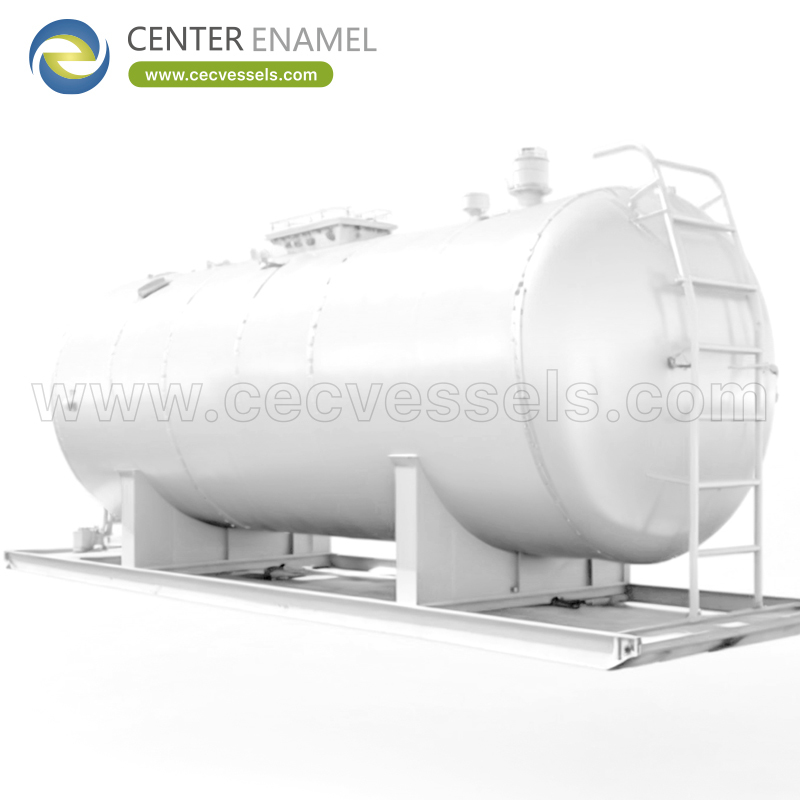
How Is A Pressure Vessel Made Fabrication Steps Explained
| Place of Origin: | China |
| Brand Name: | Center Enamel |
| Certification: | ISO 9001,CE, NSF/ANSI 61, WRAS, ISO 28765, LFGB, BSCI, ISO 45001 |
| Minimum Order Quantity: | 1 Sets |
| Price: | 2000 |
| Delivery Time: | 2 months |
| Payment Terms: | L/C,T/T |
| Supply Ability: | 200 sets / days |
|
Detail Information |
|||
Product Description
How Is A Pressure Vessel Made Fabrication Steps Explained
A pressure vessel is made by turning certified plate and formed heads into a code-compliant pressure boundary through a controlled sequence: cutting, forming, welding, examination, heat treatment, testing and documentation.
This guide follows that route step by step and shows where quality is built in — because the inspection record at the end is only as good as the operations that produced it.
Material Receipt And Traceability
Fabrication begins with plate, heads, forgings and nozzles that carry mill certificates. The shop verifies grade and dimensions and assigns identity so each piece can be traced from the finished vessel back to its certificate.
Traceability is the foundation of everything that follows. If material cannot be traced, the thickness calculation cannot be shown to match the steel actually used.
Cutting, Marking And Forming
Plate is cut to developed dimensions for each shell course, edges are prepared for welding, and the courses are rolled to the required diameter. Heads are formed by pressing or spinning to the specified geometry.
Rolling direction, seam offset and forming tolerance matter, because they affect how the part behaves under pressure and how well it fits at assembly.
Fit-Up And Welding
Shell courses and heads are fitted together on jigs or rollers, with controlled gaps and alignment, then welded longitudinal and circumferential seams. Internals, nozzles and supports are attached according to qualified procedures.
Welding is done by qualified welders using qualified procedures, with parameters controlled and recorded. The longitudinal seam usually carries the highest load and receives the closest examination.
Heat Treatment Where Required
Some materials and thicknesses require post-weld heat treatment to relieve residual stress and restore toughness. The requirement comes from the code, the material and the service, not from shop preference.
The treatment cycle is recorded with a chart and must match the specified temperature and hold time. Skipping or mis-recording it can invalidate the mechanical properties the design assumed.
Nondestructive Examination
Welds are examined by the methods required by the code and the specified examination level — radiographic, ultrasonic, magnetic-particle or dye-penetrant testing — and each seam is linked to its report on the weld map.
The examination level chosen at design affects the joint efficiency used in the thickness calculation, so inspection is both a quality step and a design input.
Pressure Testing
The completed vessel is pressure tested, usually hydrostatically, to the code-required test pressure. The test demonstrates leak tightness and integrity of the whole pressure boundary in one controlled operation.
Pneumatic testing is used where water is unacceptable, with stricter safety controls because compressed gas stores far more energy. The chosen method and result are recorded in the data book.
Nameplate, Marking And Final Records
After successful test and any required authorized inspection, the nameplate is applied with design conditions, year, manufacturer identification and marking such as the U stamp or CE mark as applicable.
The data report gathers calculations, certificates, weld and NDT records, heat treatment charts and test results into one file. That file, not the nameplate alone, is the proof of compliance.
Where Quality Is Actually Controlled
Final inspection cannot compensate for poor forming or uncontrolled welding. Hold points — fit-up, pre-weld, post-weld, pre-test — let problems be caught when they are still cheap to correct.
A buyer can assess a shop by asking how these stages are controlled and recorded. Consistent records across a number of vessels are a better sign than a single impressive certificate.
Fabrication Stage And Its Record
Stage |
Key activity |
Record produced |
Material receipt |
Grade and identity check |
Mill certificate / traceability |
Forming |
Roll shell, form heads |
Dimensional checks |
Welding |
Qualified seams and attachments |
WPS/PQR, welder list, weld map |
Heat treatment |
Stress relief where required |
Time-temperature chart |
Examination |
RT / UT / MT / PT |
NDT reports |
Pressure test |
Hydro or pneumatic |
Test record |
Release |
Marking and sign-off |
Data report / nameplate |
Buyer Checkpoints In Fabrication
Checkpoint |
Why it matters |
Material certificates |
Confirms the grade used |
Weld map |
Links seams to examination |
WPS / PQR |
Qualified joining process |
HT chart |
Confirms heat treatment |
NDT report |
Verifies weld integrity |
Test record |
Proves pressure integrity |
Authorized sign-off |
Closes the code route |
Conclusion
A pressure vessel is built through a controlled chain from certified material to formed and welded parts, examination, heat treatment, pressure test and final documentation.
Quality is made at each stage and proven by linked records; when assessing a supplier, look at how those stages are controlled and documented rather than at a single certificate.
About Center Enamel
Center Enamel is a pressure vessel and process equipment manufacturer based in China, producing stainless steel and carbon steel pressure vessels, separators, reactors, heat exchangers and storage tanks for chemical, oil and gas, power, food, pharmaceutical and water-treatment applications.
The company works under ASME VIII Div.1, GB/T 150 and ISO 9001, and can supply CE/PED marking for the EU market with material traceability, documented welding procedures, NDT and hydrostatic testing in the delivered data book.
- Certifications: ASME, ISO 9001, CE/PED, NSF/ANSI 61, WRAS, ISO 28765, LFGB, BSCI, ISO 45001.
- Standards: ASME VIII Div.1, GB/T 150, EN 13445 where required by the destination market.
- Commercial terms: Minimum order quantity 1 unit, typical lead time about 2 months, L/C or T/T.
Frequently Asked Questions (FAQ)
How is a pressure vessel made?
From traceable plate and formed heads through welding, examination, heat treatment, pressure testing and documentation.
What is the first fabrication step?
Receiving and verifying material with mill certificates and assigning traceability.
Why is material traceability important?
It links the steel in the vessel to the grade used in the design calculation.
How are heads made?
By pressing or spinning plate to the specified head geometry and thickness.
What is a WPS / PQR?
The welding procedure specification and its qualification record, showing an acceptable joining process.
Which weld is most critical?
Usually the longitudinal seam, because it carries the highest pressure stress.
When is heat treatment needed?
When required by the code, material and thickness for stress relief or toughness.
What NDT methods are used?
Radiographic, ultrasonic, magnetic-particle and dye-penetrant testing as specified.
What is a weld map?
A drawing that numbers seams and links each to procedure and examination.
How is the vessel tested?
Hydrostatically in most cases, or pneumatically with stricter controls where water is unacceptable.
What is a hold point?
A stage that must be inspected and accepted before fabrication continues.
What goes on the nameplate?
Design conditions, year, manufacturer identification and applicable marking.
What is the data report?
The file collecting calculations, certificates, examination, tests and sign-off.
Can final inspection fix poor fabrication?
No. Examination finds defects, but quality is built during forming and welding.
What is the lead time for a vessel?
About two months from a China manufacturer, subject to code, size and inspection scope.
Suggested CTA: Request a technical quotation with your duty, pressure, temperature and fluid data, or discuss the code and cost basis with a Center Enamel engineer.