-
Glass Fused To Steel Tanks (896)
-
Stainless Steel Tanks (434)
-
Fusion Bonded Epoxy Tanks (660)
-
Galvanized Steel Tanks (321)
-
Aluminum Dome Roofs (1346)
-
Wastewater Storage Tanks (280)
-
Welded Steel Tanks (457)
-
Pressure Vessels (534)
-
Anaerobic Digester (217)
-
Industrial Water Tanks (424)
-
Glass Lined Steel Tanks (180)
-
Bolted Steel Tanks (389)
-
Sludge Storage Tank (115)
-
Biogas Storage Tank (173)
-
Leachate Storage Tanks (133)
-
Agricultural Water Storage Tanks (179)
-
Fire Water Tank (166)
-
Grain Storage Silos (146)
-
Biogas Projects (424)
-
Wastewater Treatment Projects (1882)
-
Double Membrane Roof (223)

|
Pressure Vessel Types Classified By Function And Form
| Place of Origin: | China |
| Brand Name: | Center Enamel |
| Certification: | ISO 9001,CE, NSF/ANSI 61, WRAS, ISO 28765, LFGB, BSCI, ISO 45001 |
| Minimum Order Quantity: | 1 Sets |
| Price: | 2000 |
| Delivery Time: | 2 months |
| Payment Terms: | L/C,T/T |
| Supply Ability: | 200 sets / days |
|
Detail Information |
|||
Product Description
Pressure Vessel Types Classified By Function And Form
Pressure vessel types are best understood by what they do, not by their names. Storage, separation, heat exchange and reaction vessels all share the same pressure-boundary rules but differ in internals, orientation and the design questions they raise.
This guide maps the main types by function and form, and shows how classification leads to a clearer specification and a better enquiry.
Classify By Function First
Storage vessels hold gas or liquid under pressure: air receivers, LPG bullets and buffer vessels. Their design centres on volume, pressure and corrosion allowance, with minimal internals.
Process vessels do something to the fluid. Separators split phases, heat exchangers transfer heat between streams, and reactors provide mixing and reaction conditions. Their design adds internals and process loads.
Separation Vessels
Separators, knockout drums and flash drums use gravity, velocity reduction and internals such as mist extractors or coalescers to divide gas, liquid and sometimes solids.
Their sizing depends on phase flow rates, residence time and droplet or bubble removal targets. Nozzle placement and internal baffles matter as much as the shell diameter.
Heat Exchange Vessels
Shell-and-tube exchangers are pressure vessels when their shell and channel sides are pressure boundaries. The tubesheet separates the fluids and is the most specialized part of the design.
Both sides need design pressure and temperature, fluid assignment and a construction standard. Treating the channel as a simple cover misses half the code obligation.
Reaction Vessels
Reactors are pressure vessels with agitation, heat transfer and control functions added for a chemical or biological transformation. The agitator nozzle carries loads and the jacket or coil forms another boundary.
Material selection considers reactants, products, catalysts and cleaning agents, not just corrosion. Surface finish and cleanability can govern in pharmaceutical and food service.
Orientation: Vertical Or Horizontal
Vertical vessels use less floor area and suit phase separation, tall residence time and gravity-driven internal flows. They need more headroom and structural support for height.
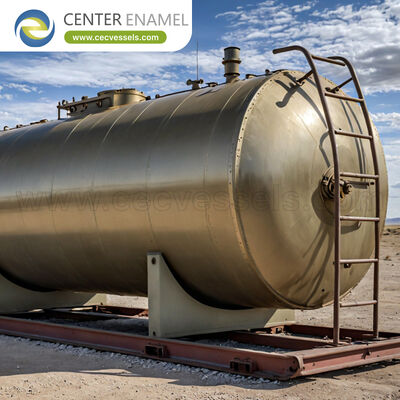
Horizontal vessels suit large volume, two-phase flow and cases where a low profile or transport limits matter. Support saddles and liquid holdup shape the design.
Cylindrical, Spherical And Special Forms
Cylindrical shells with curved heads are the common compromise between efficiency and fabrication cost. Spherical vessels distribute pressure most efficiently but are harder and costlier to build.
Special forms — jacketed, clad, lined or multi-layer — split duties between a structural shell and a corrosion or thermal layer, and are chosen for aggressive or high-pressure service.
Why The Type Label Is Not Enough
Two vessels called separators can have very different internals, pressures and materials. A type name does not carry the design conditions, code, nozzle schedule or inspection requirements.
Use the type as a starting point, then specify duty, design pressure and temperature, fluid, volume, internals and code. That is what allows a supplier to offer a comparable vessel.
Choosing Among Types
Start with the process job, then decide whether storage or processing is needed, and whether the duty wants vertical or horizontal geometry and any special internals.
Check access, transport and site constraints early. A vessel that cannot be shipped, lifted or opened for inspection is a poor choice regardless of how well it fits the process on paper.
Finally confirm the code route and the maintenance expectation for the chosen type. A separator with internals that cannot be removed, or a reactor with no cleaning access, may be cheap to buy and costly to keep in service. Stating the inspection and cleaning needs alongside the process duty lets the supplier propose a type that works over the vessel's full life rather than only at start-up.
Main Vessel Types By Function
Type |
Main job |
Characteristic feature |
Storage / buffer |
Hold fluid under pressure |
Minimal internals |
Separator |
Split phases |
Mist extractor, baffles |
Heat exchanger |
Transfer heat |
Tubesheet, two boundaries |
Reactor |
Host a reaction |
Agitator, jacket, coils |
Air receiver |
Store compressed air |
Horizontal or vertical |
Scrubber / column |
Contact gas and liquid |
Trays or packing |
Type Selection Inputs
Input |
Why it matters |
Process function |
Sets the vessel family |
Phase behaviour |
Drives separator internals |
Heat duty |
Sets exchanger surfaces |
Reaction needs |
Sets agitator and jacket |
Orientation |
Footprint vs access |
Transport limits |
Diameter and length |
Inspection access |
Manways and clearance |
Conclusion
Pressure vessel types divide by function — storage, separation, heat exchange and reaction — and by form — vertical or horizontal, cylindrical or spherical.
Use the type as a starting point, then specify the duty, design conditions, internals, access and code; that is what turns a category into a buildable enquiry.
About Center Enamel
Center Enamel is a pressure vessel and process equipment manufacturer based in China, producing stainless steel and carbon steel pressure vessels, separators, reactors, heat exchangers and storage tanks for chemical, oil and gas, power, food, pharmaceutical and water-treatment applications.
The company works under ASME VIII Div.1, GB/T 150 and ISO 9001, and can supply CE/PED marking for the EU market with material traceability, documented welding procedures, NDT and hydrostatic testing in the delivered data book.
- Certifications: ASME, ISO 9001, CE/PED, NSF/ANSI 61, WRAS, ISO 28765, LFGB, BSCI, ISO 45001.
- Standards: ASME VIII Div.1, GB/T 150, EN 13445 where required by the destination market.
- Commercial terms: Minimum order quantity 1 unit, typical lead time about 2 months, L/C or T/T.
Frequently Asked Questions (FAQ)
What are the main types of pressure vessels?
Storage, separation, heat exchange and reaction vessels, each with a distinct function and internals.
What is a separator vessel?
A vessel that splits gas, liquid and sometimes solids using gravity and internals.
Is a shell-and-tube exchanger a pressure vessel?
Its shell and channel sides are pressure boundaries, so the pressure parts follow vessel rules.
How is a reactor different?
It adds agitation, heat transfer and control to carry out a reaction.
When choose vertical orientation?
For small footprint, phase separation and gravity-driven internal flow.
When choose horizontal?
For large volume, two-phase duties and transport or height limits.
Why are most vessels cylindrical?
Cylinders with curved heads distribute pressure efficiently and are economical to build.
What is a jacketed vessel?
A vessel with an outer chamber for a heating or cooling medium.
What is a clad vessel?
A structural shell with a corrosion-resistant layer, splitting strength and corrosion duties.
Does the type name define the design?
No. It does not carry pressure, temperature, material, code or inspection requirements.
What internals does a separator use?
Mist extractors, coalescers, baffles and inlet devices.
How does transport affect type choice?
Diameter and length limits may force a different orientation or field erection.
Why is inspection access a selection factor?
A vessel that cannot be opened and measured cannot be reliably assessed in service.
What should an enquiry include?
Function, design conditions, fluid, volume, internals, access and code.
What is the lead time for an engineered vessel?
About two months from a China manufacturer, subject to code, size and inspection scope.
Suggested CTA: Request a technical quotation with your duty, pressure, temperature and fluid data, or discuss the pressure basis and maintenance access with a Center Enamel engineer.