-
Glass Fused To Steel Tanks (896)
-
Stainless Steel Tanks (434)
-
Fusion Bonded Epoxy Tanks (660)
-
Galvanized Steel Tanks (321)
-
Aluminum Dome Roofs (1346)
-
Wastewater Storage Tanks (280)
-
Welded Steel Tanks (457)
-
Pressure Vessels (534)
-
Anaerobic Digester (217)
-
Industrial Water Tanks (424)
-
Glass Lined Steel Tanks (180)
-
Bolted Steel Tanks (389)
-
Sludge Storage Tank (115)
-
Biogas Storage Tank (173)
-
Leachate Storage Tanks (133)
-
Agricultural Water Storage Tanks (179)
-
Fire Water Tank (166)
-
Grain Storage Silos (146)
-
Biogas Projects (424)
-
Wastewater Treatment Projects (1882)
-
Double Membrane Roof (223)
|
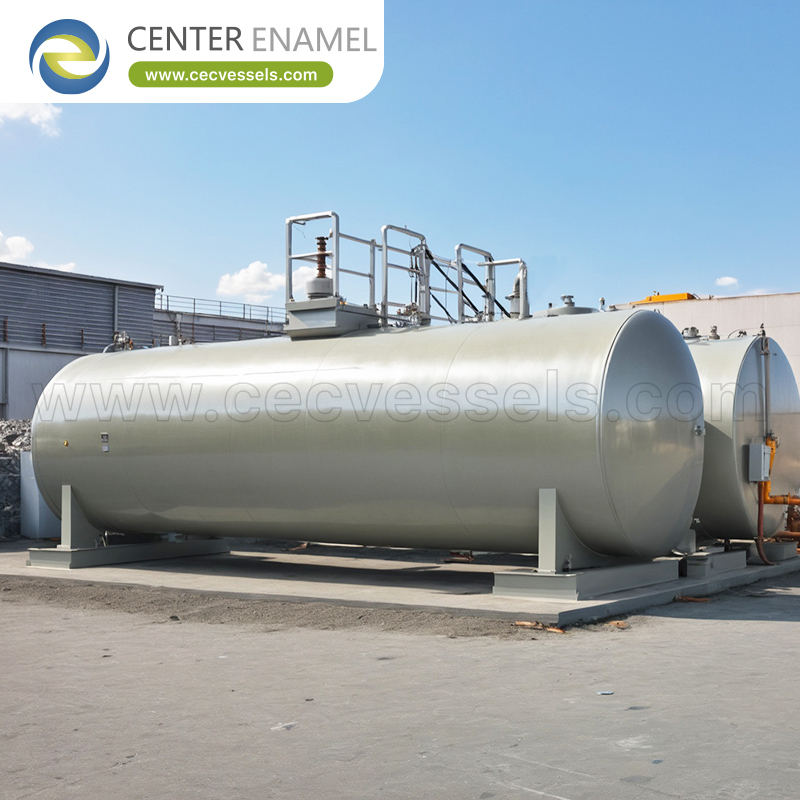
Difference Between Pressure Vessel And Storage Tank Explained
| Place of Origin: | China |
| Brand Name: | Center Enamel |
| Certification: | ISO 9001,CE, NSF/ANSI 61, WRAS, ISO 28765, LFGB, BSCI, ISO 45001 |
| Minimum Order Quantity: | 1 Sets |
| Price: | 2000 |
| Delivery Time: | 2 months |
| Payment Terms: | L/C,T/T |
| Supply Ability: | 200 sets / days |
|
Detail Information |
|||
Product Description
Difference Between Pressure Vessel And Storage Tank Explained
A pressure vessel and a storage tank are separated by design pressure and stored energy, not by size. A large atmospheric tank may hold far more liquid than a small air receiver and still be a tank, while the receiver is a pressure vessel.
This guide draws that boundary and compares the codes, geometry, relief systems and inspection regimes that follow from it, so a purchase can be specified under the right class.
Pressure And Stored Energy Decide
The common dividing line in North American practice is around 15 psig internal pressure; above it a vessel generally falls under ASME Section VIII. Europe's PED starts from a maximum allowable pressure above 0.5 bar.
The logic is physical. A breach in an atmospheric tank releases liquid; a breach in a pressurized vessel releases stored energy all at once. That difference created two codes and two inspection systems.
The Codes Are Different
Atmospheric and low-pressure tanks are commonly built to API 650, with API 620 for larger low-pressure duties. Pressure vessels are built to ASME VIII, EN 13445 or GB/T 150 depending on market.
The chosen code drives wall thickness, head geometry, welding qualification, examination, relief calculation and certification. The two families are not interchangeable by name or by custom.
Shape Follows The Load
A tank is typically a flat-bottom cylinder with a flat, cone or dome roof, sized mainly for liquid head, wind and seismic load. Its bottom rests on a foundation designed for distributed weight.
A vessel is usually cylindrical with curved heads because curved surfaces carry pressure in membrane tension. A flat end would have to be very thick to resist the same internal pressure.
Relief And Venting
Tanks use conservation or pressure-vacuum vents, flame arrestors and emergency roof manholes to handle breathing, filling and fire exposure without overpressurizing the roof.
Vessels use a relief valve sized to defined scenarios such as fire, blocked outflow and thermal expansion. The device is part of the code design, not an accessory fitted at the end.
The Borderline Cases
A low-pressure item described as a tank can still be a vessel if blocked vapour flow or thermal expansion can raise its pressure into vessel range. Nitrogen blanketing is the classic example.
Fluid hazard and cyclic duty also matter. A hazardous or fluctuating service can bring equipment into pressure-vessel scope below the nominal threshold, subject to the jurisdiction.
Inspection Regimes Diverge
In the API framework in-service inspection follows API 510 for pressure vessels and API 653 for storage tanks, with different intervals, acceptance criteria and repair rules.
The document sets differ too: a vessel file carries design calculation, relief sizing and statutory inspection; a tank file centres on shell courses, coating, settlement and vent verification.
How To Classify An Item
State maximum design pressure, volume, fluid, temperature and whether the item is fired. Apply the destination code's scope rules to those inputs, including blocked-in and thermal cases.
If the duty sits near the boundary, have the class confirmed before ordering. A late change from tank to vessel means new calculations, different heads, qualified welding and a different data book.
Pressure Vessel Versus Storage Tank
Aspect |
Pressure vessel |
Storage tank |
Design pressure |
Above threshold |
Atmospheric / low |
Typical code |
ASME VIII / EN 13445 / GB150 |
API 650 / API 620 |
Shape |
Curved heads |
Flat bottom, flat/cone roof |
Wall basis |
Pressure + corrosion |
Liquid head + wind |
Relief |
Sized relief valve |
Conservation / P-V vents |
In-service |
API 510 type regime |
API 653 type regime |
Cost per volume |
Higher |
Lower |
Classification Inputs
Input |
Effect |
Design pressure |
Primary threshold test |
Blocked-in case |
Can force vessel scope |
Thermal expansion |
Sets relief need |
Fluid hazard |
May tighten the code |
Volume |
Sets code category |
Destination |
Defines authority |
Fired or unfired |
Selects code section |
Conclusion
The vessel-versus-tank boundary is design pressure and stored energy, not size. That distinction determines the code, geometry, relief design, documentation and inspection regime.
State pressure scenarios, fluid and destination code in the enquiry, and settle borderline classifications before fabrication rather than after.
About Center Enamel
Center Enamel is a pressure vessel and process equipment manufacturer based in China, producing stainless steel and carbon steel pressure vessels, separators, reactors, heat exchangers and storage tanks for chemical, oil and gas, power, food, pharmaceutical and water-treatment applications.
The company works under ASME VIII Div.1, GB/T 150 and ISO 9001, and can supply CE/PED marking for the EU market with material traceability, documented welding procedures, NDT and hydrostatic testing in the delivered data book.
- Certifications: ASME, ISO 9001, CE/PED, NSF/ANSI 61, WRAS, ISO 28765, LFGB, BSCI, ISO 45001.
- Standards: ASME VIII Div.1, GB/T 150, EN 13445 where required by the destination market.
- Commercial terms: Minimum order quantity 1 unit, typical lead time about 2 months, L/C or T/T.
Frequently Asked Questions (FAQ)
What is the difference between a pressure vessel and a storage tank?
Design pressure and stored energy: a vessel is pressurized, a tank is normally atmospheric or low pressure.
Is the 15 psig rule universal?
It is a common North American line; Europe's PED uses 0.5 bar, so jurisdiction decides.
Does size decide the class?
No. A small air receiver is a vessel; a large atmospheric tank is not.
Which code covers tanks?
Commonly API 650, with API 620 for larger low-pressure duties.
Why do vessels have curved heads?
To distribute pressure stress; flat ends are inefficient under pressure.
Can a tank be nitrogen blanketed?
At low pressure yes, but above the roof design the item becomes a low-pressure vessel.
What relief does a vessel need?
A valve sized for fire, blocked outflow, thermal expansion and other credible cases.
Are inspection standards different?
Yes. API 510 for vessels and API 653 for tanks in the API framework.
Which is cheaper?
A tank is normally lower cost per unit volume because it avoids pressure-rated construction.
What is the middle zone?
Low-pressure duties where a blocked line or heating can push pressure into vessel range.
Does fluid hazard matter?
Yes. Hazardous or cyclic service can bring an item into vessel scope.
Can I use a vessel for atmospheric storage?
Technically yes, but it is heavier and costlier than a correctly specified tank.
What should the purchase order state?
Design pressure and temperature, fluid, volume, applicable code and pressure scenarios.
What if I choose the wrong class?
Recalculation, head redesign, weld requalification and documentation rework.
What is the lead time for an engineered vessel?
About two months from a China manufacturer, subject to code, size and inspection scope.
Suggested CTA: Request a technical quotation with your duty, pressure, temperature and fluid data, or discuss the pressure basis and maintenance access with a Center Enamel engineer.