-
Glass Fused To Steel Tanks (896)
-
Stainless Steel Tanks (434)
-
Fusion Bonded Epoxy Tanks (660)
-
Galvanized Steel Tanks (321)
-
Aluminum Dome Roofs (1336)
-
Wastewater Storage Tanks (280)
-
Welded Steel Tanks (457)
-
Pressure Vessels (524)
-
Anaerobic Digester (217)
-
Industrial Water Tanks (424)
-
Glass Lined Steel Tanks (180)
-
Bolted Steel Tanks (389)
-
Sludge Storage Tank (115)
-
Biogas Storage Tank (173)
-
Leachate Storage Tanks (133)
-
Agricultural Water Storage Tanks (179)
-
Fire Water Tank (166)
-
Grain Storage Silos (146)
-
Biogas Projects (424)
-
Wastewater Treatment Projects (1872)
-
Double Membrane Roof (223)
|
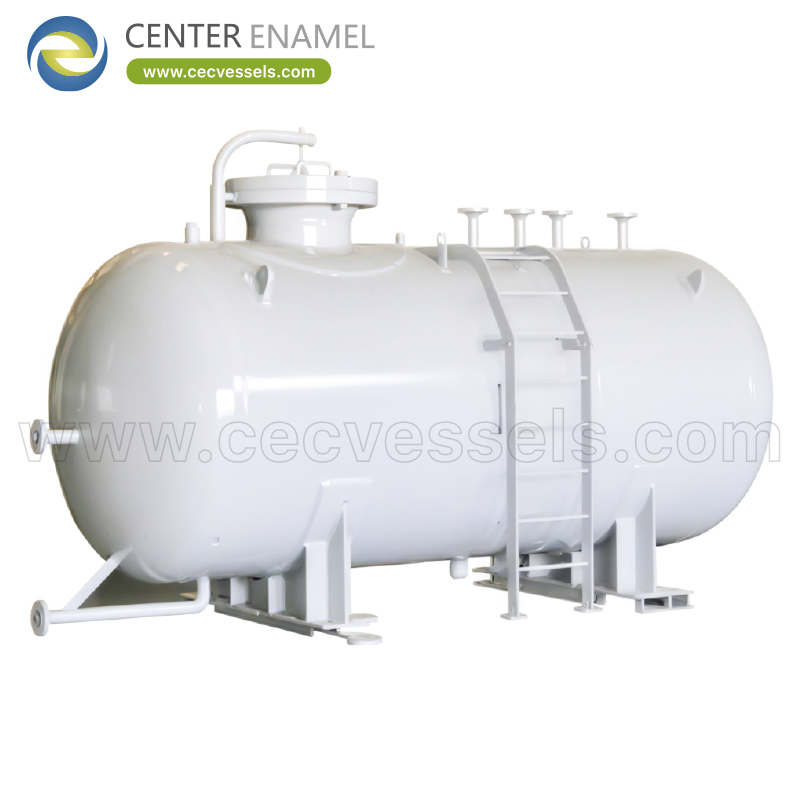
Food Grade Pressure Vessel Sanitary Design 3 A And EHEDG Compliance
| Place of Origin: | China |
| Brand Name: | Center Enamel |
| Certification: | ISO 9001,CE, NSF/ANSI 61, WRAS, ISO 28765, LFGB, BSCI, ISO 45001 |
| Minimum Order Quantity: | 1 Sets |
| Price: | 2000 |
| Delivery Time: | 2 months |
| Payment Terms: | L/C,T/T |
| Supply Ability: | 200 sets / days |
|
Detail Information |
|||
Product Description
What Is A Pressure Vessel Definition Scope And Examples
A pressure vessel is a closed container designed to hold a gas, vapour or liquid at a pressure substantially different from the surrounding atmosphere. The pressure difference, not the vessel's size or shape, is what makes it a pressure vessel.
This page defines the term precisely, explains the scope thresholds used by major codes, gives common examples and notes the equipment normally excluded.
The Core Definition
Three elements define a pressure vessel: it is closed and leak-tight, it contains a fluid, and it is designed for a pressure meaningfully above or below ambient. A bucket of water at atmospheric pressure is not one; a sealed air receiver is.
Because it stores energy, a pressure vessel is treated as safety-critical equipment. Its design, fabrication, examination and testing are governed by a construction code.
How Codes Define Scope
ASME Section VIII generally applies to unfired vessels above about 15 psig internal pressure. The PED in Europe starts from a maximum allowable pressure above 0.5 bar, then uses volume and fluid group to set the category.
Thresholds vary by jurisdiction, so the same physical item can be in scope in one market and out of scope in another. Always state the destination code when classifying equipment.
External Pressure Counts Too
A vessel designed to withstand vacuum or external pressure is still a pressure vessel. External pressure can collapse a shell, and the design rules for buckling differ from those for internal pressure.
Jacketed vessels and equipment that can be evacuated need both conditions considered, even when the internal operating pressure is modest.
Common Examples
Examples include compressed air receivers, separators and knockout drums, surge and buffer vessels, reactors and autoclaves, shell-and-tube heat exchanger shells and channels, and LPG or LNG storage vessels.
What they share is a pressure boundary designed to a code. Their function may be storage, separation, heat transfer or reaction, but the structural obligation is the same.
What Is Normally Excluded
Atmospheric storage tanks built to tank standards are not pressure vessels in the usual sense. Piping is covered by piping codes, and fired steam boilers fall under a separate boiler section.
Open vessels, simple containers with no meaningful pressure difference and equipment below the applicable threshold are generally outside pressure-vessel scope, subject to local rules.
The Main Components
A vessel consists of a shell, heads that close the ends, nozzles for connections, supports, and often internals and safety devices. Every part that holds pressure is a pressure boundary.
The relief device is part of the safety design: if pressure can exceed the allowable limit, a relief valve or rupture device is required to protect the boundary.
Why The Definition Matters Commercially
Classification decides the code, the level of examination, the need for third-party inspection, the marking and the documentation package. It therefore drives cost and lead time.
A buyer who calls a low-pressure item a tank when it is really a vessel may order the wrong construction and face rework or a compliance gap at installation.
How To Classify An Item
Start with the maximum allowable or design pressure, the volume, the fluid and whether the vessel is fired. Apply the destination code's scope rules to those inputs.
If the item sits near a threshold, document the pressure scenarios — blocked outflow, thermal expansion, vacuum — and have the classification confirmed before purchase.
What Counts As A Pressure Vessel
| Item | Usually a pressure vessel? | Reason |
| Compressed air receiver | Yes | Holds gas above atmospheric pressure |
| Separator / knockout drum | Yes | Pressure boundary under process pressure |
| Atmospheric storage tank | No | Near-ambient, tank standard |
| Fired steam boiler | Separate class | Covered by boiler code |
| Evacuated / vacuum vessel | Yes | External pressure design |
| Open process pot | No | No meaningful pressure difference |
Classification Inputs
| Input | Why it matters |
| Design / allowable pressure | Primary scope test |
| Internal volume | Sets code category |
| Fluid group | Affects category and code |
| Fired or unfired | Selects code section |
| External / vacuum case | Adds buckling design |
| Operating temperature | Affects material and scope |
| Destination jurisdiction | Defines the applicable code |
Conclusion
A pressure vessel is a closed, leak-tight container designed for a pressure substantially different from ambient. The pressure difference and stored energy — not size or shape — define it.
Classify by design pressure, volume, fluid, firing and destination code, and confirm borderline duties before ordering so the correct construction and documentation are specified.
About Center Enamel
Center Enamel is a pressure vessel and process equipment manufacturer based in China, producing stainless steel and carbon steel pressure vessels, separators, reactors, heat exchangers and storage tanks for chemical, oil and gas, power, food, pharmaceutical and water-treatment applications.
The company works under ASME VIII Div.1, GB/T 150 and ISO 9001, and can supply CE/PED marking for the EU market with material traceability, documented welding procedures, NDT and hydrostatic testing in the delivered data book.
- Certifications: ASME, ISO 9001, CE/PED, NSF/ANSI 61, WRAS, ISO 28765, LFGB, BSCI, ISO 45001.
- Standards: ASME VIII Div.1, GB/T 150, EN 13445 where required by the destination market.
- Commercial terms: Minimum order quantity 1 unit, typical lead time about 2 months, L/C or T/T.
Frequently Asked Questions (FAQ)
What is a pressure vessel in simple terms?
A closed container built to hold a gas or liquid at a pressure substantially different from the surrounding air.
Does size decide if something is a pressure vessel?
No. Pressure and stored energy decide; a small air receiver can be a vessel while a large atmospheric tank is not.
What pressure threshold is commonly used?
ASME Section VIII is commonly cited above about 15 psig; the PED starts above 0.5 bar with category rules.
Is a vacuum vessel a pressure vessel?
Yes. External pressure can collapse a shell, so vacuum design falls within pressure-vessel rules.
Is a storage tank a pressure vessel?
Usually no. Atmospheric tanks are built to tank standards such as API 650 rather than a pressure-vessel code.
Is a boiler a pressure vessel?
It is a separate class under the boiler code because it is fired; an unfired vessel uses the vessel code.
What are common examples?
Air receivers, separators, surge vessels, reactors, autoclaves, exchanger shells and LPG or LNG tanks.
What are the main parts?
Shell, heads, nozzles, supports, internals where needed, and safety relief devices.
Why does classification affect cost?
It sets the code, examination level, inspection, marking and documentation package.
Can the same item be in scope in one country and not another?
Yes. Scope thresholds and rules differ by jurisdiction.
What is a pressure boundary?
Any part whose failure would let the contained pressure escape — shell, heads, nozzles and covers.
Do all vessels need a relief device?
Where pressure can exceed the allowable limit, a relief or rupture device is required.
Are heat exchanger shells pressure vessels?
Their shell and channel sides are pressure boundaries and are designed to the pressure code.
What should I provide to classify an item?
Design pressure, volume, fluid, temperature, fired status and destination code.
What is the lead time for an engineered vessel?
About two months from a China manufacturer, subject to code, size and inspection scope.
Suggested CTA: Request a technical quotation with your duty, pressure, temperature and fluid data, or discuss the applicable code and inspection route with a Center Enamel engineer.