-
Glass Fused To Steel Tanks (896)
-
Stainless Steel Tanks (434)
-
Fusion Bonded Epoxy Tanks (660)
-
Galvanized Steel Tanks (321)
-
Aluminum Dome Roofs (1346)
-
Wastewater Storage Tanks (280)
-
Welded Steel Tanks (457)
-
Pressure Vessels (534)
-
Anaerobic Digester (217)
-
Industrial Water Tanks (424)
-
Glass Lined Steel Tanks (180)
-
Bolted Steel Tanks (389)
-
Sludge Storage Tank (115)
-
Biogas Storage Tank (173)
-
Leachate Storage Tanks (133)
-
Agricultural Water Storage Tanks (179)
-
Fire Water Tank (166)
-
Grain Storage Silos (146)
-
Biogas Projects (424)
-
Wastewater Treatment Projects (1882)
-
Double Membrane Roof (223)
|
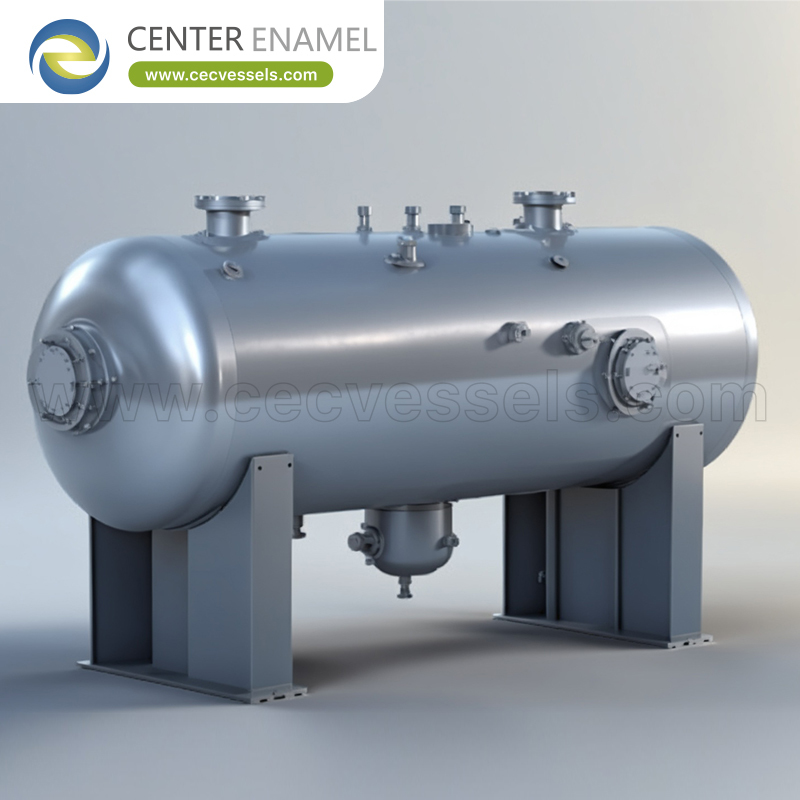
Pressure Vessel Skid Package Design And Integration
| Place of Origin: | China |
| Brand Name: | Center Enamel |
| Certification: | ISO 9001,CE, NSF/ANSI 61, WRAS, ISO 28765, LFGB, BSCI, ISO 45001 |
| Minimum Order Quantity: | 1 Sets |
| Price: | 2000 |
| Delivery Time: | 2 months |
| Payment Terms: | L/C,T/T |
| Supply Ability: | 200 sets / days |
|
Detail Information |
|||
Product Description
A pressure vessel skid package mounts the vessel together with its pumps, piping, valves and instrumentation on a single structural frame, so the unit can be tested and shipped as one assembly.
This guide explains what a skid contains, how it is designed for transport and installation, and where the engineering effort goes to make a modular package work reliably.
What A Skid Package ContainsA skid typically includes the vessel, a structural base frame, interconnecting piping, valves, instruments and sometimes pumps, heaters or control panels. The exact content depends on the process function.
The aim is to move work from the construction site into the controlled environment of the workshop, where quality is easier to verify and schedule is easier to hold.
The Frame And Structural DesignThe frame carries the weight of the vessel and equipment and must withstand transport loads as well as operating loads. Lifting points, tie-down locations and support distribution are designed into it.
Rigidity matters: a frame that flexes can misalign piping and damage nozzles, so deflection under load is checked alongside strength.
Piping And Interface PointsSkid piping connects the mounted equipment internally and terminates at defined interface points for the plant to connect to. These interfaces — utility, feed, product and control — must be drawn and agreed.
Clear interfaces are what make a skid installable. A package with undefined connection points creates site work and delays.
Instrumentation And ControlA skid may include local instruments, sensors and a control panel. The control philosophy should state what is monitored locally and what signals go to the plant control system.
Factory testing of the instrument loop before shipment is a major advantage of the skid approach, because wiring and response can be verified in the shop.
Transport And Site ConstraintsSkid dimensions and weight are set by transport limits and site access. Oversize packages may need special carriers, route surveys or a design that splits into smaller modules.
Designing to the transport envelope early avoids the costly exercise of building a skid that cannot reach the site.
Factory Acceptance TestingBefore shipment the skid can undergo factory acceptance testing: pressure tests, leak checks, instrument loop checks and, where specified, a functional run with water or a substitute medium.
Witnessing these tests reduces commissioning risk, because problems are found and fixed while the package is still in the workshop.
When A Skid Makes SenseSkids suit repeatable duties, tight site schedules and locations where skilled site labour is scarce. They are less suited to very large vessels that exceed transport limits or to duties needing extensive field integration.
The decision is a trade-off between factory quality and transport or size constraints, and should be made early in the project.
Specifying A Skid PackageState the process duty, the equipment to be mounted, the transport envelope, utility interfaces, control philosophy, code and the tests to be witnessed at factory acceptance.
Define what is excluded as clearly as what is included, so the buyer and supplier agree on the boundary before fabrication.
Preservation during transport and storage deserves attention too. Instruments, seals and machined surfaces can be damaged by vibration or weather before the skid reaches site, so protective covers, secured connections and a clear preservation plan belong in the handover requirements. A package that was tested successfully in the workshop can still arrive in poor condition if these practical details are left to chance.
Skid Package Versus Field-Erected VesselAspect |
Skid package |
Field erection |
Assembly |
In workshop |
On site |
Quality control |
Factory conditions |
Site-dependent |
Transport |
Size and weight limited |
Piece-by-piece |
Site work |
Connect and set |
Full build |
Testing |
FAT before shipment |
Mostly on site |
Best for |
Repeatable, moderate size |
Very large vessels |
Input |
Why it matters |
Mounted equipment list |
Defines scope |
Transport envelope |
Sets maximum size |
Utility interfaces |
Defines site connections |
Control philosophy |
Sets I/O and local control |
Frame load cases |
Transport and operating |
FAT scope |
Defines witnessed tests |
Code and marking |
Sets compliance |
A pressure vessel skid package integrates vessel, piping and controls on one frame for factory testing and simplified site installation.
Fix the transport envelope, equipment list and interface points early, and use factory acceptance testing to move risk out of the construction site.
About Center EnamelCenter Enamel is a pressure vessel and process equipment manufacturer based in China, producing stainless steel and carbon steel pressure vessels, separators, reactors, heat exchangers and storage tanks for chemical, oil and gas, power, food, pharmaceutical and water-treatment applications.
The company works under ASME VIII Div.1, GB/T 150 and ISO 9001, and can supply CE/PED marking for the EU market with material traceability, documented welding procedures, NDT and hydrostatic testing in the delivered data book.
- Certifications: ASME, ISO 9001, CE/PED, NSF/ANSI 61, WRAS, ISO 28765, LFGB, BSCI, ISO 45001.
- Standards: ASME VIII Div.1, GB/T 150, EN 13445 where required by the destination market.
- Commercial terms: Minimum order quantity 1 unit, typical lead time about 2 months, L/C or T/T.
A vessel and its associated equipment mounted on one structural frame for transport and installation as a unit.
What is usually on a skid?The vessel, frame, piping, valves, instruments and sometimes pumps, heaters or a control panel.
Why use a skid package?To move fabrication and testing into the workshop and reduce site work.
How is the frame designed?For operating and transport loads, with lifting points and adequate rigidity.
What are interface points?Defined connections for feed, product, utilities and controls where the plant ties in.
What is factory acceptance testing?Pressure, leak, instrument and functional checks done before shipment.
Do skids have size limits?Yes. Transport and site access set the maximum dimensions and weight.
When is a skid not suitable?For very large vessels beyond transport limits or duties needing extensive field integration.
Can a skid be split into modules?Yes, where a single package would exceed transport constraints.
Who witnesses the FAT?The buyer or its representative where agreed in the contract.
Does a skid include controls?Often, with local instruments and a panel; the control philosophy defines the split.
What is piping stress on a skid?Loads from piping that can misalign equipment; checked in the frame design.
Why define exclusions?So both parties agree on the boundary of supply before fabrication.
How does a skid affect schedule?It can shorten site work but adds engineering and transport planning.
What is the lead time for a skid package?About two months for an engineered vessel, subject to scope, code and testing.