-
Glass Fused To Steel Tanks (896)
-
Stainless Steel Tanks (434)
-
Fusion Bonded Epoxy Tanks (660)
-
Galvanized Steel Tanks (321)
-
Aluminum Dome Roofs (1346)
-
Wastewater Storage Tanks (280)
-
Welded Steel Tanks (457)
-
Pressure Vessels (534)
-
Anaerobic Digester (217)
-
Industrial Water Tanks (424)
-
Glass Lined Steel Tanks (180)
-
Bolted Steel Tanks (389)
-
Sludge Storage Tank (115)
-
Biogas Storage Tank (173)
-
Leachate Storage Tanks (133)
-
Agricultural Water Storage Tanks (179)
-
Fire Water Tank (166)
-
Grain Storage Silos (146)
-
Biogas Projects (424)
-
Wastewater Treatment Projects (1882)
-
Double Membrane Roof (223)
|
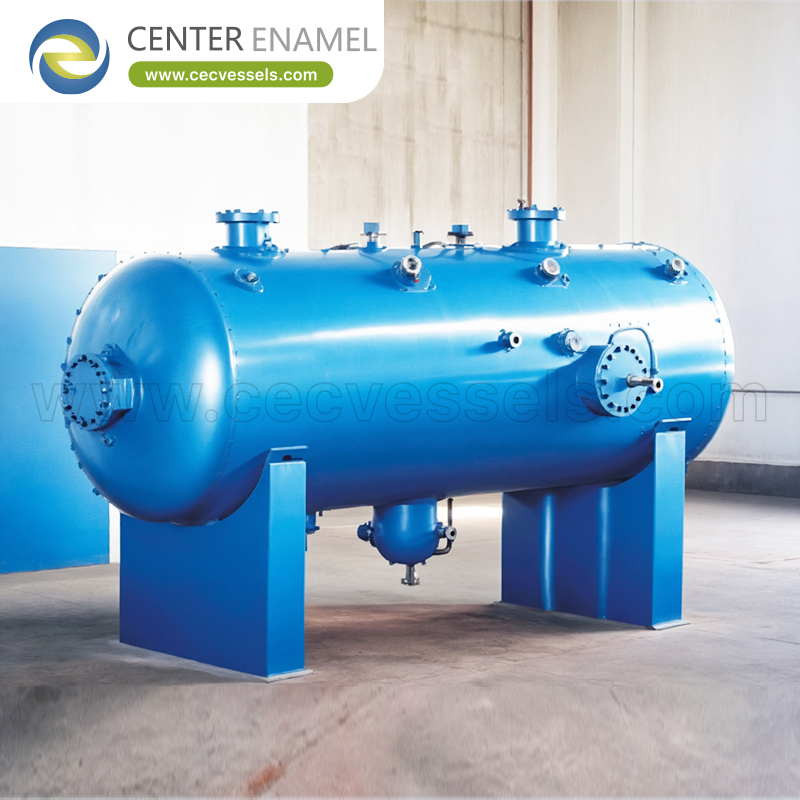
Pressure Vessel Project Execution From Order To Delivery
| Place of Origin: | China |
| Brand Name: | Center Enamel |
| Certification: | ISO 9001,CE, NSF/ANSI 61, WRAS, ISO 28765, LFGB, BSCI, ISO 45001 |
| Minimum Order Quantity: | 1 Sets |
| Price: | 2000 |
| Delivery Time: | 2 months |
| Payment Terms: | L/C,T/T |
| Supply Ability: | 200 sets / days |
|
Detail Information |
|||
Product Description
Pressure Vessel Project Execution From Order To Delivery
A pressure vessel project runs from contract kickoff to delivery through a series of controlled milestones, each with documents and acceptance points. Managing those milestones is what keeps the vessel on schedule and on specification.
This guide follows a typical vessel project, identifies the decision points where delay usually starts, and shows how clear milestones protect both buyer and supplier.
Kickoff And The Frozen Basis
The project begins with a kickoff that confirms the design basis, code, material, scope and documents. Any ambiguity left here will reappear as a change order later.
Freezing the basis does not mean ignoring future questions; it means formalising how questions and changes are raised and approved.
Design And Approval Milestone
The supplier develops calculations and drawings for review. The buyer or EPC contractor checks them against the specification and returns comments within an agreed period.
Slow review is a common cause of delay. Setting a review turnaround in the contract is as important as setting the fabrication time.
Procurement Of Long-Lead Items
Certified plate, forgings, heads, nozzles and special alloys may have long lead times. These are ordered after design approval, so the approval milestone directly affects the delivery date.
Early identification of long-lead items allows the project team to reserve material and avoid idling the fabrication slot.
Fabrication And Hold Points
Fabrication proceeds through forming, welding and examination, with defined hold points where inspection or buyer witness is required before work continues.
Missing a hold point can mean rework, so the inspection and test plan should state who attends, what is checked and how acceptance is recorded.
Testing And Final Documentation
The pressure test, any required authorized inspection and the final data report close the compliance part of the project. The nameplate and marking are applied at this stage.
The buyer should review the document package before shipment, because correcting a record after delivery is slower and more expensive.
Delivery And Site Interface
Delivery arrangements depend on size and site conditions. Oversize vessels may need route surveys, special transport or staged delivery, and the buyer must confirm who handles unloading and lifting.
A clear delivery point in the contract — ex-works or delivered to site — avoids disputes about transport risk and cost.
Schedule Control
The critical path usually runs through design approval, material procurement and inspection availability. Tracking these rather than only shop hours gives an accurate view of progress.
Regular progress reporting with document status, material status and fabrication stage lets both parties act before a small slip becomes a delay.
Weather, inspection availability and shipping windows can also shape the plan, especially for large vessels or long transport routes. A realistic schedule acknowledges these rather than assuming a smooth sequence. When a milestone slips, the useful question is which downstream activity it affects and whether the remaining float can absorb it. That kind of forward-looking control is more valuable than a report that simply confirms the vessel is progressing in the shop.
Changes And Claims
Scope changes should be recorded with their technical and schedule impact before work proceeds. Silent changes are the root of most project disputes.
A simple change procedure — request, assessment, approval, updated documents — keeps the vessel, the schedule and the commercial position aligned.
Changes often originate outside the fabrication shop: a piping route moves a nozzle, a process revision raises the design temperature, or a site condition alters the support arrangement. Each can affect material already ordered, work already completed and documents already approved. Recording the origin as well as the impact helps both parties see whether the change is a genuine scope difference or a correction of an incomplete specification, which is often the real cause of a claim.
Project Milestones And Outputs
Milestone |
Key output |
Common risk |
Kickoff |
Frozen basis and scope |
Unstated assumptions |
Design approval |
Approved drawings |
Slow review |
Procurement |
Material on order |
Long-lead items |
Fabrication |
Examined welds |
Missed hold points |
Testing |
Test record and data report |
Incomplete documents |
Delivery |
Vessel at agreed point |
Transport / lifting |
Project Control Inputs
Input |
Why it matters |
Approved design basis |
Prevents later changes |
Review turnaround |
Protects the schedule |
Long-lead list |
Secures material early |
Inspection plan |
Defines hold points |
Document list |
Defines deliverables |
Delivery point |
Sets responsibility |
Change procedure |
Controls scope drift |
Conclusion
A pressure vessel project is a chain of milestones — kickoff, design approval, procurement, fabrication, testing and delivery — each with documents and acceptance points.
Freeze the basis, agree review turnarounds, track long-lead items and hold points, and manage changes formally to keep the vessel on specification and on schedule.
About Center Enamel
Center Enamel is a pressure vessel and process equipment manufacturer based in China, producing stainless steel and carbon steel pressure vessels, separators, reactors, heat exchangers and storage tanks for chemical, oil and gas, power, food, pharmaceutical and water-treatment applications.
The company works under ASME VIII Div.1, GB/T 150 and ISO 9001, and can supply CE/PED marking for the EU market with material traceability, documented welding procedures, NDT and hydrostatic testing in the delivered data book.
- Certifications: ASME, ISO 9001, CE/PED, NSF/ANSI 61, WRAS, ISO 28765, LFGB, BSCI, ISO 45001.
- Standards: ASME VIII Div.1, GB/T 150, EN 13445 where required by the destination market.
- Commercial terms: Minimum order quantity 1 unit, typical lead time about 2 months, L/C or T/T.
Frequently Asked Questions (FAQ)
What is a pressure vessel project?
The managed sequence from contract kickoff through design, procurement, fabrication, testing and delivery.
What happens at kickoff?
The design basis, code, material, scope and documents are confirmed and frozen.
Why is design approval critical?
Material is ordered after approval, so review time directly affects delivery.
What are long-lead items?
Certified plate, forgings, heads, nozzles and special alloys that take time to procure.
What is a hold point?
A fabrication stage that must be inspected and accepted before work continues.
What is an inspection and test plan?
A document stating what is checked, by whom and at which stages.
When is the data report finished?
After the pressure test and any required authorized inspection.
Why review documents before shipment?
Corrections after delivery are slower and more costly.
What determines the critical path?
Design approval, material procurement and inspection availability.
What is ex-works delivery?
The buyer takes responsibility at the factory; transport is separate.
How are oversize vessels delivered?
By route survey, special transport or staged delivery, with lifting arranged at site.
Why record changes formally?
To capture technical and schedule impact before work proceeds.
What should progress reports include?
Document status, material status and fabrication stage.
How long does an engineered vessel take?
About two months from a China manufacturer, subject to code, size and inspection scope.
Who attends hold points?
The inspector and, where agreed, the buyer or EPC representative.
Suggested CTA: Request a technical quotation with your duty, pressure, temperature and fluid data, or discuss the delivery and engineering scope with a Center Enamel engineer.