-
Glass Fused To Steel Tanks (896)
-
Stainless Steel Tanks (434)
-
Fusion Bonded Epoxy Tanks (660)
-
Galvanized Steel Tanks (321)
-
Aluminum Dome Roofs (1346)
-
Wastewater Storage Tanks (280)
-
Welded Steel Tanks (457)
-
Pressure Vessels (534)
-
Anaerobic Digester (217)
-
Industrial Water Tanks (424)
-
Glass Lined Steel Tanks (180)
-
Bolted Steel Tanks (389)
-
Sludge Storage Tank (115)
-
Biogas Storage Tank (173)
-
Leachate Storage Tanks (133)
-
Agricultural Water Storage Tanks (179)
-
Fire Water Tank (166)
-
Grain Storage Silos (146)
-
Biogas Projects (424)
-
Wastewater Treatment Projects (1882)
-
Double Membrane Roof (223)
|
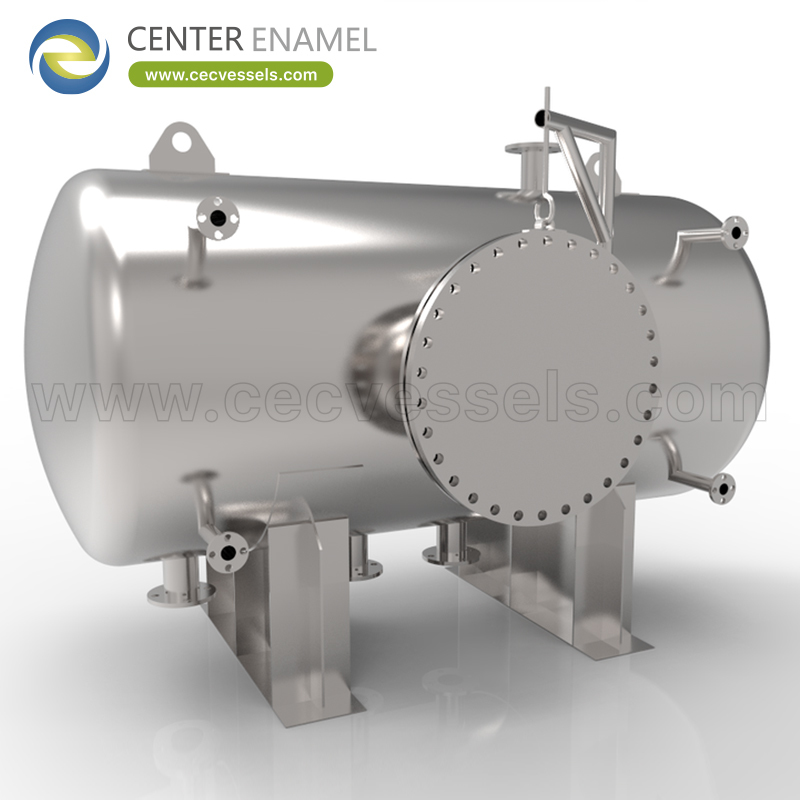
Pressure Vessel For Chemical Plant Materials And Duty Requirements
| Place of Origin: | China |
| Brand Name: | Center Enamel |
| Certification: | ISO 9001,CE, NSF/ANSI 61, WRAS, ISO 28765, LFGB, BSCI, ISO 45001 |
| Minimum Order Quantity: | 1 Sets |
| Price: | 2000 |
| Delivery Time: | 2 months |
| Payment Terms: | L/C,T/T |
| Supply Ability: | 200 sets / days |
|
Detail Information |
|||
Product Description
Chemical plant vessels are specified by the chemistry and the duty first: what the fluid is, how it attacks material, what temperature and cycling it sees, and how it must be cleaned and protected.
This guide covers the requirements chemical service places on a pressure vessel — material, corrosion, pressure protection, cleanability and the compliance basis.
Chemistry Drives Material SelectionChemical service rarely fails for lack of strength; it fails because the material was wrong for the fluid. Corrosion, stress corrosion cracking and localized attack must be evaluated against the real composition.
Chlorides, acids, solvents, sulfur compounds and cleaning agents each point to different materials. Trace impurities can matter as much as the main component.
Corrosion Mechanisms And AllowanceUniform thinning is only one mechanism. Pitting, crevice corrosion, stress corrosion cracking and hydrogen-related damage can occur with little overall wall loss.
A corrosion allowance addresses uniform loss; the other mechanisms are handled through material choice, stress control, fabrication quality and targeted inspection.
Temperature And Thermal CyclingChemical processes heat and cool vessels repeatedly, sometimes through large temperature ranges. Thermal cycling drives fatigue at details and affects allowable stress.
Design temperature must cover the credible maximum and minimum, and the number of cycles belongs in the design basis where it is significant.
Pressure Protection And ReliefReactions can run away, blocked outlets can overpressure a vessel, and thermal expansion of a trapped liquid can raise pressure sharply. Relief must be sized for the credible scenarios.
The relief basis must be coordinated with the vessel's allowable pressure and the rest of the system, including upstream equipment that can exceed the assumed pressure.
Cleanability And Product PurityMany chemical vessels are multi-product or require high purity. Surface finish, drainage, clean-in-place features and the absence of crevices can be decisive.
These requirements influence geometry, internals and nozzle placement, and should be stated at specification rather than added after fabrication.
Seals, Gaskets And Ancillary PartsThe pressure boundary is not only the shell. Gaskets, seals, linings and instrument connections must be compatible with the fluid and temperature, since a small seal failure can shut down a unit.
Specify these items by service, not by catalogue default, and confirm they are included in the document package.
Code, Registration And InspectionChemical vessels are commonly built to ASME Section VIII, EN 13445 or GB/T 150 depending on location, with in-service inspection under the applicable regime.
Hazardous or regulated services may add requirements, so the destination jurisdiction and fluid classification should be established early.
Working With The SupplierGive the supplier the full fluid data, including impurities and cleaning chemicals, and the expected operating pattern. A generic corrosion or non-corrosive label is not enough.
Ask for the material basis, relief assumptions and inspection provisions to be stated, so the design can be reviewed against the real chemical duty.
It is equally important to describe what changes over time: feedstock variations, catalyst changes, planned revamps or a shift to a different product. A vessel designed only for today's composition can become the constraint when the plant evolves. Discussing the plausible future duty at the design stage allows corrosion allowance, material and access to be chosen with that flexibility in mind, which is usually cheaper than modifying the vessel later.
Start-up and shutdown conditions deserve the same attention as steady operation. Chemical vessels often see air, moisture or cleaning solutions at moments when the process is not at its normal composition, and these can be more aggressive than the running fluid. Specifying the full operating sequence, including how the vessel is emptied, cleaned and left between campaigns, allows material and lining choices to be checked against the real exposure rather than only the nominal duty.
Chemical Service RequirementsRequirement |
Design response |
Specification input |
Corrosive fluid |
Material / cladding |
Full composition |
Localized attack |
Grade and stress control |
Impurities, chlorides |
Thermal cycling |
Fatigue detail |
Cycle count and range |
Overpressure |
Sized relief |
Reaction / blockage cases |
Product purity |
Finish and cleanability |
CIP method |
Regulated service |
Code and inspection |
Jurisdiction and fluid group |
Input |
Why it matters |
Fluid composition |
Sets material |
Impurities |
Drives localized corrosion |
Temperature range |
Sets stress and grade |
Cycle count |
Fatigue assessment |
Reaction / upset cases |
Relief sizing |
Cleaning method |
Finish and internals |
Code and jurisdiction |
Compliance basis |
Chemical plant vessels are defined by fluid compatibility, corrosion mechanism, temperature and cycling, relief, cleanability and the applicable code.
Provide complete chemistry and operating data at enquiry, and require the material basis and relief assumptions to be stated so the vessel fits the real duty.
About Center EnamelCenter Enamel is a pressure vessel and process equipment manufacturer based in China, producing stainless steel and carbon steel pressure vessels, separators, reactors, heat exchangers and storage tanks for chemical, oil and gas, power, food, pharmaceutical and water-treatment applications.
The company works under ASME VIII Div.1, GB/T 150 and ISO 9001, and can supply CE/PED marking for the EU market with material traceability, documented welding procedures, NDT and hydrostatic testing in the delivered data book.
Material compatibility with the real fluid and the duty conditions.
Why can a strong vessel still fail?Because the material was wrong for the chemistry, causing corrosion or cracking.
What is stress corrosion cracking?Cracking from tensile stress, a susceptible material and a specific corrodent.
Does a corrosion allowance cover all corrosion?No. It addresses uniform thinning, not pitting or cracking.
Why do trace impurities matter?They can drive localized corrosion not predicted from the main fluid.
How does thermal cycling affect design?It can cause fatigue at details and change material allowable stress.
What relief scenarios apply?Runaway reaction, blocked outlet, fire and thermal expansion among others.
Why is cleanability important?Multi-product or high-purity service needs finishes and features that can be cleaned.
Do gaskets matter?Yes. Compatibility and correct specification prevent seal failures and shutdowns.
Which code applies?Depends on location: commonly ASME VIII, EN 13445 or GB/T 150.
Are hazardous fluids treated differently?Yes. They may raise the code category and add inspection requirements.
Can cladding help?Often, by combining a structural shell with a corrosion-resistant contact surface.
What data should I give the supplier?Full fluid composition including impurities, temperatures, cycles and cleaning chemicals.
What should I ask to be stated?The material basis, relief assumptions and inspection provisions.
What is the lead time for an engineered chemical vessel?About two months, subject to material, code and inspection scope.
Suggested CTA: Request a technical quotation with your duty, pressure, temperature and fluid data, or discuss the package scope and interface with a Center Enamel engineer.