-
Glass Fused To Steel Tanks (896)
-
Stainless Steel Tanks (434)
-
Fusion Bonded Epoxy Tanks (660)
-
Galvanized Steel Tanks (321)
-
Aluminum Dome Roofs (1346)
-
Wastewater Storage Tanks (280)
-
Welded Steel Tanks (457)
-
Pressure Vessels (534)
-
Anaerobic Digester (217)
-
Industrial Water Tanks (424)
-
Glass Lined Steel Tanks (180)
-
Bolted Steel Tanks (389)
-
Sludge Storage Tank (115)
-
Biogas Storage Tank (173)
-
Leachate Storage Tanks (133)
-
Agricultural Water Storage Tanks (179)
-
Fire Water Tank (166)
-
Grain Storage Silos (146)
-
Biogas Projects (424)
-
Wastewater Treatment Projects (1882)
-
Double Membrane Roof (223)
|
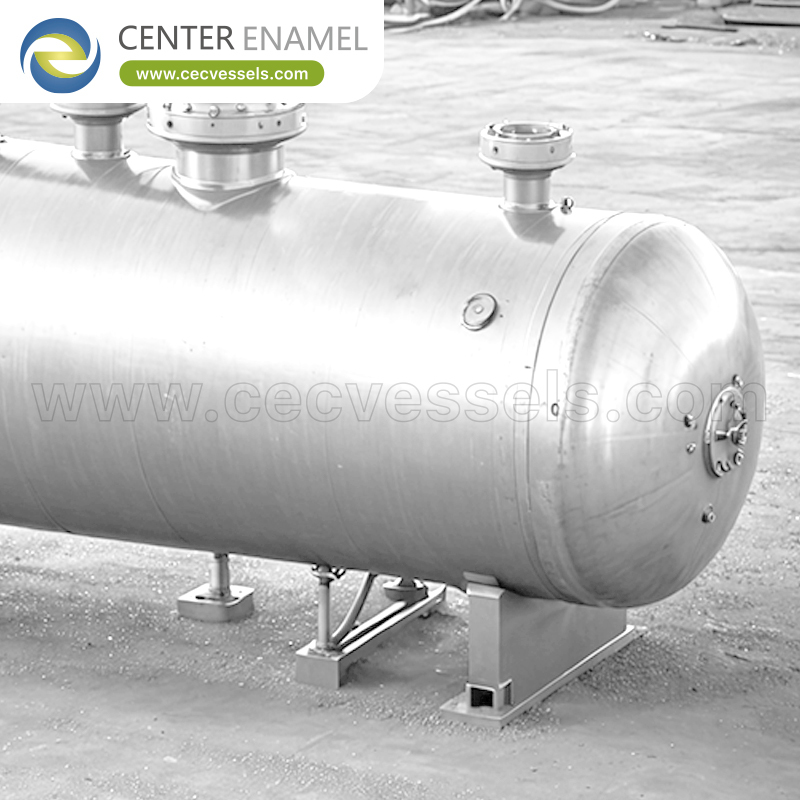
Pressure Vessel Engineering From Process Data To Fabrication
| Place of Origin: | China |
| Brand Name: | Center Enamel |
| Certification: | ISO 9001,CE, NSF/ANSI 61, WRAS, ISO 28765, LFGB, BSCI, ISO 45001 |
| Minimum Order Quantity: | 1 Sets |
| Price: | 2000 |
| Delivery Time: | 2 months |
| Payment Terms: | L/C,T/T |
| Supply Ability: | 200 sets / days |
|
Detail Information |
|||
Product Description
Pressure Vessel Engineering From Process Data To Fabrication
Pressure vessel engineering converts a process requirement into a buildable, code-compliant design: the design basis, calculations, material selection, drawings and documents that the shop works from.
This guide follows the engineering scope from process data to fabrication release, and shows where engineering decisions control cost, integrity and schedule.
Start With The Process Data
Engineering begins with the process envelope: fluid composition, flow, normal and maximum operating pressure and temperature, phase behaviour, and any vacuum or cyclic duty.
Incomplete process data is the most common cause of engineering rework. A design built on an assumed fluid or pressure will be revisited once the real duty arrives.
Set The Design Basis
From the process data the engineer fixes design pressure and temperature, corrosion allowance, joint efficiency, code and edition, and the load cases the vessel must withstand.
This basis is the reference for every later calculation and drawing. It should be recorded and approved before detailed design starts.
Mechanical Calculation
The calculation establishes shell and head thickness, opening reinforcement, nozzle loads, support design and, where relevant, external-pressure buckling and fatigue checks.
It is not a single thickness number. Each pressure-retaining part and load case must be addressed, and the controlling component determines the vessel's allowable pressure.
Material Selection
Material is chosen against the real fluid, temperature and code acceptance — not by grade name alone. Corrosivity, chloride content, cleaning chemicals and minimum metal temperature all influence the choice.
The decision affects thickness, welding procedures, heat treatment and inspection, so it is an engineering decision with cost and schedule consequences.
Nozzles, Supports And Internals
Nozzles are designed for reinforcement, flange rating and external pipe loads. Supports are checked for weight, wind, seismic and thermal movement. Internals are engineered for the process function.
These details are where many field problems originate, because they connect the vessel to the rest of the plant and to the foundation.
Drawings And Data Documents
Engineering output is a controlled drawing set: general arrangement, fabrication drawings, nozzle schedule, weld map and detail drawings, linked to the calculation and the data report.
Consistency across these documents matters. A mismatch between the nozzle schedule and the general arrangement is a common source of fabrication rework.
Design Review And Approval
Before release, the design is reviewed for code compliance, dimensional consistency, material availability and fabrication practicality. The EPC contractor or owner may hold approval points.
Catching errors at review is far cheaper than changing a vessel on the shop floor or on site.
An effective review also checks the vessel against the rest of the plant. Nozzle orientations should match the piping layout, support locations should suit the foundation, and the maintenance envelope should allow internals to be withdrawn. These interfaces are rarely visible in a single vessel drawing, so the reviewer needs the related plant documents. Resolving them at this stage avoids the costly field modifications that occur when a vessel is installed but cannot be connected or opened as intended.
Engineering Support During Fabrication
Engineering does not end at drawing release. Questions arise during forming, welding and inspection, and deviations must be assessed against the design basis rather than resolved informally.
A clear engineering change process keeps the as-built vessel, the documents and the compliance basis aligned.
Common shop-stage questions include a material grade that is unavailable in the required form, a nozzle that conflicts with a seam, or a thickness that changes after a component is substituted. Each has a technical answer that must be reflected in the calculation, the drawing and the data record together. Treating such questions as engineering decisions rather than shop conveniences is what preserves compliance and avoids a mismatch between the vessel and its documentation.
Engineering Inputs And Outputs
Input |
Engineering action |
Output |
Process data |
Define design basis |
Basis document |
Pressure / temperature |
Calculate thickness |
Design calculation |
Fluid chemistry |
Select material |
Material spec |
Loads |
Design nozzles/supports |
Detail drawings |
Code |
Set examination level |
Weld map / ITP |
Duty |
Design internals |
Fabrication drawings |
Engineering Deliverables
Deliverable |
Purpose |
Design basis |
Reference for all design work |
Calculation report |
Code compliance of pressure parts |
General arrangement |
Overall geometry and interfaces |
Fabrication drawings |
Shop build instructions |
Nozzle schedule |
Connections and ratings |
Weld map |
Joint identification and NDT |
Data report |
Final compliance record |
Conclusion
Pressure vessel engineering bridges process data and fabrication through a defined design basis, calculations, material choice, drawings and controlled documents.
Fix the basis early, keep the documents consistent, and manage engineering changes formally so the built vessel matches its compliance record.
About Center Enamel
Center Enamel is a pressure vessel and process equipment manufacturer based in China, producing stainless steel and carbon steel pressure vessels, separators, reactors, heat exchangers and storage tanks for chemical, oil and gas, power, food, pharmaceutical and water-treatment applications.
The company works under ASME VIII Div.1, GB/T 150 and ISO 9001, and can supply CE/PED marking for the EU market with material traceability, documented welding procedures, NDT and hydrostatic testing in the delivered data book.
- Certifications: ASME, ISO 9001, CE/PED, NSF/ANSI 61, WRAS, ISO 28765, LFGB, BSCI, ISO 45001.
- Standards: ASME VIII Div.1, GB/T 150, EN 13445 where required by the destination market.
- Commercial terms: Minimum order quantity 1 unit, typical lead time about 2 months, L/C or T/T.
Frequently Asked Questions (FAQ)
What is pressure vessel engineering?
Converting process requirements into a code-compliant, buildable design with calculations and drawings.
What starts the engineering work?
The process envelope: fluid, flow, pressure, temperature and duty cases.
What is a design basis?
The agreed pressure, temperature, material, code, allowance and loads used for all calculations.
What do calculations determine?
Thickness, reinforcement, nozzle and support design, and where relevant buckling and fatigue.
How is material chosen?
Against fluid, temperature, code acceptance and fabrication practicality.
Why do nozzle loads matter?
They connect the vessel to piping and can drive local reinforcement.
What drawings are produced?
General arrangement, fabrication drawings, nozzle schedule, weld map and details.
What is an ITP?
An inspection and test plan defining hold and witness points.
Why review the design before release?
To catch code, dimensional and fabrication issues while changes are cheap.
Who approves the design?
The owner or EPC contractor may hold approval points under the contract.
Does engineering stop at drawing release?
No. It supports fabrication questions and assesses deviations formally.
What is a design change?
Any alteration to the basis, geometry or material needing review and updated documents.
How does engineering affect cost?
Through material, thickness, examination level, engineering hours and rework avoidance.
Why is document consistency important?
Because mismatched drawings cause fabrication errors and rework.
What is the lead time for an engineered vessel?
About two months from a China manufacturer, subject to code, size and inspection scope.
Suggested CTA: Request a technical quotation with your duty, pressure, temperature and fluid data, or discuss the delivery and engineering scope with a Center Enamel engineer.