-
Glass Fused To Steel Tanks (896)
-
Stainless Steel Tanks (434)
-
Fusion Bonded Epoxy Tanks (660)
-
Galvanized Steel Tanks (321)
-
Aluminum Dome Roofs (1336)
-
Wastewater Storage Tanks (280)
-
Welded Steel Tanks (457)
-
Pressure Vessels (524)
-
Anaerobic Digester (217)
-
Industrial Water Tanks (424)
-
Glass Lined Steel Tanks (180)
-
Bolted Steel Tanks (389)
-
Sludge Storage Tank (115)
-
Biogas Storage Tank (173)
-
Leachate Storage Tanks (133)
-
Agricultural Water Storage Tanks (179)
-
Fire Water Tank (166)
-
Grain Storage Silos (146)
-
Biogas Projects (424)
-
Wastewater Treatment Projects (1872)
-
Double Membrane Roof (223)
|
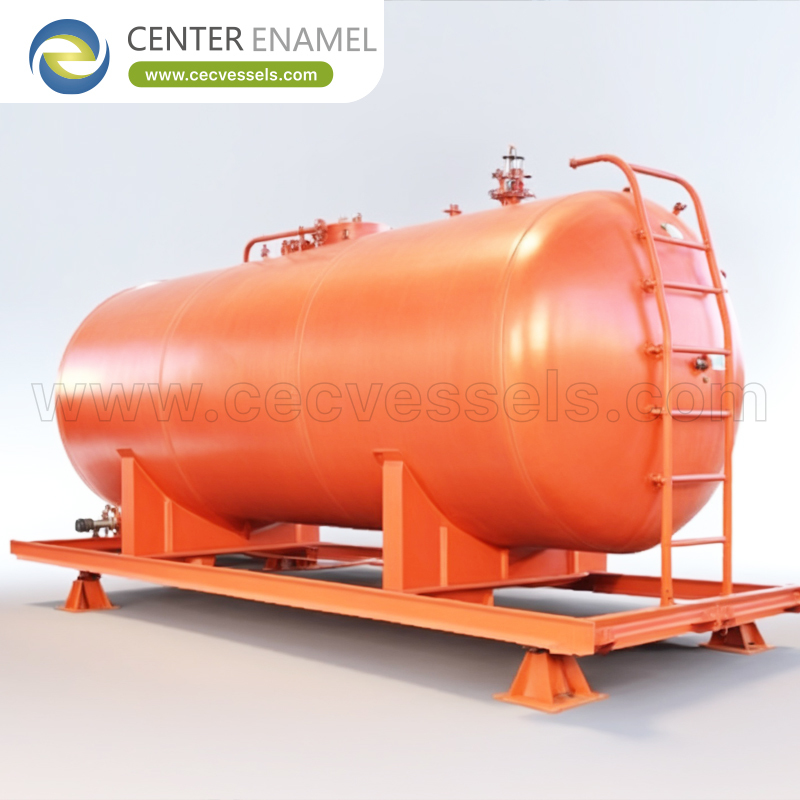
ASME Vs PED Pressure Vessel Regulatory Regimes Compared
| Place of Origin: | China |
| Brand Name: | Center Enamel |
| Certification: | ISO 9001,CE, NSF/ANSI 61, WRAS, ISO 28765, LFGB, BSCI, ISO 45001 |
| Minimum Order Quantity: | 1 Sets |
| Price: | 2000 |
| Delivery Time: | 2 months |
| Payment Terms: | L/C,T/T |
| Supply Ability: | 200 sets / days |
|
Detail Information |
|||
Product Description
ASME Vs PED Pressure Vessel Regulatory Regimes Compared
ASME Section VIII and the PED are not competing versions of the same document. ASME is a consensus construction code applied through jurisdictions and third-party inspection; the PED is a European legal directive implemented through conformity assessment and CE marking.
This comparison sets out the differences that affect an export purchase: scope, who judges conformity, the evidence package and the mark on the nameplate.
Two Different Kinds Of Instrument
The ASME Boiler and Pressure Vessel Code is written by a standards body and becomes enforceable when a jurisdiction adopts it. Compliance is shown by building to the code and having an authorized inspector sign the data report.
The Pressure Equipment Directive 2014/68/EU is EU legislation. It sets essential safety requirements and leaves the technical solutions to harmonised standards. Compliance is shown by a conformity assessment route and a declaration of conformity.
Scope And Thresholds
ASME Section VIII generally addresses unfired pressure vessels above about 15 psig internal pressure. Section I covers fired boilers; other sections cover materials, NDE, welding and rules for construction.
The PED applies to pressure equipment with a maximum allowable pressure above 0.5 bar, with categories determined by pressure, volume and fluid group. Hazardous fluids move equipment into higher categories.
Who Assesses Conformity
Under ASME the manufacturer holds an authorization and an authorized inspector from an authorized inspection agency witnesses the required stages. The inspector's signature on the data report precedes the stamp.
Under the PED the assessment route depends on the category. Lower categories may be assessed by the manufacturer with internal control; higher categories require a notified body. The fluid group and category decide which route applies.
Technical Standards Behind The Law
ASME supplies its own detailed construction rules inside the BPVC, so the code is both the legal reference and the technical rulebook in jurisdictions that adopt it.
The PED does not normally dictate exact thickness formulas. Harmonised standards such as EN 13445 provide the technical detail, and applying them gives a presumption of conformity with the directive's essential requirements.
Marking And Documentation
An ASME-built vessel carries the U or UM stamp together with a nameplate and a manufacturer's data report. The stamp is a code mark applied under the inspection arrangement.
A PED-compliant item carries CE marking accompanied by a written declaration of conformity and a technical file. The CE mark is the visible outcome of the assessment, and the declaration identifies the directive and standards applied.
Design Philosophy Differences
ASME design rules are largely formula-based with defined allowable stresses and joint efficiencies, and division choice changes the permitted stress level and analysis depth.
EN-based design under the PED route uses a different safety-factor and load-case framework. Comparing two vessels only by nominal wall thickness can therefore mislead; the allowable stress basis differs.
Which Route Applies To My Order
The destination market is the first filter. Equipment installed in North America is usually specified to ASME with local jurisdictional registration where required; equipment placed on the EU market must satisfy the PED.
Projects in third countries may accept either, chosen by the purchaser, insurer or local authority. Mixed fleets often require both evidence packages, so the code decision should be made at enquiry rather than after award.
Avoiding Double Work
A single fabrication can sometimes be built to satisfy both routes, but the data book must carry both sets of evidence and the marking must follow each route's rules. This should be engineered from the start.
Retrofitting compliance at the end is expensive: material certificates, weld procedures, inspection hold points and declarations all have to be assembled against rules that were not considered when the vessel was designed.
ASME Section VIII Versus EU PED
| Aspect | ASME Section VIII | PED (Directive 2014/68/EU) |
|---|---|---|
| Nature | Consensus construction code | EU legal directive |
| Scope trigger | About 15 psig internal pressure | PS above 0.5 bar |
| Technical basis | BPVC rules in the code | Harmonised standards e.g. EN 13445 |
| Conformity judge | Authorized inspector | Manufacturer or notified body by category |
| Category driver | Division and service | Pressure, volume, fluid group |
| Marking | U / UM stamp | CE marking |
| Core document | Manufacturer's data report | Declaration + technical file |
Route Decision Inputs
| Input | Effect on route |
|---|---|
| Destination market | Selects ASME, PED or both |
| Max allowable pressure | PED scope and category |
| Volume | PED category |
| Fluid group | PED category and module |
| Fired or unfired | ASME Section I vs VIII |
| Registration requirement | Jurisdictional add-on |
| Required marking | Stamp vs CE |
Conclusion
ASME Section VIII and the PED differ in kind, not just in detail: one is a construction code enforced through inspection, the other a legal directive implemented through conformity assessment and CE marking.
Choose the route from the destination market and the equipment's pressure, volume and fluid, name it in the enquiry, and require the matching evidence package and marking at delivery.
About Center Enamel
Center Enamel is a pressure vessel and process equipment manufacturer based in China, producing stainless steel and carbon steel pressure vessels, separators, reactors, heat exchangers and storage tanks for chemical, oil and gas, power, food, pharmaceutical and water-treatment applications.
The company works under ASME VIII Div.1, GB/T 150 and ISO 9001, and can supply CE/PED marking for the EU market with material traceability, documented welding procedures, NDT and hydrostatic testing in the delivered data book.
- Certifications: ASME, ISO 9001, CE/PED, NSF/ANSI 61, WRAS, ISO 28765, LFGB, BSCI, ISO 45001.
- Standards: ASME VIII Div.1, GB/T 150, EN 13445 where required by the destination market.
- Commercial terms: Minimum order quantity 1 unit, typical lead time about 2 months, L/C or T/T.
Frequently Asked Questions (FAQ)
Are ASME and PED alternative versions of the same rules?
No. ASME is a consensus construction code; the PED is a legal directive with essential requirements met through harmonised standards.
What is the official PED number?
Directive 2014/68/EU. Some procurement documents misquote it; the official number should be used.
What pressure brings equipment into PED scope?
A maximum allowable pressure above 0.5 bar, with categories set by pressure, volume and fluid group.
What does the ASME U stamp signify?
That the vessel was built to Section VIII under an authorized manufacturer's arrangement and inspected by an authorized inspector.
Does every PED vessel need a notified body?
No. It depends on the category; lower categories can use internal production control.
What is a harmonised standard?
A standard whose application gives a presumption of conformity with the directive's essential requirements.
Can one vessel carry both ASME and CE marking?
Yes, if designed and documented for both routes from the start; the evidence book must satisfy each.
Which route applies in a third country?
Whatever the purchaser, insurer or local authority specifies; either route can be named.
Do allowable stresses differ between the routes?
Yes, the design bases differ, so comparing only nominal thickness is misleading.
What is a fluid group under PED?
A classification of the contained fluid by hazard, used with pressure and volume to set the category.
Is CE marking a quality certificate?
No. It is a declaration that the product meets applicable EU requirements, backed by the technical file and declaration of conformity.
What is a manufacturer's data report?
The signed ASME record of design conditions, construction and verification.
Can I convert a vessel to the other route later?
Usually not cheaply, because materials, procedures and inspection points must meet rules not applied during build.
Which section covers a fired boiler?
ASME Section I; Section VIII covers unfired pressure vessels.
What is the lead time for a dual-route vessel?
About two months from a China manufacturer, subject to code, category and inspection scope.
Suggested CTA: Request a technical quotation with your duty, pressure, temperature and fluid data, or discuss the applicable code and compliance route with a Center Enamel engineer.