-
Glass Fused To Steel Tanks (896)
-
Stainless Steel Tanks (434)
-
Fusion Bonded Epoxy Tanks (660)
-
Galvanized Steel Tanks (321)
-
Aluminum Dome Roofs (1336)
-
Wastewater Storage Tanks (280)
-
Welded Steel Tanks (457)
-
Pressure Vessels (485)
-
Anaerobic Digester (217)
-
Industrial Water Tanks (384)
-
Glass Lined Steel Tanks (180)
-
Bolted Steel Tanks (389)
-
Sludge Storage Tank (115)
-
Biogas Storage Tank (173)
-
Leachate Storage Tanks (133)
-
Agricultural Water Storage Tanks (179)
-
Fire Water Tank (166)
-
Grain Storage Silos (146)
-
Biogas Projects (424)
-
Wastewater Treatment Projects (1832)
-
Double Membrane Roof (223)
|
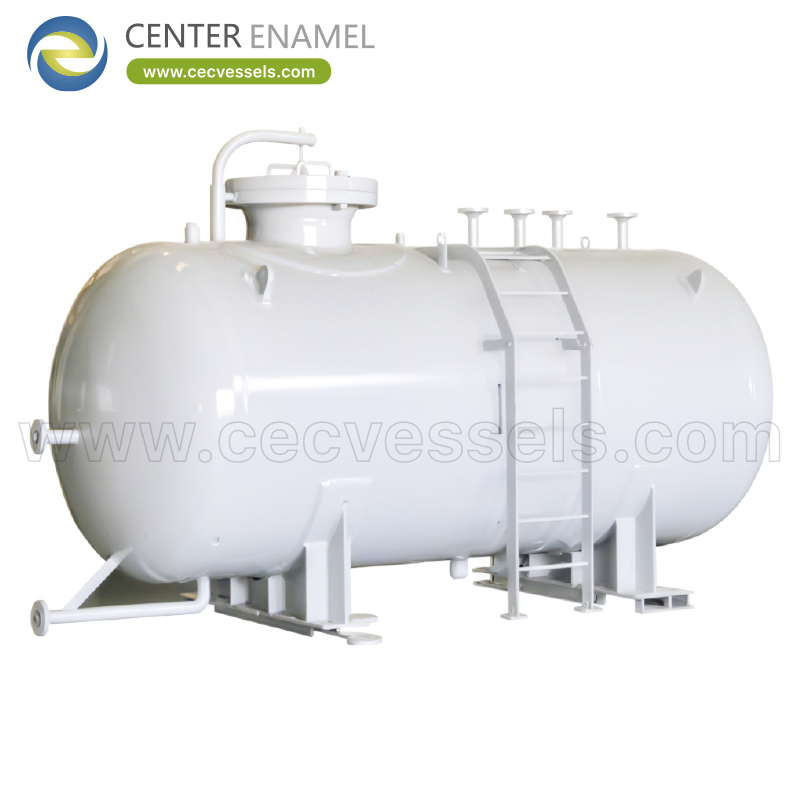
Food Grade Pressure Vessel Sanitary Design 3 A And EHEDG Compliance
| Place of Origin: | China |
| Brand Name: | Center Enamel |
| Certification: | ISO 9001,CE, NSF/ANSI 61, WRAS, ISO 28765, LFGB, BSCI, ISO 45001 |
| Minimum Order Quantity: | 1 Sets |
| Price: | 2000 |
| Delivery Time: | 2 months |
| Payment Terms: | L/C,T/T |
| Supply Ability: | 200 sets / days |
|
Detail Information |
|||
Product Description
Food Grade Pressure Vessel Sanitary Design 3 A And EHEDG Compliance
A food grade pressure vessel must do two jobs at once: hold pressure safely under ASME or GB/T 150, and stay cleanable to food-safety standards such as 3-A Sanitary Standards and EHEDG design principles.
That dual requirement shifts the specification from wall thickness toward stainless grade, surface finish, drainable geometry and documented cleanability - the topics this guide covers, using verified material and code facts rather than assumed performance.
What 'Food Grade' Requires Beyond Pressure
Food contact means the vessel interior must resist product adhesion, clean fully and avoid harbouring residue; standards such as 3-A (US dairy/food equipment) and EHEDG (European hygienic engineering) define the geometry and finish expectations.
Unlike a plain process shell, a food-grade vessel is also judged on organoleptic impact - no off-flavour or taint transfer - so material and finish choices answer both pressure and food-safety law.
Material: Stainless 304 And 316L
Food duty typically uses austenitic stainless: 304 for general food and beverage, 316L where chloride or aggressive cleaning chemicals demand higher corrosion resistance. Both are accepted for food contact when finished and certified appropriately.
Material certification traces the heat to a mill certificate so the food producer can demonstrate conformance to its own food-safety system during audit.
Surface Finish And Cleanability
Interior finish is specified by roughness, often Ra 0.8 micrometre or better for contact surfaces, achieved by mechanical polish and sometimes electropolish for the smoothest, least adhesive surface.
A smoother surface sheds product and cleaning fluid more readily, shortening CIP cycles and reducing residue risk; the finish target is a specification item, not a shop default.
Hygienic Geometry: Drainage And Dead Legs
Sanitary design eliminates dead legs, crevices and hard-to-clean corners; connections use hygienic fittings and internal welds are full-penetration and dressed flush so product has nowhere to stagnate.
The vessel and nozzles slope to complete, verifiable drain-out, so cleaning cycles leave no pooled product that could later contaminate a batch.
Clean-In-Place Considerations
Most food vessels support CIP with spray devices and returns integrated into the pressure boundary, so the vessel is cleaned without disassembly between production runs.
CIP validity depends on the geometry above: a vessel that drains and sheds product cleans predictably, while one with dead legs needs longer, less certain cycles.
Code Basis And Food Regulations
The pressure boundary follows ASME VIII Div.1 or GB/T 150, with CE/PED for the EU; the food-safety layer (3-A, EHEDG, FDA CFR 21 for contact materials) sits inside that code shell and must be satisfied without compromising it.
This dual requirement is why a food-grade vessel costs more than a plain shell of the same pressure - the finish, fittings and validation carry real work.
Differentiating From Pharmaceutical Duty
Pharma vessels (covered separately) add GMP validation, stricter extractables control and sterile-service readiness; food duty centres on 3-A / EHEDG geometry, organoleptic neutrality and CIP rather than full validation dossiers.
Specify to the higher bar only when the product demands it; a food-grade finish alone will not satisfy a pharma audit, but a full pharma build may be unnecessary for standard food lines.
Procurement Checklist For Food Duty
Require the contact material and finish in the PO, the sanitary fitting standard, CIP provisions and the code marking; verify a sample data book that includes surface-finish records.
Confirm the builder can deliver the hygienic layer - polished, dressed welds, drainable geometry - not just a code shell with a 'sanitary' label.
Food Versus Pharma Vessel
Aspect |
Food-grade |
Pharma |
Standard |
3-A / EHEDG |
GMP / cGMP |
Focus |
Organoleptic, CIP |
Validation, sterile |
Finish |
Polished Ra<=0.8 |
Electropolish Ra<=0.8 |
Validation |
Lighter |
IQ/OQ required |
Sterile service |
Rare |
Common (SIP) |
Food-Grade Vessel Spec Inputs
Input |
Why it matters |
Contact material |
304 / 316L, certified |
Surface finish |
Ra target, polish type |
Drainage / dead legs |
Cleanability |
CIP provision |
Between-run cleaning |
Sanitary standard |
3-A / EHEDG |
Code + marking |
Pressure approval |
Conclusion
A food grade pressure vessel meets a pressure code and a food-safety standard at once: stainless 304/316L contact surfaces, a specified smooth finish, drainable hygienic geometry and CIP support, all inside an ASME or GB/T 150 shell.
Specify the material, finish, sanitary standard and code marking in the purchase order, and verify a sample data book that includes surface-finish records before award.
About Center Enamel
Center Enamel is a pressure vessel and process equipment manufacturer based in China, producing stainless steel and carbon steel pressure vessels, separators, reactors, heat exchangers and storage tanks for chemical, oil and gas, power, food, pharmaceutical and water-treatment applications.
Manufacturing is carried out under ASME VIII Div.1, GB/T 150 and ISO 9001 with CE/PED and NACE MR0175 / ISO 15156 options for sour service. Each unit is supplied with material traceability, hydrostatic or pneumatic testing, NDT and export documentation.
- Material range: Stainless steel (304 / 316L), duplex, carbon steel with rubber or epoxy lining for corrosion duty.
- Standards: ASME VIII Div.1, GB/T 150, ISO 9001, CE/PED, NACE MR0175 / ISO 15156.
- Commercial terms: Minimum order quantity 1 unit, typical lead time about 2 months, L/C or T/T.
Frequently Asked Questions (FAQ)
What is a food grade pressure vessel?
A code vessel (ASME VIII or GB/T 150) built to food-safety standards such as 3-A or EHEDG, with cleanable stainless contact surfaces and drainable geometry.
Which stainless for food duty?
304 for general food and beverage, 316L where chlorides or aggressive cleaners demand higher corrosion resistance; both need mill certification.
What surface finish is typical?
Contact surfaces often Ra 0.8 micrometre or better, by mechanical polish and sometimes electropolish for the smoothest, least adhesive surface.
What is 3-A?
A US sanitary standard for food and dairy equipment defining hygienic design, materials and finish expectations.
What is EHEDG?
The European Hygienic Engineering and Design Group; its principles guide cleanable, drainable equipment design for food.
Why avoid dead legs?
They trap product or cleaning fluid and can contaminate later batches; sanitary design eliminates them for complete drain-out.
What is CIP?
Clean-in-place: the vessel is cleaned without disassembly, using integrated spray devices and returns.
Which code applies?
The pressure boundary follows ASME VIII Div.1 or GB/T 150, with CE/PED for the EU; food rules sit inside that shell.
How is food different from pharma?
Food centres on 3-A/EHEDG geometry and CIP; pharma adds GMP validation, extractables control and sterile service.
Does food duty need electropolish?
Often mechanical polish suffices; electropolish is used where the smoothest surface is required.
What documents prove compliance?
Material certs, surface-finish records, weld maps and the code data report.
Can carbon steel be food grade?
Not for contact; carbon steel may be used for non-contact structures, with stainless for the product-wetted surface.
Why do food vessels cost more?
The finish, sanitary fittings and CIP integration carry real work beyond a plain code shell.
How long to fabricate?
About 2 months from a China manufacturer for an engineered hygienic vessel scheduled around certification.
What should the PO state?
Contact material and finish, sanitary standard, CIP provision and the required code marking.
Suggested CTA: Request a technical quotation with your duty, pressure, temperature and fluid data, or discuss your project with a Center Enamel engineer for a sized proposal.