-
Glass Fused To Steel Tanks (896)
-
Stainless Steel Tanks (434)
-
Fusion Bonded Epoxy Tanks (660)
-
Galvanized Steel Tanks (321)
-
Aluminum Dome Roofs (1336)
-
Wastewater Storage Tanks (280)
-
Welded Steel Tanks (457)
-
Pressure Vessels (485)
-
Anaerobic Digester (217)
-
Industrial Water Tanks (384)
-
Glass Lined Steel Tanks (180)
-
Bolted Steel Tanks (389)
-
Sludge Storage Tank (115)
-
Biogas Storage Tank (173)
-
Leachate Storage Tanks (133)
-
Agricultural Water Storage Tanks (179)
-
Fire Water Tank (166)
-
Grain Storage Silos (146)
-
Biogas Projects (424)
-
Wastewater Treatment Projects (1832)
-
Double Membrane Roof (223)
|
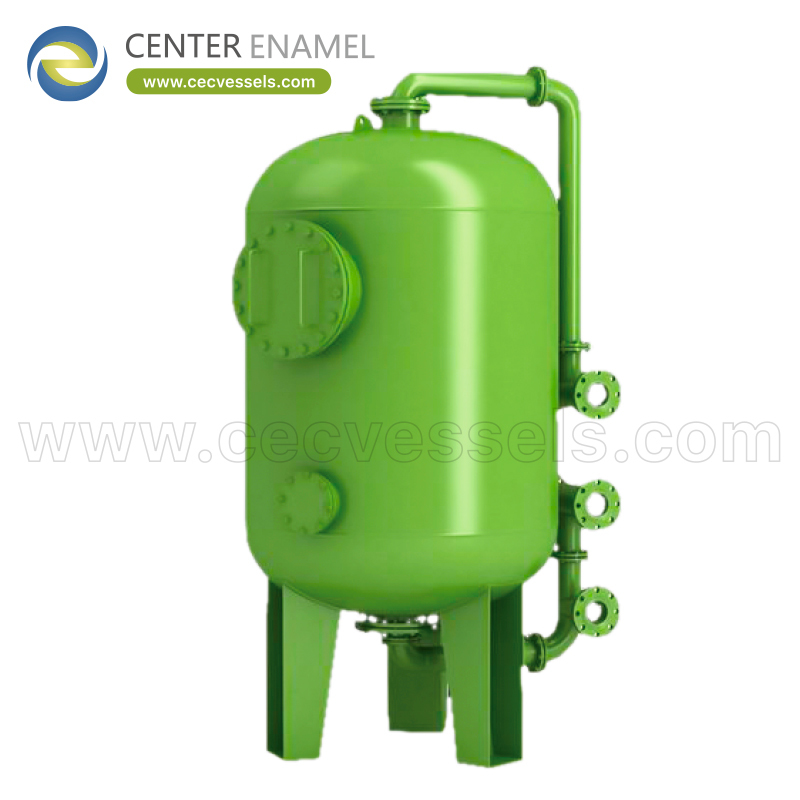
Air Receiver Tank Sizing Pressure Rating And ASME Certification
| Place of Origin: | China |
| Brand Name: | Center Enamel |
| Certification: | ISO 9001,CE, NSF/ANSI 61, WRAS, ISO 28765, LFGB, BSCI, ISO 45001 |
| Minimum Order Quantity: | 1 Sets |
| Price: | 2000 |
| Delivery Time: | 2 months |
| Payment Terms: | L/C,T/T |
| Supply Ability: | 200 sets / days |
|
Detail Information |
|||
Product Description
Air Receiver Tank Sizing Pressure Rating And ASME Certification
An air receiver tank is the buffer between a compressor and the plant air network: it stores compressed air, smooths pressure swings, lets condensate drop out and reduces compressor cycling.
Sizing and specifying one well means matching the receiver to the compressor output and the duty - not picking a generic tank - and the guidance below uses verified pressure-vessel facts plus the standard CFM-based sizing rule.
What The Receiver Actually Does
The receiver absorbs the pulsation from the compressor, holds a reserve so tools see steady pressure during demand peaks, and gives moisture and oil a chance to settle out before the air moves on.
Without an adequately sized receiver, the compressor short-cycles, tools lose pressure under load, and condensate control suffers - three problems a correctly specified tank prevents at once.
Wet Versus Dry Receiver
A wet receiver sits before the dryer and handles warm, moist air; a dry receiver sits after the dryer and stores clean, stable-pressure air for the point of use.
The two have different internal treatment expectations - the wet receiver sees corrosion and condensate, the dry receiver must not re-introduce contamination - so the specification states which one you need.
Sizing Against Compressor Output
The common industry rule sizes the receiver between about 4 and 10 times the compressor rated CFM, with the higher multiple for variable or peaky demand; a 100 CFM compressor thus typically pairs with a 400-1000 gallon receiver depending on the load profile.
This multiplier is a starting point, not a substitute for the actual demand study; intermittent high-demand plants need the upper end, steady continuous plants the lower.
Pressure Rating And ASME Certification
The receiver's rated pressure must exceed the compressor discharge with margin (commonly rated to 8-10 bar for a compressor at 7-8 bar), and as a pressurized vessel it is an ASME code vessel requiring design calc, NDE and a data report.
Despite the 'tank' name, an air receiver is a regulated pressure vessel; treating it as atmospheric risks dropping the stamp and failing acceptance.
Vertical Versus Horizontal
Vertical receivers save floor space and aid drainage; horizontal units suit low ceilings or transport-friendly layouts and larger volumes.
Orientation follows the plant layout and the drainage requirement, so specify the space constraint and the service (storage versus surge) before the shop selects supports.
Drains, Moisture And Safety
Condensate must be drained automatically or on a schedule; an undrained receiver becomes a water reservoir that defeats the drying purpose and accelerates internal corrosion.
A certified relief valve, a pressure gauge and safe clearances are non-negotiable safety items, and the receiver must be installed so the relief discharges to a safe location.
Materials For The Service
Carbon steel covers most plant air; stainless 304/316L is specified where the air contacts food, pharma or high-purity processes and cleanliness outweighs cost.
As a typical scope example, Center Enamel's pressure-vessel range includes air receivers such as a DN1300 x 4000 mm unit in Q345R carbon steel rated to 1.0 MPa - representative of standard compressed-air duty, not a specific contracted project.
Procurement Checklist
State compressor CFM and discharge pressure, required reserve, wet or dry duty, orientation and the code/marking; require the data report and a relief-valve specification.
Confirm the rated pressure leaves margin over the compressor and that automatic drainage is included or specified, because those are the items most often missed at install.
Wet Versus Dry Receiver
Aspect |
Wet receiver |
Dry receiver |
Position |
Before dryer |
After dryer |
Air state |
Warm, moist |
Clean, dry |
Main job |
Buffer + condensate |
Stable supply |
Internal care |
Corrosion control |
No re-contamination |
Air Receiver Selection Inputs
Input |
Why it matters |
Compressor CFM |
Sets volume (4-10x) |
Discharge pressure |
Sets rated margin |
Reserve need |
Sets peak cover |
Wet / dry duty |
Sets internal spec |
Orientation |
Sets layout |
Code / marking |
Defines approvals |
Conclusion
An air receiver tank is a code vessel that buffers compressed air, smooths pressure and drops out condensate; size it to 4-10 times the compressor CFM by demand profile, with rated pressure above the discharge.
Specify wet or dry duty, orientation, automatic drainage and the required code marking, and confirm the receiver is an ASME-stamped pressure vessel, not an unstamped tank.
About Center Enamel
Center Enamel is a pressure vessel and process equipment manufacturer based in China, producing stainless steel and carbon steel pressure vessels, separators, reactors, heat exchangers and storage tanks for chemical, oil and gas, power, food, pharmaceutical and water-treatment applications.
Manufacturing is carried out under ASME VIII Div.1, GB/T 150 and ISO 9001 with CE/PED and NACE MR0175 / ISO 15156 options for sour service. Each unit is supplied with material traceability, hydrostatic or pneumatic testing, NDT and export documentation.
- Material range: Stainless steel (304 / 316L), duplex, carbon steel with rubber or epoxy lining for corrosion duty.
- Standards: ASME VIII Div.1, GB/T 150, ISO 9001, CE/PED, NACE MR0175 / ISO 15156.
- Commercial terms: Minimum order quantity 1 unit, typical lead time about 2 months, L/C or T/T.
Frequently Asked Questions (FAQ)
What does an air receiver tank do?
It stores compressed air, smooths pressure swings, lets condensate settle out and reduces compressor start-stop cycling.
How do I size an air receiver?
Commonly 4-10 times the compressor rated CFM, with the higher multiple for peaky demand; a 100 CFM unit pairs with roughly 400-1000 gallons.
Why the 4-10x CFM rule?
It balances reserve against cycling; intermittent high-demand plants need the upper end, steady plants the lower.
Is an air receiver a pressure vessel?
Yes; despite the name it is pressurized and therefore an ASME code vessel needing design calc, NDE and a data report.
Wet vs dry receiver?
Wet sits before the dryer (warm, moist); dry sits after (clean, stable pressure). The two have different internal specs.
What pressure rating do I need?
Rated above the compressor discharge with margin; commonly 8-10 bar for a 7-8 bar compressor.
Vertical or horizontal?
Vertical saves floor space and aids drainage; horizontal suits low ceilings or larger volumes.
Why automatic drainage?
An undrained receiver becomes a water reservoir that defeats drying and accelerates corrosion.
What safety items are required?
A certified relief valve, pressure gauge and safe relief discharge location are non-negotiable.
Which material?
Carbon steel for plant air; stainless 304/316L for food, pharma or high-purity air.
Can stainless air receivers be built?
Yes; ASME covers stainless provided it meets SA or accepted-equivalent grades with mill certificates.
What is a typical air receiver spec?
As a scope example, a DN1300 x 4000 mm Q345R unit rated to 1.0 MPa represents standard compressed-air duty.
How long to fabricate?
About 2 months from a China manufacturer for an engineered unit, shorter for standard receivers.
What documents come with it?
Material certs, WPS/PQR, NDT, hydrostatic-test certificate and the data report.
What should the PO state?
Compressor CFM and pressure, reserve, wet/dry duty, orientation and required code marking.
Suggested CTA: Request a technical quotation with your duty, pressure, temperature and fluid data, or discuss your project with a Center Enamel engineer for a sized proposal.