-
Glass Fused To Steel Tanks (896)
-
Stainless Steel Tanks (434)
-
Fusion Bonded Epoxy Tanks (660)
-
Galvanized Steel Tanks (321)
-
Aluminum Dome Roofs (1336)
-
Wastewater Storage Tanks (280)
-
Welded Steel Tanks (457)
-
Pressure Vessels (485)
-
Anaerobic Digester (217)
-
Industrial Water Tanks (384)
-
Glass Lined Steel Tanks (180)
-
Bolted Steel Tanks (389)
-
Sludge Storage Tank (115)
-
Biogas Storage Tank (173)
-
Leachate Storage Tanks (133)
-
Agricultural Water Storage Tanks (179)
-
Fire Water Tank (166)
-
Grain Storage Silos (146)
-
Biogas Projects (424)
-
Wastewater Treatment Projects (1832)
-
Double Membrane Roof (223)
|
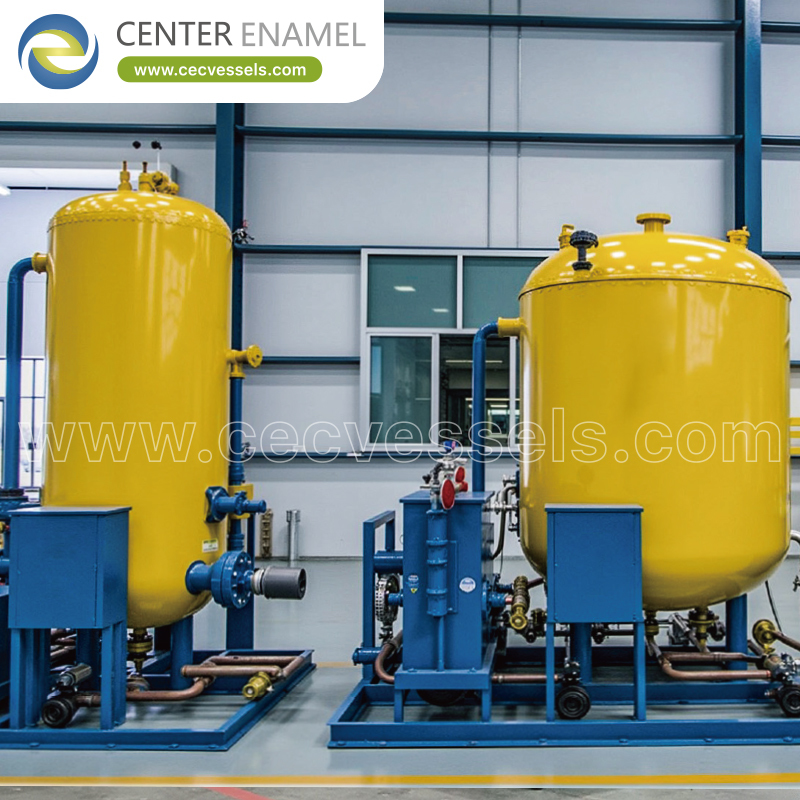
Air Receiver Tank For Compressor System Integration And Cycling Control
| Place of Origin: | China |
| Brand Name: | Center Enamel |
| Certification: | ISO 9001,CE, NSF/ANSI 61, WRAS, ISO 28765, LFGB, BSCI, ISO 45001 |
| Minimum Order Quantity: | 1 Sets |
| Price: | 2000 |
| Delivery Time: | 2 months |
| Payment Terms: | L/C,T/T |
| Supply Ability: | 200 sets / days |
|
Detail Information |
|||
Product Description
Air Receiver Tank For Compressor System Integration And Cycling Control
An air receiver tank for compressor service is the same vessel as a standalone receiver, but specified around the compressor system: it is the buffer that lets a screw compressor run in fewer, longer cycles and delivers steady pressure to the network.
The buyer's job here is system integration - match the receiver to the compressor, place it correctly, and size for the demand profile - and the guidance below focuses on that system view rather than the vessel alone.
The Receiver's Role In The Compressor Loop
In a rotary-screw system the receiver sits in the air path and absorbs the difference between the compressor's steady output and the plant's uneven draw, so the compressor loads and unloads less often.
A correctly sized receiver is what turns a compressor that would short-cycle into one that runs in stable bands, protecting the drive and the air treatment downstream.
Reducing Start-Stop And Load-Unload Cycling
Frequent cycling wastes energy and wears the compressor; the receiver stores enough air that the unit stays loaded through normal demand dips instead of stopping and restarting.
For variable-demand plants this is the single biggest reliability and energy gain from proper receiver sizing, and it is why the receiver is sized to the demand profile, not just the compressor nameplate.
Matching Receiver To Compressor CFM
The same 4-10x CFM rule applies, but the choice is driven by how the compressor is controlled and how the plant draws air; a fixed-speed compressor with spikey demand needs the upper multiple.
Oversizing the receiver costs floor space and capital without benefit, while undersizing returns to short-cycling, so the demand study - not a round number - sets the volume.
Placement: Before Or After The Dryer
A wet receiver before the dryer handles buffer and bulk condensate; a dry receiver after the dryer protects the clean side and stabilizes supply to the point of use. Many systems use both.
Placement changes the internal specification - the wet leg sees moisture and corrosion, the dry leg must stay clean - so the system layout is decided before the vessel is specified.
System Layout And Intercooling
The typical path is compressor, aftercooler, wet receiver, dryer, dry receiver, point of use; the receiver positions are where pulsation is damped and condensate is removed.
Where multi-stage or high-duty compressors are used, intercooling between stages and a receiver at each stage smooths temperature and pressure before the next step.
Pressure Stability At The Point Of Use
The downstream benefit is steady tool and instrument pressure: pneumatic tools perform to spec, and controls see a stable supply instead of sagging during peaks.
This is the user-visible value of the receiver - not the tank itself but the stable pressure it delivers across the whole air network.
Sizing For Intermittent Versus Continuous Demand
Intermittent-demand plants (e.g. batch pneumatic tool use) need more reserve to cover peaks without compressor cycling; continuous processes need less, because draw is steady.
State the demand pattern, not just the compressor size, so the receiver volume matches the actual load the compressor must serve.
Procurement Checklist For Compressor Service
Provide compressor CFM, control type, discharge pressure, demand pattern, wet/dry placement and code/marking; require the data report and confirm rated pressure margin.
Confirm automatic drainage for the wet leg and that the receiver is an ASME-stamped vessel sized to the demand study, not a generic off-the-shelf tank.
Receiver: Vessel View Vs System View
Aspect |
Standalone (a8) |
Compressor-integrated (a9) |
Focus |
Vessel spec |
System integration |
Sizing driver |
CFM rule |
Demand profile |
Key benefit |
Storage |
Cycling control |
Placement |
General |
Before/after dryer |
Compressor Receiver Inputs
Input |
Why it matters |
Compressor CFM |
Sets base volume |
Control type |
Sets cycling need |
Demand pattern |
Sets reserve |
Wet / dry placement |
Sets internal spec |
Discharge pressure |
Sets rated margin |
Code / marking |
Defines approvals |
Conclusion
An air receiver for compressor service is specified as part of the air system: it damps pulsation, cuts start-stop cycling and stabilizes pressure at the point of use when matched to the compressor CFM and the demand profile.
Decide wet or dry placement and state the demand pattern, then require an ASME-stamped receiver sized to that study with automatic drainage on the wet leg.
About Center Enamel
Center Enamel is a pressure vessel and process equipment manufacturer based in China, producing stainless steel and carbon steel pressure vessels, separators, reactors, heat exchangers and storage tanks for chemical, oil and gas, power, food, pharmaceutical and water-treatment applications.
Manufacturing is carried out under ASME VIII Div.1, GB/T 150 and ISO 9001 with CE/PED and NACE MR0175 / ISO 15156 options for sour service. Each unit is supplied with material traceability, hydrostatic or pneumatic testing, NDT and export documentation.
- Material range: Stainless steel (304 / 316L), duplex, carbon steel with rubber or epoxy lining for corrosion duty.
- Standards: ASME VIII Div.1, GB/T 150, ISO 9001, CE/PED, NACE MR0175 / ISO 15156.
- Commercial terms: Minimum order quantity 1 unit, typical lead time about 2 months, L/C or T/T.
Frequently Asked Questions (FAQ)
What does a receiver do for a compressor?
It buffers the difference between steady compressor output and uneven plant draw, so the compressor cycles less and pressure stays steady.
How does it reduce cycling?
By storing air through normal demand dips, the compressor stays loaded instead of stopping and restarting, saving energy and wear.
How do I match it to the compressor?
Use the 4-10x CFM rule, then adjust by control type and demand pattern; fixed-speed spikey demand needs the upper multiple.
Where does it go in the system?
Typically compressor, aftercooler, wet receiver, dryer, dry receiver, point of use; placement sets the internal spec.
Wet or dry receiver in a screw system?
Many use both: wet before the dryer for buffer and condensate, dry after for clean stable supply.
What is intercooling?
Cooling between compressor stages with a receiver at each stage to smooth temperature and pressure before the next step.
Why does demand pattern matter?
Intermittent demand needs more reserve to avoid cycling; continuous demand needs less because draw is steady.
What pressure stability do tools see?
Steady pneumatic-tool and instrument pressure, instead of sagging during peaks - the user-visible benefit.
Is it still a code vessel?
Yes; the receiver is an ASME pressure vessel regardless of its system role.
What if I oversize the receiver?
You pay for floor space and capital with no benefit; undersizing returns to short-cycling.
What documents come with it?
Material certs, WPS/PQR, NDT, hydrostatic-test certificate and the data report.
Does a dry receiver need drainage?
Less so than the wet leg, but the wet receiver must have automatic drainage to avoid a water reservoir.
How long to fabricate?
About 2 months from a China manufacturer for an engineered unit, shorter for standard receivers.
What should the PO state?
Compressor CFM, control type, demand pattern, wet/dry placement, pressure and code marking.
How is this different from a standalone receiver?
Same vessel, but specified for system integration - cycling control and placement - rather than the tank in isolation.
Suggested CTA: Request a technical quotation with your duty, pressure, temperature and fluid data, or discuss your project with a Center Enamel engineer for a sized proposal.