-
Glass Fused To Steel Tanks (896)
-
Stainless Steel Tanks (434)
-
Fusion Bonded Epoxy Tanks (660)
-
Galvanized Steel Tanks (321)
-
Aluminum Dome Roofs (1336)
-
Wastewater Storage Tanks (280)
-
Welded Steel Tanks (457)
-
Pressure Vessels (485)
-
Anaerobic Digester (217)
-
Industrial Water Tanks (384)
-
Glass Lined Steel Tanks (180)
-
Bolted Steel Tanks (389)
-
Sludge Storage Tank (115)
-
Biogas Storage Tank (173)
-
Leachate Storage Tanks (133)
-
Agricultural Water Storage Tanks (179)
-
Fire Water Tank (166)
-
Grain Storage Silos (146)
-
Biogas Projects (424)
-
Wastewater Treatment Projects (1832)
-
Double Membrane Roof (223)
|
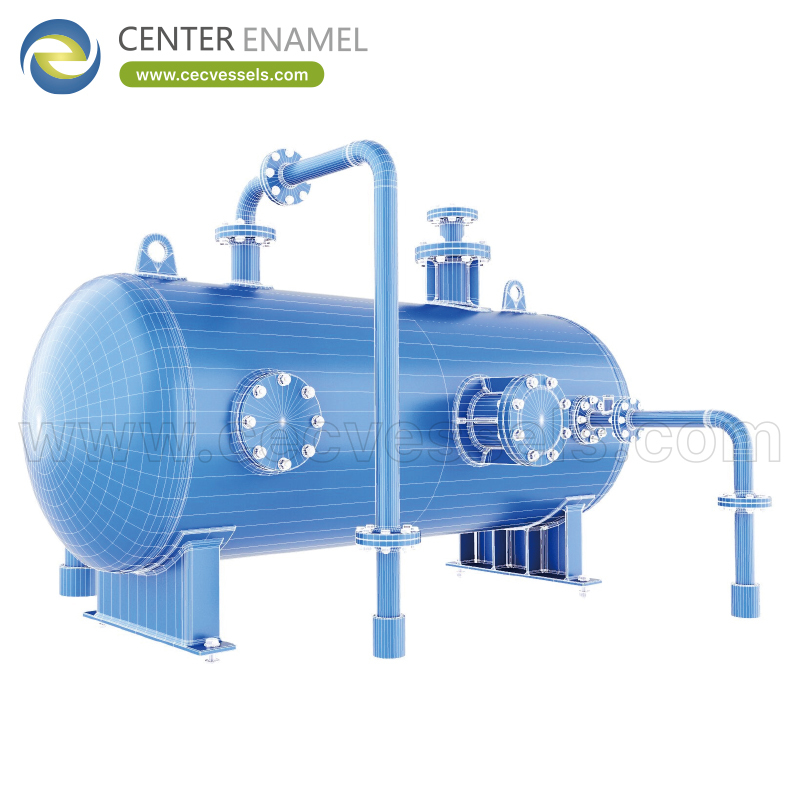
Oil And Gas Pressure Vessel Sour Service NACE MR0175 And Separator Design
| Place of Origin: | China |
| Brand Name: | Center Enamel |
| Certification: | ISO 9001,CE, NSF/ANSI 61, WRAS, ISO 28765, LFGB, BSCI, ISO 45001 |
| Minimum Order Quantity: | 1 Sets |
| Price: | 2000 |
| Delivery Time: | 2 months |
| Payment Terms: | L/C,T/T |
| Supply Ability: | 200 sets / days |
|
Detail Information |
|||
Product Description
Oil And Gas Pressure Vessel Sour Service NACE MR0175 And Separator Design
An oil and gas pressure vessel works in one of the harshest duty families - it separates, scrubs, accumulates or treats hydrocarbons, often with hydrogen sulphide (H2S) present and at pressures far above a plant-air receiver.
The defining specification issue is sour service: when H2S is present, material hardness and grade are constrained by NACE MR0175 / ISO 15156 to resist sulphide-stress cracking, and that single rule drives most of the design and inspection choices below.
The Oil And Gas Vessel Family
Typical equipment includes production separators (gas/liquid split), scrubbers (entrained-liquid removal from gas), surge drums, amine contactors for gas treating and accumulators for process stabilization.
Each is a pressure vessel whose internals - vanes, mesh pads, trays or packing - answer the separation duty while the shell answers the pressure and the medium.
Sour Service: NACE MR0175 / ISO 15156
When H2S is present above threshold, the materials must comply with NACE MR0175 / ISO 15156, which limits hardness, controls weld hardness, and restricts grade selection to resist sulphide-stress cracking.
This is not optional for sour duty; specifying a standard carbon-steel vessel without the NACE hardness controls risks catastrophic failure, so the H2S partial pressure must be stated up front.
Material Selection
Carbon steel with controlled hardness covers much sweet and moderate sour service; 316L or duplex stainless and, for severe duty, higher alloys extend life where chlorides or acid gas concentrate.
Cladding or lined carbon steel is a common cost-balanced route for corrosive internals, with the cladding and the base metal both controlled to the service limits.
Separators And Scrubbers
A separator splits a mixed stream into gas, oil and water using gravity, vanes and mesh; a scrubber removes entrained liquid from a gas stream before it damages downstream equipment.
The vessel specification must state the inlet composition, the separation efficiency required and the expected solids or foam, because those decide the internal design and the access for cleaning.
Code Basis: ASME Plus Process Standards
The pressure boundary follows ASME VIII Div.1, often with API practices for separator design and ASME B31.3 for the connected piping; the choice follows contract and destination.
For export, CE/PED or local pressure-equipment rules may apply, and the documentation package must satisfy both the ASME data report and any project-specific inspection plan.
Onshore Versus Offshore
Offshore vessels face weight and space penalties, stricter certification and harsher environmental coating, while onshore units can trade some of that for easier access and larger footprint.
Weight-controlled design - thinner, higher-grade shells with rigorous NDE - is the offshore norm, and the coating (often C5M for marine exposure) is specified for the environment.
Inspection And H2S Precautions
Sour service demands hardness testing of welds and heat-affected zones, hydrogen-sulphide-aware welding procedure qualification, and NDE beyond the minimum to catch cracking-prone defects.
Post-weld heat treatment and controlled hydrogen levels during welding are routine for sour duty; the ITP must name these steps as witnessed hold points.
Procurement Checklist For Oil And Gas
State the H2S partial pressure, the stream composition, the separation duty, the design pressure and the code/marking; require NACE compliance evidence and the full data book.
Confirm the builder controls weld hardness and can show NACE-qualified procedures, because those are the items auditors and operators check first on sour-service vessels.
Sweet Versus Sour Service
Aspect |
Sweet |
Sour (H2S) |
Material |
CS / SS as needed |
NACE-limited grades |
Hardness |
Standard control |
Strict limit |
Welding |
Normal PQR |
H2S-aware PQR |
NDE |
Code minimum |
Enhanced |
Cost driver |
Pressure |
Material + inspection |
Oil And Gas Vessel Spec Inputs
Input |
Why it matters |
H2S partial pressure |
Sets NACE scope |
Stream composition |
Drives internals |
Separation duty |
Sets efficiency |
Design pressure |
Sets wall & grade |
Code / NACE |
Defines approvals |
Onshore / offshore |
Weight & cert |
Conclusion
An oil and gas pressure vessel is specified around the medium first: state the H2S partial pressure so NACE MR0175 / ISO 15156 controls apply, then select grade, welding and NDE to the separation duty and pressure.
Confirm the builder controls weld hardness and holds NACE-qualified procedures, and require the full data book so the vessel passes both code and sour-service audit.
About Center Enamel
Center Enamel is a pressure vessel and process equipment manufacturer based in China, producing stainless steel and carbon steel pressure vessels, separators, reactors, heat exchangers and storage tanks for chemical, oil and gas, power, food, pharmaceutical and water-treatment applications.
Manufacturing is carried out under ASME VIII Div.1, GB/T 150 and ISO 9001 with CE/PED and NACE MR0175 / ISO 15156 options for sour service. Each unit is supplied with material traceability, hydrostatic or pneumatic testing, NDT and export documentation.
- Material range: Stainless steel (304 / 316L), duplex, carbon steel with rubber or epoxy lining for corrosion duty.
- Standards: ASME VIII Div.1, GB/T 150, ISO 9001, CE/PED, NACE MR0175 / ISO 15156.
- Commercial terms: Minimum order quantity 1 unit, typical lead time about 2 months, L/C or T/T.
Frequently Asked Questions (FAQ)
What is an oil and gas pressure vessel?
A code vessel for hydrocarbon duty - separators, scrubbers, surge drums, amine contactors - built for pressure and the process medium.
What is sour service?
Service with hydrogen sulphide (H2S) present above a threshold, requiring materials and welding controls to resist sulphide-stress cracking.
What does NACE MR0175 do?
Limits hardness, controls weld hardness and restricts grade selection for H2S service to prevent sulphide-stress cracking.
Is NACE optional?
No for sour duty; specifying standard carbon steel without NACE controls risks catastrophic failure.
Which material for sour service?
Controlled-hardness carbon steel for moderate duty; 316L, duplex or higher alloys for severe duty, often as cladding.
What is a separator?
A vessel that splits a mixed stream into gas, oil and water using gravity, vanes and mesh; efficiency depends on stated inlet conditions.
What is a scrubber?
A vessel that removes entrained liquid from a gas stream before it damages downstream equipment.
Which code applies?
ASME VIII Div.1 for the shell, often with API separator practice and ASME B31.3 piping; CE/PED for EU.
Onshore versus offshore?
Offshore needs weight control, stricter certification and marine coating; onshore allows larger footprint.
Why hardness testing in sour service?
Hardness above the NACE limit makes welds and HAZ susceptible to sulphide-stress cracking.
What is H2S partial pressure?
The partial pressure of H2S in the gas; thresholds determine whether NACE MR0175 applies.
What welding controls apply?
H2S-aware PQR, controlled hydrogen, possible post-weld heat treatment, and enhanced NDE.
What documents prove compliance?
Material certs, hardness records, NACE-qualified WPS/PQR, NDT reports and the data report.
How long to fabricate?
About 2 months from a China manufacturer for an engineered vessel, longer if special alloys or offshore certs apply.
What should the PO state?
H2S partial pressure, stream composition, separation duty, design pressure, code/NACE scope and marking.
Suggested CTA: Request a technical quotation with your duty, pressure, temperature and fluid data, or discuss your project with a Center Enamel engineer for a sized proposal.