-
Glass Fused To Steel Tanks (896)
-
Stainless Steel Tanks (434)
-
Fusion Bonded Epoxy Tanks (660)
-
Galvanized Steel Tanks (321)
-
Aluminum Dome Roofs (1336)
-
Wastewater Storage Tanks (280)
-
Welded Steel Tanks (457)
-
Pressure Vessels (485)
-
Anaerobic Digester (217)
-
Industrial Water Tanks (384)
-
Glass Lined Steel Tanks (180)
-
Bolted Steel Tanks (389)
-
Sludge Storage Tank (115)
-
Biogas Storage Tank (173)
-
Leachate Storage Tanks (133)
-
Agricultural Water Storage Tanks (179)
-
Fire Water Tank (166)
-
Grain Storage Silos (146)
-
Biogas Projects (424)
-
Wastewater Treatment Projects (1832)
-
Double Membrane Roof (223)
|
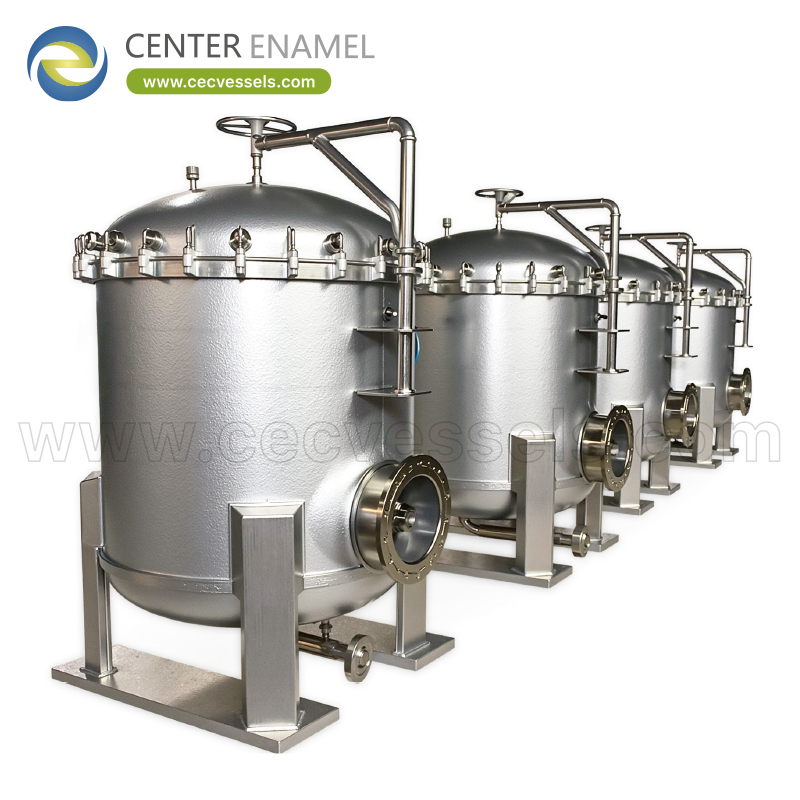
Buffer Pressure Vessel Process Holdup And Batch To Continuous Buffering
| Place of Origin: | China |
| Brand Name: | Center Enamel |
| Certification: | ISO 9001,CE, NSF/ANSI 61, WRAS, ISO 28765, LFGB, BSCI, ISO 45001 |
| Minimum Order Quantity: | 1 Sets |
| Price: | 2000 |
| Delivery Time: | 2 months |
| Payment Terms: | L/C,T/T |
| Supply Ability: | 200 sets / days |
|
Detail Information |
|||
Product Description
Buffer Pressure Vessel Process Holdup And Batch To Continuous Buffering
A buffer pressure vessel holds a volume of process fluid between two units so a batch process can feed a continuous one, or so one side's interruption does not stop the other - a steady-state holdup, not a transient cushion.
This guide covers how buffer vessels are sized and specified, and how they differ from surge vessels, using verifiable process facts rather than assumed performance.
What A Buffer Vessel Actually Does
A buffer vessel provides holdup volume: it decouples the upstream and downstream units so each can run on its own schedule. When the upstream slows, the buffer feeds the downstream; when the downstream stops, the buffer absorbs the upstream.
The key word is holdup - the buffer is sized for minutes to hours of production, not milliseconds of transient. That time scale is what separates it from a surge vessel.
Batch-To-Continuous Interface
Batch processes (with inherent flow interruptions) often feed continuous processes. A buffer vessel sized for the expected batch cycle lets the continuous line run without stopping during batch changeover or CIP.
This is common in food, beverage and pharmaceutical lines where a steriliser or filler runs at a different rate than the tank farm feeding it.
Accumulation And Steady-State Surge
In continuous plants, a buffer provides accumulation - it holds excess when demand dips and releases it when demand spikes, smoothing the load on compressors, pumps or reactors.
This is steady-state surge: slow, predictable level movement, not the violent pressure wave a surge vessel absorbs. The control logic and sizing are different because the time constants are different.
Sizing: Hold Time And Volume
Buffer volume follows the hold time you need - from minutes of surge to several hours of shift-length holding - multiplied by the production or flow rate. Larger holdup costs more but buys more decoupling.
The sizing tier depends on function: short-term matching, standard buffering, or extended shift-length holding each calls for a different volume range.
In practice the hold time is set by the longest expected interruption on either side of the buffer - a batch changeover, a CIP cycle or a planned maintenance window - so the vessel is specified against the worst-case decoupling, not the average.
Level Control And Instrumentation
Buffer vessels run on level control: sensors track the fill and a PLC adjusts upstream or downstream flow to keep the level in a safe band, with alarms at the high and low limits.
Because the buffer is a working volume, its instrumentation is a process-control item, not just a safety feature - the vessel only decouples the line while its level stays managed.
Material And Code
Buffer shells follow ASME VIII Div.1 or GB/T 150; material follows the fluid - stainless for hygienic or corrosive service, carbon steel with allowance or lining for general duty.
CE/PED applies for the EU market, and the data book records material, NDE and test evidence for the whole assembly.
Specification Checklist For Buyers
State the fluid, the required hold time, the flow or production rate, the pressure, the corrosivity and the code/marking in the purchase order.
Confirm the builder sizes on hold time and flow, not just a nominal volume, and verify a sample data book before award.
Buffer Versus Surge Vessel
Factor |
Buffer |
Surge |
Time scale |
Minutes to hours |
Milliseconds to minutes |
Purpose |
Holdup / decouple |
Transient absorption |
Trigger |
Rate mismatch |
Flow velocity change |
Sizing basis |
Hold time x flow |
Velocity x wave speed |
Control |
Level / PLC |
Open volume / relief |
Buffer Vessel Specification Inputs
Input |
Why it matters |
Fluid + corrosivity |
Drives material |
Hold time |
Sets volume |
Flow / rate |
Sizing basis |
Pressure |
Defines boundary |
Level control |
Decouples line |
Code + marking |
Pressure approval |
Conclusion
A buffer pressure vessel provides steady-state holdup that decouples batch and continuous units or smooths accumulation, sized on hold time and flow rather than transient velocity.
Keep it distinct from surge protection by time scale and sizing basis, specify the fluid, hold time and code, and verify a sample data book before award.
About Center Enamel
Center Enamel is a pressure vessel and process equipment manufacturer based in China, producing stainless steel and carbon steel pressure vessels, separators, reactors, heat exchangers and storage tanks for chemical, oil and gas, power, food, pharmaceutical and water-treatment applications.
Manufacturing is carried out under ASME VIII Div.1, GB/T 150 and ISO 9001 with CE/PED and NACE MR0175 / ISO 15156 options for sour service. Each unit is supplied with material traceability, hydrostatic or pneumatic testing, NDT and export documentation.
- Material range: Stainless steel (304 / 316L), duplex, carbon steel with rubber or epoxy lining for corrosion duty.
- Standards: ASME VIII Div.1, GB/T 150, ISO 9001, CE/PED, NACE MR0175 / ISO 15156.
- Commercial terms: Minimum order quantity 1 unit, typical lead time about 2 months, L/C or T/T.
Frequently Asked Questions (FAQ)
What is a buffer pressure vessel?
A code vessel that holds process fluid between two units to decouple batch and continuous operation or smooth accumulation.
How is buffer different from surge?
Buffer is minutes-to-hours holdup for rate mismatch; surge is millisecond transient absorption for water hammer.
What is batch-to-continuous buffering?
Using a buffer sized for the batch cycle so a continuous line keeps running during batch changeover or CIP.
How is buffer volume sized?
Hold time multiplied by flow or production rate; the needed hold time sets whether it is minutes or hours of volume.
What level control is used?
Level sensors and a PLC adjust upstream/downstream flow to keep the level in a safe band, with high/low alarms.
Which material for buffer vessels?
Stainless for hygienic/corrosive service; carbon steel with allowance or lining for general duty.
Which code applies?
ASME VIII Div.1 or GB/T 150, with CE/PED for the EU; data book records material, NDE and test.
Is buffer the same as accumulation?
Accumulation is one function of buffering - holding excess at low demand and releasing at high demand.
Can one tank serve buffer and surge?
Often yes if sized for both, but the dominant duty should drive the sizing; mixing them blindly risks under-sizing.
What documents prove compliance?
Material certs, WPS/PQR, NDT, hydrostatic test and the data report.
How long to fabricate?
About 2 months from a China manufacturer for an engineered vessel scheduled around certification.
What should the PO state?
Fluid, hold time, flow rate, pressure, corrosivity and required code/marking.
Why verify the data book early?
It proves the vessel is sized on hold time and flow, not a nominal volume, before build.
Where are buffer vessels used?
Food, beverage, pharma and process lines where batch and continuous units must run independently.
Does a buffer need relief?
It needs pressure relief per code like any pressure vessel, but its main control is level-based decoupling.
Suggested CTA: Request a technical quotation with your duty, pressure, temperature and fluid data, or discuss your project with a Center Enamel engineer for a sized proposal.