-
Glass Fused To Steel Tanks (896)
-
Stainless Steel Tanks (434)
-
Fusion Bonded Epoxy Tanks (660)
-
Galvanized Steel Tanks (321)
-
Aluminum Dome Roofs (1336)
-
Wastewater Storage Tanks (280)
-
Welded Steel Tanks (457)
-
Pressure Vessels (485)
-
Anaerobic Digester (217)
-
Industrial Water Tanks (384)
-
Glass Lined Steel Tanks (180)
-
Bolted Steel Tanks (389)
-
Sludge Storage Tank (115)
-
Biogas Storage Tank (173)
-
Leachate Storage Tanks (133)
-
Agricultural Water Storage Tanks (179)
-
Fire Water Tank (166)
-
Grain Storage Silos (146)
-
Biogas Projects (424)
-
Wastewater Treatment Projects (1832)
-
Double Membrane Roof (223)
|
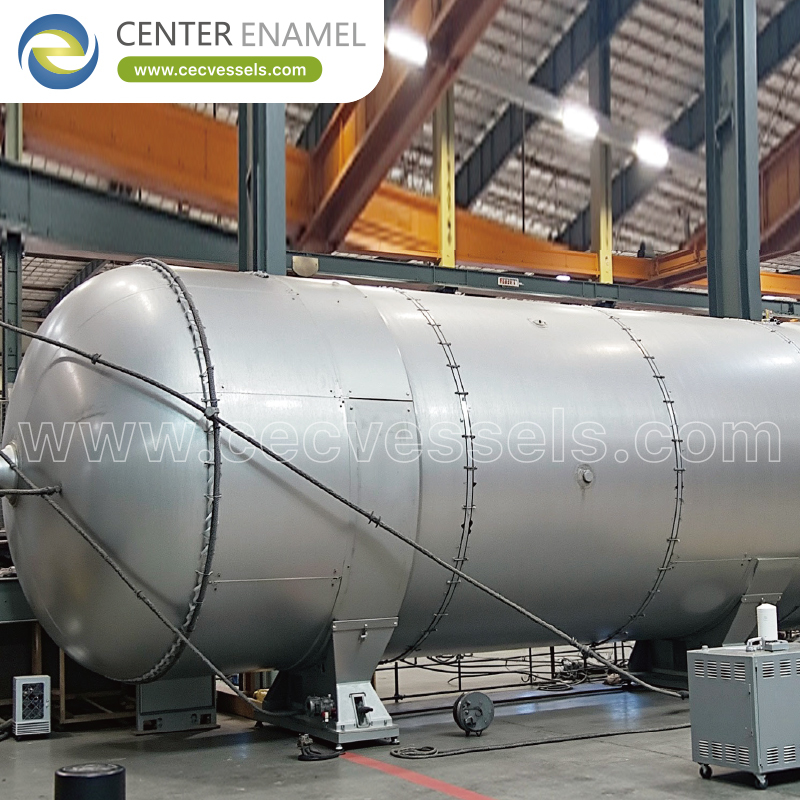
Brewery Pressure Vessel Pressurized Fermentation And Bright Beer Service
| Place of Origin: | China |
| Brand Name: | Center Enamel |
| Certification: | ISO 9001,CE, NSF/ANSI 61, WRAS, ISO 28765, LFGB, BSCI, ISO 45001 |
| Minimum Order Quantity: | 1 Sets |
| Price: | 2000 |
| Delivery Time: | 2 months |
| Payment Terms: | L/C,T/T |
| Supply Ability: | 200 sets / days |
|
Detail Information |
|||
Product Description
Brewery Pressure Vessel Pressurized Fermentation And Bright Beer Service
A brewery pressure vessel spans the brewhouse and the packaged product: mash and kettle duties, fermentation under pressure, and bright beer tanks that carbonate and condition before the line.
It is specified for beer, yeast and CO2 rather than milk, so the hygienic rules are shared with dairy but the process fluid, pressure profile and cleaning chemistry are distinct - the topics this guide covers.
Brewery Process Fluids Set The Duty
Wort, beer, yeast and CIP chemicals pass through the same shell at different stages, so the vessel must resist beer stone, yeast deposits and caustic/acid cleaning without harbouring flavour or microbial carryover.
Carbon dioxide is generated in fermentation and managed throughout; a brewery vessel is therefore often a pressure vessel by function - holding fermenter pressure and later carbonating the bright beer.
Pressurized Fermentation Versus Open
Modern craft and many lager programmes use pressurized fermentation, holding the tank at a few tenths of a bar to control ester profile and capture CO2. The vessel then needs a rated pressure boundary, a pressure relief path and a hygienic seal.
The pressure rating is modest but real; a tank sold only as atmospheric cannot safely take fermenter pressure, so the specification must state the maximum fermentation pressure, not assume it.
Bright Beer Tanks And Carbonation
A bright beer tank conditions, clarifies and carbonates finished beer under pressure before packaging. It holds product at the target CO2 volume, so the pressure boundary, the carbonate dosing and the cooling jacket all matter.
Brite tanks are often the most pressure-rated vessel in the cellar; they must also drain and clean fully so no yeast or trub reaches the packaged beer.
Hygienic Material: 304 Versus 316L
Most brewery vessels use 304 (S30408) stainless for wort and beer contact; 316L (S31603) is chosen where cleaning chemicals, acidic sources or chloride risk demand more corrosion resistance.
As in dairy, the finish is specified - a smooth, electropolished or polished contact surface resists beer stone and cleans readily across repeated CIP cycles.
Thermal Duty: Jackets And Cooling
Fermentation is exothermic and bright tanks are conditioned cold, so jackets and cooling surfaces are part of the vessel design. The pressure boundary and the thermal surface must both be specified and verified.
Thermal cycling between fermentation heat and crash cooling stresses the shell and seals, the same way dairy CIP does, so material and gasket selection account for it.
Clean-In-Place And Microbial Control
Brewery vessels support CIP with spray balls and returns integrated into the boundary; microbial control is critical because a single contaminated batch can infect later fills. Drainable geometry and verified cleaning are qualification criteria.
Validation here is lighter than pharma but still real: weld maps, surface records and cleaning evidence support the brewery's own quality system.
Code, Marking And Documentation
The pressure boundary follows ASME VIII Div.1 or GB/T 150, with CE/PED for the EU; the hygienic layer sits inside that code shell. Both must be satisfied without compromising either.
Material certificates, weld maps, surface-finish records and the hydrostatic-test certificate sit alongside any 3-A / EHEDG conformance evidence in the delivered package.
Specification Checklist For Brewers
State the duty (mash/kettle, fermenter, brite), the maximum fermentation or service pressure, the cooling requirement, the cleaning chemicals and the required finish and fitting standard in the purchase order.
Confirm the builder can deliver the hygienic layer and the rated pressure boundary together, and verify a sample data book that includes surface-finish and weld-map records.
Brewery Vessel By Duty
Duty |
Pressure |
Key design point |
Mash / kettle |
Low |
Thermal, mixing |
Fermenter |
0.1-0.3 bar typ. |
Pressure-rated, cooling |
Bright beer |
CO2 volume rated |
Carbonate + condition |
CIP return |
Atmospheric |
Drainable, cleanable |
All |
Code shell |
Hygienic layer inside |
Brewery Vessel Specification Inputs
Input |
Why it matters |
Duty type |
Sets pressure rating |
Max ferment pressure |
Defines boundary |
Cooling / jacket |
Fermentation + crash |
Cleaning chem |
Seal and surface duty |
Finish / fitting |
3-A / EHEDG conformance |
CO2 handling |
Relief and rating |
Code + marking |
Pressure approval |
Conclusion
A brewery pressure vessel is specified for beer, yeast and CO2: a hygienic 304 or 316L shell, a rated pressure boundary for pressurized fermentation and bright-beer carbonation, and a cleanable design that survives CIP.
Treat the pressure rating and the hygienic layer as two requirements that must both be met, and verify a sample data book that includes surface-finish and weld-map records before award.
About Center Enamel
Center Enamel is a pressure vessel and process equipment manufacturer based in China, producing stainless steel and carbon steel pressure vessels, separators, reactors, heat exchangers and storage tanks for chemical, oil and gas, power, food, pharmaceutical and water-treatment applications.
Manufacturing is carried out under ASME VIII Div.1, GB/T 150 and ISO 9001 with CE/PED and NACE MR0175 / ISO 15156 options for sour service. Each unit is supplied with material traceability, hydrostatic or pneumatic testing, NDT and export documentation.
- Material range: Stainless steel (304 / 316L), duplex, carbon steel with rubber or epoxy lining for corrosion duty.
- Standards: ASME VIII Div.1, GB/T 150, ISO 9001, CE/PED, NACE MR0175 / ISO 15156.
- Commercial terms: Minimum order quantity 1 unit, typical lead time about 2 months, L/C or T/T.
Frequently Asked Questions (FAQ)
What is a brewery pressure vessel?
A code vessel for wort, beer, yeast and CIP in brewhouse, fermentation and bright-beer service, built to hygienic and pressure standards.
Why pressurize fermentation?
To control ester profile and capture CO2; the tank then needs a rated boundary, relief path and hygienic seal, not an atmospheric shell.
What is a bright beer tank?
A pressure vessel that conditions, clarifies and carbonates finished beer before packaging, often the most pressure-rated vessel in the cellar.
Which stainless for brewery?
304 (S30408) for wort and beer; 316L (S31603) where cleaning chemicals, acidic sources or chloride risk demand more resistance.
How is brewery different from dairy?
Brewery centres on wort, yeast, fermentation pressure and CO2; dairy focuses on milk fat/protein fouling and aseptic packaging.
What thermal duty does it see?
Exothermic fermentation and crash cooling, plus CIP; jackets and the boundary are specified and verified together.
Does brewery need CIP?
Yes; spray balls and returns are integrated so the vessel cleans without disassembly and controls microbial carryover.
Which code applies?
The pressure boundary follows ASME VIII Div.1 or GB/T 150, with CE/PED for the EU; the hygienic layer sits inside.
What finish is typical?
Smooth polished or electropolished 304/316L contact surfaces to resist beer stone and clean readily.
What documents prove compliance?
Material certs, weld maps, surface-finish records, cleaning evidence and the code data report.
Can an atmospheric tank take fermenter pressure?
No; only a pressure-rated boundary with relief can safely hold fermenter pressure - specify it explicitly.
How long to fabricate?
About 2 months from a China manufacturer for an engineered hygienic vessel scheduled around certification and finish.
What should the PO state?
Duty type, max ferment pressure, cooling requirement, cleaning chemicals, finish, fitting standard and code marking.
Why verify the data book early?
Surface-finish and weld-map records support the brewery's quality system; a builder without them is a risk.
Is CO2 handling part of the spec?
Yes; fermenter and brite tanks must manage CO2 generation, carbonation and relief within the rated boundary.
Suggested CTA: Request a technical quotation with your duty, pressure, temperature and fluid data, or discuss your project with a Center Enamel engineer for a sized proposal.