-
Glass Fused To Steel Tanks (896)
-
Stainless Steel Tanks (434)
-
Fusion Bonded Epoxy Tanks (660)
-
Galvanized Steel Tanks (321)
-
Aluminum Dome Roofs (1336)
-
Wastewater Storage Tanks (280)
-
Welded Steel Tanks (457)
-
Pressure Vessels (475)
-
Anaerobic Digester (217)
-
Industrial Water Tanks (374)
-
Glass Lined Steel Tanks (180)
-
Bolted Steel Tanks (389)
-
Sludge Storage Tank (115)
-
Biogas Storage Tank (173)
-
Leachate Storage Tanks (133)
-
Agricultural Water Storage Tanks (179)
-
Fire Water Tank (166)
-
Grain Storage Silos (146)
-
Biogas Projects (424)
-
Wastewater Treatment Projects (1822)
-
Double Membrane Roof (223)

|
Fire Water Tank Supplier: Total Cost And Logistics Considerations
| Place of Origin: | China |
| Brand Name: | CEC TANKS |
| Certification: | ISO 9001:2008, AWWA D103 , OSHA , BSCI |
| Model Number: | J2016012651 |
| Minimum Order Quantity: | 1set |
| Price: | $5000~$20000 one set |
| Packaging Details: | PE poly-foam between each two steel plates ; wooden pallet and wooden box |
| Delivery Time: | 0-60 days after deposit received |
| Payment Terms: | L/C,T/T |
| Supply Ability: | 60 sets per month |
|
Detail Information |
|||
| Place of Origin | China | Brand Name | CEC TANKS |
|---|---|---|---|
| Certification | ISO 9001:2008, AWWA D103 , OSHA , BSCI | Model Number | J2016012651 |
| Coating Color: | Can Be Customized | Coating Thickness: | 0.25mm~0.40mm & Double Coating |
| Adhesion: | 3,450N/cm | Elastic: | Same As Steel Sheet ,around 500KN /mm |
| Acid And Alkalinity Proof: | Standard Sheet PH:3~11 Special Sheet PH: 1~14 | Service Life: | ≥30 Years |
| Permeability: | Gas And Liquid Impermeable | Material: | Glass And Steel |
| Highlight: | industrial water tanks total cost,fire water tank logistics,industrial water tank supplier |
||
Product Description
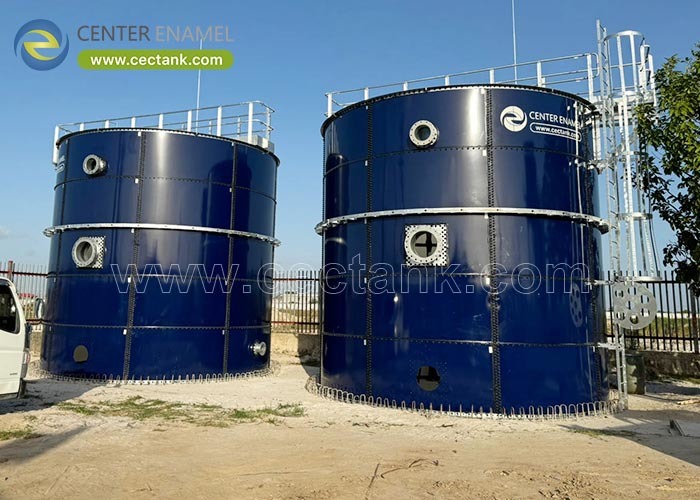
A fire water tank supplier influences total cost of ownership long after the quote, because freight, erection speed, coating life and expansion options decide what the reserve really costs across a 30-50 year life. Sourcing means weighing the supplier's logistics against a deadline and its coating system against standby reliability. Center Enamel ships bolted GFS, FBE and galvanized fire-water tanks to 100-plus countries, with ex-works lead about 30 days for 1,000-10,000 m3 tanks and on-site erection in weeks.
Total Cost Of OwnershipThe first cost is a small part of the story. A GFS enamel lining fired at 820-930 C needs no field recoating during decades of standby, avoiding the 5-10 year repaint cycle of field-coated welded steel. Bolted panels ship flat, cutting freight versus welded shells, and erect in weeks, avoiding concrete formwork or welding delays. The supplier that documents the lining and delivers on time reduces cost at every later stage, not just at purchase.
- GFS lining: no field recoat for decades.
- Flat panels cut freight vs welded shells.
- Erection in weeks, not months.
- Lifecycle cost beats first cost.
Deadline risk is the silent cost: a tank that misses the occupancy date delays revenue and insurance. A fire water tank supplier should state ex-works lead (about 30 days for 1,000-10,000 m3), containerized panel shipping and the on-site jacking sequence so the crane window is booked with confidence. Confirm the supplier provides torque and gasket instructions so the erected shell matches the qualified coating.
- Ex-works lead about 30 days (1,000-10,000 m3).
- Containerized flat-panel shipping.
- On-site jacking sequence documented.
- Torque and gasket instructions supplied.
Fire water sits full but unused for years, then must work flawlessly on demand, so the lining matters more than pressure rating. Glass-Fused-to-Steel panels are fired at 820-930 °C to give a smooth inert skin with Ra below 0.8 micrometres, documented at 0.25-0.45 mm thickness, adhesion above 3,450 N/cm2 and 100 percent 1,500 V DC spark testing per panel. Hot-dip galvanized and Fusion-Bonded Epoxy bolted tanks cover cost-sensitive or documented-coating duties. Aluminum geodesic dome roofs (AWWA D108, API 650, EN 1090) keep weather out and heat in. A caveat applies: GFS suits most fire duty, but where the medium is aggressive beyond the enamel pH range, the right lining should be confirmed with the engineer rather than assumed. Shijiazhuang Zhengzhong Technology Co., Ltd (Center Enamel) builds the steel containment to AWWA D103-09 and ISO 28765, with more than 30,000 installed tank projects across 100-plus countries.
- GFS bolted: inert enamel, Ra below 0.8 micrometres, no field recoating.
- Hot-dip galvanized: lower cost, zinc shell protection.
- FBE bolted: documented epoxy lining for specified duty.
- Aluminum geodesic dome roof per AWWA D108, API 650, EN 1090.
Sizing a fire water tank starts from the fire-protection engineer's hydraulic calculation, not a catalogue number. The required flow density of 4-12 L/min per square metre, the design area of operation of 140-480 square metres, the discharge duration of 30-90 minutes and the hazard class (Light through High Hazard) fix the usable volume of 9-200 m3 for European systems or larger for campus-scale reserves. The coating thickness of 0.25-0.45 mm, the refill window of 36 hours per EN 12845 and the freeze-protection margin of 1.0 metre for non-frost-proof tanks then set the shell, appurtenances and foundation. Every figure below is confirmed against the applicable standard and the local authority having jurisdiction.
Design parameter |
Typical value or range |
Why it matters |
Coating thickness |
0.25-0.45 mm enamel |
No field recoat for decades |
Adhesion |
above 3,450 N/cm2 |
Standby lining integrity |
Spark test |
1,500 V DC, 100 percent |
Source holiday check |
Ex-works lead |
about 30 days (1,000-10,000 m3) |
Deadline certainty |
Erection |
bolted jacking, weeks |
Avoid concrete or weld delay |
Single-tank max |
20,000 m3 |
One-shell upper bound |
Lifecycle |
30-50 years |
TCO basis |
Countries served |
100-plus |
Logistics reach evidence |
The figures below are drawn from Center Enamel's verified fire-protection project record (case_library.csv). Each Project ID is allocated to exactly one article in this batch to avoid double-counting evidence. Where the source did not record a diameter or height, the field reads Not Provided and is not estimated. These are real water-storage deliveries for fire duty; they demonstrate the company's ability to engineer code-referenced bolted tanks, not a claim about any single standard's certification on that specific job.
Project |
Country |
Tank type |
Volume |
Year |
Relevance |
China Sichuan fire protection |
China |
GFS bolted |
1,375 m3 (2 tanks) |
2024 |
Split two-tank reserve |
Compare suppliers on lifecycle cost, not quote: coating system and recoat cycle, freight and erection speed, expansion or relocation option, and the engineering package for plan review. A lower quote with field-applied coating or uncertain lead time usually costs more by year five. Require panel-level coating evidence and a verified project near your size before shortlisting.
- Compare lifecycle, not headline price.
- Coating system and recoat cycle.
- Freight, erection speed, expansion option.
- Require coating evidence and verified project.
Lifecycle cost - coating system and recoat cycle, freight and erection speed, expansion option and the engineering package - not the headline quote.
Why does a bolted tank lower total cost?Flat panels cut freight, weeks-long bolted erection avoids concrete or weld delay, and the GFS lining needs no field recoat for decades.
What is the typical supplier lead time?About 30 days ex-works for a 1,000-10,000 m3 tank, plus on-site erection; welded or concrete alternatives take months longer.
How are fire tanks shipped?As flat or nested panels in containers, then assembled on site by top-down jacking, fitting short crane windows.
Should the supplier provide erection instructions?Yes - torque and gasket sequence so the erected shell matches the qualified coating and stays leak-free.
What coating evidence should the supplier show?0.25-0.45 mm enamel thickness, above 3,450 N/cm2 adhesion and 1,500 V DC spark test on 100 percent of panels.
Can the tank be expanded later?Bolted modular tanks can often be raised by adding shell rings or relocated, protecting the reserve investment as demand changes.
Does Center Enamel supply worldwide?Yes - bolted fire-water tanks to 100-plus countries, with more than 30,000 installed projects.
How do I verify a supplier's delivery claim?Request the ex-works lead, shipping method and a project reference of similar size and deadline, then cross-check.
ConclusionA fire water tank supplier should be chosen on total cost of ownership and logistics, because freight, erection speed and coating life decide the real cost across a 30-50 year life. The supplier that documents the lining and meets the deadline reduces cost at every later stage rather than only at purchase.