-
Glass Fused To Steel Tanks (896)
-
Stainless Steel Tanks (434)
-
Fusion Bonded Epoxy Tanks (660)
-
Galvanized Steel Tanks (321)
-
Aluminum Dome Roofs (1336)
-
Wastewater Storage Tanks (280)
-
Welded Steel Tanks (457)
-
Pressure Vessels (475)
-
Anaerobic Digester (217)
-
Industrial Water Tanks (374)
-
Glass Lined Steel Tanks (180)
-
Bolted Steel Tanks (389)
-
Sludge Storage Tank (115)
-
Biogas Storage Tank (173)
-
Leachate Storage Tanks (133)
-
Agricultural Water Storage Tanks (179)
-
Fire Water Tank (166)
-
Grain Storage Silos (146)
-
Biogas Projects (424)
-
Wastewater Treatment Projects (1822)
-
Double Membrane Roof (223)

|
EN 12845 Water Storage Tank: European Sprinkler Compliance
| Place of Origin: | China |
| Brand Name: | CEC TANKS |
| Certification: | ISO 9001:2008, AWWA D103 , OSHA , BSCI |
| Model Number: | W |
| Minimum Order Quantity: | 1set |
| Price: | $5000~$20000 one set |
| Packaging Details: | PE poly-foam between each two steel plates ; wooden pallet and wooden |
| Delivery Time: | 10-30 days after deposit received |
| Payment Terms: | L/C,T/T |
| Supply Ability: | 60 sets per month |
|
Detail Information |
|||
| Place of Origin | China | Brand Name | CEC TANKS |
|---|---|---|---|
| Certification | ISO 9001:2008, AWWA D103 , OSHA , BSCI | Model Number | W |
| Feature: | Eco-friendly, Durability | Tank Material: | Glass Fused To Steel |
| Chemical Resistance: | Excellent | Size Of Panel: | 2.4M * 1.2M |
| Easy To Clean: | Smooth, Glossy, Inert, Anti-adhesion | Capactiy Available: | 20 M3 To 20,000 M3 |
| Highlight: | EN 12845 water storage tank,European sprinkler compliance tank,industrial sprinkler water tank |
||
Product Description
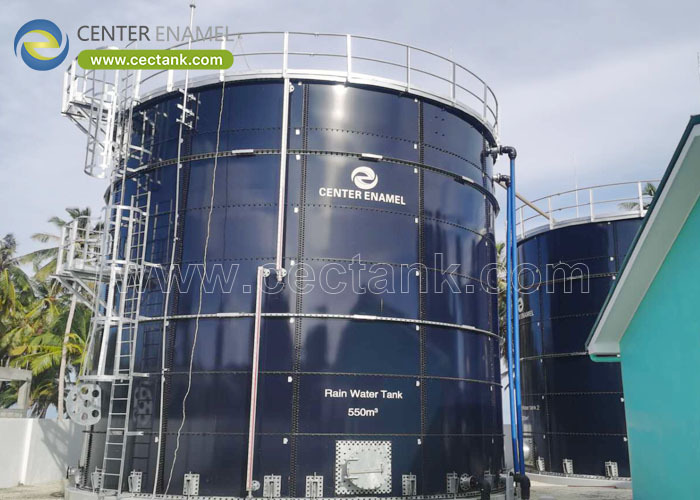
Request Center Enamel's EN 12845 water storage tank specification with national annex and effective-capacity calculation.
An EN 12845 water storage tank is engineered to the European standard for fixed firefighting systems - automatic sprinkler systems - which sets the volume, refill and corrosion-protection rules for the reserve. (The search term 'EN 121545' is a transposition of EN 12845; there is no EN 121545 standard, so this article addresses EN 12845, the correct reference.) Center Enamel supplies GFS and galvanized bolted reservoirs with the coating documentation and split, isolated configuration European data-center and industrial redundancy requires, referenced to EN 12845, EN 1090 and ISO 28765.
What EN 12845 Demands Of The TankEN 12845 requires the tank to be painted or corrosion-protected so maintenance draining is deferred at least 10 years, the water source to refill within 36 hours, and every tank except an open reservoir to have an externally readable level indicator. The standard sets indicative minimum volumes from 9 m3 for Light Hazard up to 200 m3 for High Hazard, but the fire-protection engineer confirms the actual volume from hydraulic calculation. National annexes in the Netherlands, France and elsewhere shift acceptance detail, so the applicable annex must be stated in the specification.
- Corrosion protection defers draining 10 years.
- Refill within 36 hours.
- Externally readable level indicator.
- State the national annex in the spec.
EN 12845 Clause 9.3 defines effective capacity as the volume between the normal water level and the lowest effective level, not the geometric volume. Where the tank is not frost-proof the normal level is raised at least 1.0 metre and ice venting is required. A vortex inhibitor and sump maintain the difference between physical and effective volume, so the tank must be specified and drawn to those clearances rather than a single gross number.
- Effective capacity: normal to lowest effective level.
- Frost-proof: raise normal level 1.0 m, ice vent.
- Vortex inhibitor and sump preserve capacity.
- Draw to clearances, not gross volume.
Fire water sits full but unused for years, then must work flawlessly on demand, so the lining matters more than pressure rating. Glass-Fused-to-Steel panels are fired at 820-930 °C to give a smooth inert skin with Ra below 0.8 micrometres, documented at 0.25-0.45 mm thickness, adhesion above 3,450 N/cm2 and 100 percent 1,500 V DC spark testing per panel. Hot-dip galvanized and Fusion-Bonded Epoxy bolted tanks cover cost-sensitive or documented-coating duties. Aluminum geodesic dome roofs (AWWA D108, API 650, EN 1090) keep weather out and heat in. A caveat applies: GFS suits most fire duty, but where the medium is aggressive beyond the enamel pH range, the right lining should be confirmed with the engineer rather than assumed. Shijiazhuang Zhengzhong Technology Co., Ltd (Center Enamel) builds the steel containment to AWWA D103-09 and ISO 28765, with more than 30,000 installed tank projects across 100-plus countries.
- GFS bolted: inert enamel, Ra below 0.8 micrometres, no field recoating.
- Hot-dip galvanized: lower cost, zinc shell protection.
- FBE bolted: documented epoxy lining for specified duty.
- Aluminum geodesic dome roof per AWWA D108, API 650, EN 1090.
Sizing a fire water tank starts from the fire-protection engineer's hydraulic calculation, not a catalogue number. The required flow density of 4-12 L/min per square metre, the design area of operation of 140-480 square metres, the discharge duration of 30-90 minutes and the hazard class (Light through High Hazard) fix the usable volume of 9-200 m3 for European systems or larger for campus-scale reserves. The coating thickness of 0.25-0.45 mm, the refill window of 36 hours per EN 12845 and the freeze-protection margin of 1.0 metre for non-frost-proof tanks then set the shell, appurtenances and foundation. Every figure below is confirmed against the applicable standard and the local authority having jurisdiction.
Design parameter |
Typical value or range |
Why it matters |
EN 12845 min volume |
9-200 m3 by hazard |
Light to High Hazard |
Refill window |
36 hours |
Clause 9.3.3 source refill |
Corrosion protection |
drains deferred 10 years |
Clause 8.1.2 / 9.6.2 |
Frost margin |
raise normal level 1.0 m |
Non frost-proof tanks |
Coating thickness |
0.25-0.45 mm enamel |
Inert standby surface |
Adhesion |
above 3,450 N/cm2 |
Standby lining integrity |
Spark test |
1,500 V DC per panel |
100 percent holiday check |
Structural code |
EN 1090 / EN 1991-1-4 |
European execution |
The figures below are drawn from Center Enamel's verified fire-protection project record (case_library.csv). Each Project ID is allocated to exactly one article in this batch to avoid double-counting evidence. Where the source did not record a diameter or height, the field reads Not Provided and is not estimated. These are real water-storage deliveries for fire duty; they demonstrate the company's ability to engineer code-referenced bolted tanks, not a claim about any single standard's certification on that specific job.
Project |
Country |
Tank type |
Volume |
Year |
Relevance |
Guinea fire protection |
Guinea |
Hot-dip galvanized |
1,983 m3 (1 tank) |
2025 |
Large HDG European-style reserve |
State the applicable national annex, the hydraulic volume from the engineer, the effective capacity after clearances and the coating evidence (0.25-0.45 mm, above 3,450 N/cm2, 1,500 V DC spark test). Require the 36-hour refill and externally readable level indication in the spec, and confirm the tank documentation matches the jurisdiction before fabrication. Reject any proposal that quotes only a geometric volume.
- State national annex and hydraulic volume.
- Specify effective capacity after clearances.
- Require 36 h refill and external level.
- Reject geometric-only volume quotes.
No - EN 121545 is a transposition of EN 12845, the actual European sprinkler standard; there is no EN 121545.
What does EN 12845 require of a water storage tank?Corrosion protection that defers draining at least 10 years, refill within 36 hours, externally readable level indication, and volume confirmed by the fire-protection engineer.
What is effective capacity under EN 12845?The volume between the normal water level and the lowest effective level, not the geometric volume; anti-vortex and sump clearances reduce it.
Why must the national annex be stated?The Netherlands, France and others adopt EN 12845 with differing acceptance, testing and sign-off, so the local variant must match the documentation.
What minimum volumes does EN 12845 give?Indicative 9 m3 for Light Hazard up to 200 m3 for High Hazard, with the engineer confirming the actual volume.
What lining suits an EN 12845 tank?GFS enamel or hot-dip galvanized bolted construction, both documented for inspection; FBE where specified.
Does Center Enamel build EN 12845 tanks?Yes - GFS and galvanized bolted reservoirs referenced to EN 12845, EN 1090 and ISO 28765, with split isolated configuration for redundancy.
What coating evidence should the tank show?0.25-0.45 mm enamel thickness, above 3,450 N/cm2 adhesion and 1,500 V DC spark test on 100 percent of panels.
How is freeze protection handled under EN 12845?Non frost-proof tanks raise the normal level at least 1.0 metre and require ice venting.
ConclusionAn EN 12845 water storage tank is engineered to the European sprinkler standard's volume, refill and corrosion rules, with effective capacity defined after anti-vortex and suction clearances. (Remember: 'EN 121545' is a transposition of EN 12845 and is not a real standard.) Stating the national annex and the effective volume is what makes the tank acceptable to the local authority having jurisdiction.
Suggested CTA: Specify an EN 12845 water tank by effective capacity after clearances, the applicable national annex and panel-level coating evidence; note EN 121545 is a typo for EN 12845.