-
Glass Fused To Steel Tanks (896)
-
Stainless Steel Tanks (434)
-
Fusion Bonded Epoxy Tanks (660)
-
Galvanized Steel Tanks (321)
-
Aluminum Dome Roofs (1336)
-
Wastewater Storage Tanks (280)
-
Welded Steel Tanks (457)
-
Pressure Vessels (451)
-
Anaerobic Digester (202)
-
Industrial Water Tanks (364)
-
Glass Lined Steel Tanks (180)
-
Bolted Steel Tanks (389)
-
Sludge Storage Tank (115)
-
Biogas Storage Tank (173)
-
Leachate Storage Tanks (133)
-
Agricultural Water Storage Tanks (179)
-
Fire Water Tank (166)
-
Grain Storage Silos (146)
-
Biogas Projects (424)
-
Wastewater Treatment Projects (1752)
-
Double Membrane Roof (223)

|
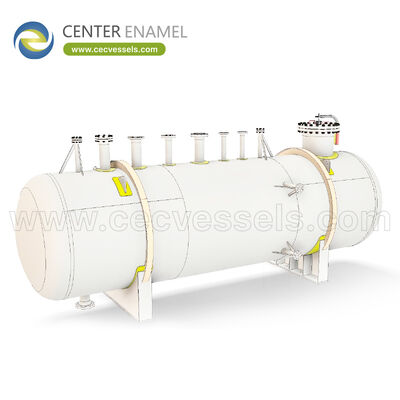
China Three Phase Production Separator Manufacturer Delivering Advanced Separation Performance for Petroleum Production Systems
| Place of Origin: | China |
| Brand Name: | Center Enamel |
| Certification: | ISO 9001,CE, NSF/ANSI 61, WRAS, ISO 28765, LFGB, BSCI, ISO 45001 |
| Minimum Order Quantity: | 1 Sets |
| Price: | 2000 |
| Delivery Time: | 2 months |
| Payment Terms: | L/C,T/T |
| Supply Ability: | 200 sets / days |
|
Detail Information |
|||
Product Description
China Three Phase Production Separator Manufacturer Delivering Advanced Separation Performance for Petroleum Production Systems
A three phase production separator separates oil, free water and gas in one vessel by gravity settling and coalescence, which is the heart of petroleum production treating. Its performance is defined by how well the oil-water interface is held and how finely it can break the emulsion.
The practical answer is to design the retention time and coalescing internals for the actual emulsion and rates, control the interface actively, and verify the rated capacity. This article is specifically about the three-phase mechanic rather than the broader upstream role.
The Three-Phase Mechanic
Gas separates at the top by velocity control, oil and water separate by density in a retention section, and the oil-water interface is held by a weir or control. Emulsion breaking is the hardest part and depends on retention time and any coalescing aid.
Unlike a simple gas-liquid knockout, the three-phase unit lives or dies by the emulsion and interface, so those must be the design focus.
Retention Time And Capacity
Retention time sets how completely oil and water separate. Underspecifying it to save size leaves water-in-oil or oil-in-water off-spec. The rated capacity should reflect the actual emulsion, not a clean-water assumption.
- Gas section: controlled by velocity to avoid liquid carryover.
- Oil section: holds retention time for settling, sized by oil rate and properties.
- Water section: settles and drains the free water, holding the interface below the oil draw.
Coalescence And Emulsion Breaking
Where emulsions are tight, coalescing packs or plates improve separation, but they add cleaning needs. Specify them only where the emulsion justifies the maintenance.
Over-adding internals without an emulsion basis adds pressure drop and cleaning work without guaranteed benefit.
Interface Control Approaches
A fixed weir is simple; an instrumented interface controller adapts to rate changes and protects endpoints during transients. Choose based on how variable the wellstream is.
Active control is usually worth it where rates swing, because a fixed weir cannot hold spec during those swings.
Sizing Inputs To Provide
Give oil, water and gas rates, the oil-water ratio, properties (density, viscosity, emulsion tendency), pressure, temperature and the endpoint specs. The endpoint specs, not just rates, set the retention time.
Provide the swing range, because three-phase units are judged when rates and ratios move, not at the design point.
Acceptance And Verification
Verify retention-volume geometry, coalescing internals if used, interface-control method, material certificates, pressure test and nozzle orientation. For sour service, confirm NACE documentation.
A practical check is to require the vendor to state the rated retention time and the emulsion basis used for sizing.
Three-Phase Design Levers
| Lever | Effect | Trade-off |
|---|---|---|
| Retention time | Cleaner oil/water split | Larger vessel |
| Coalescer | Better emulsion break | More cleaning |
| Interface control | Stable endpoints in swings | More instruments |
| Gas velocity | Less carryover | Larger cross-section |
Indicative Specification Ranges
| Parameter | Typical Basis | Note |
|---|---|---|
| Design code | ASME VIII Div.1 / GB/T 150 | NACE where sour |
| Material | Carbon steel / 316L | Per service review |
| Internals | Weir, coalescer, demister | Per emulsion basis |
| MOQ | 1 unit | Single skid acceptable |
| Lead time | About 2 months | Confirm at order |
Conclusion
A three phase production separator performs oil-water-gas separation by retention and coalescence, and its value is set by the retention time and interface control against the real emulsion. Size for the actual endpoint specs and rate swings, choose internals only where the emulsion justifies them, and verify the rated retention time and test records before acceptance.
About the Manufacturer
Center Enamel (Shijiazhuang Zhengzhong Technology Co., Ltd.) designs and fabricates pressure vessels, separators and heat exchangers in China for chemical, energy, water and gas-processing applications.
Manufacturing is governed by ASME VIII Div.1 and GB/T 150, with supplementary CE/PED and ISO 9001 quality systems. Material programs cover stainless steel (304/316L), carbon steel and clad constructions, with NACE MR0175 / ISO 15156 control applied for sour or hydrogen service.
Minimum order quantity is 1 unit, typical lead time is about 2 months, and commercial terms are L/C or T/T, supported by full material traceability, pressure testing and export documentation.
Frequently Asked Questions (FAQ)
Minimum order quantity is one unit and typical lead time is about two months, with L/C or T/T commercial terms and full export documentation. State the packing, lifting and transport requirements up front so the delivered unit arrives inspection-ready and the commissioning sequence is not delayed by missing certificates.
Confirm the quality system (ISO 9001) and, where relevant, the export certification and painting or coating specification, because coating and preservation drive field life as much as the metallurgy. Require the inspection hold points and any third-party survey at the purchase stage rather than at delivery.
For sour or hydrogen service, confirm NACE MR0175 / ISO 15156 control and the stated corrosion allowance; for stainless duties, confirm the grade (304 or 316L) and any cladding specification. A practical acceptance step is to require the vendor to state the rated duty, the design margin and the test basis in writing, so the operating window is unambiguous at handover.
Before accepting any pressure vessel, separator or heat exchanger in this family, verify the documentation package: the design code (ASME VIII Div.1 and GB/T 150 as a baseline, with CE/PED where the project requires it), material test certificates with heat-number traceability, the weld procedure and inspection records, and the hydrostatic or pneumatic pressure-test report.
Procurement Acceptance And Documentation
What defines three-phase separation performance?
The oil-water retention time and the interface control against the actual emulsion, more than the nominal size.
Why is emulsion breaking hard?
Tight emulsions need retention and sometimes coalescing aids; assuming clean-water behavior leaves endpoints off-spec.
Fixed weir or controlled interface?
A fixed weir is simple; instrumented control adapts to rate swings and protects endpoints when the wellstream varies.
When add a coalescer?
Only where the emulsion is tight enough to justify the added cleaning and pressure drop.
What sizing inputs matter most?
Oil, water and gas rates, oil-water ratio, properties, endpoint specs and the swing range.
Why design for swings?
Three-phase units are judged when rates and ratios move, not at the design point.
What material is used?
Carbon steel is common; 316L or NACE where sour or corrosive conditions apply.
What design code applies?
ASME VIII Div.1 and GB/T 150, with NACE MR0175 / ISO 15156 documentation where sour.
What acceptance records matter?
Retention geometry, coalescing internals, interface method, material certificates and pressure test.
What is a typical lead time?
About 2 months with a minimum order quantity of one unit, confirmed at order.
Can it be skidded?
Yes, common in petroleum systems, matching the plot orientation.
What commercial terms are common?
L/C or T/T, with full material traceability and export documentation at shipment.
What is the main procurement risk?
Sizing retention on clean-water assumption, leaving water or oil off-spec.
How do I verify capacity?
Require the vendor to state the rated retention time and the emulsion basis used for sizing.
Does NACE apply?
Yes where the petroleum stream is sour or hydrogen-associated, with documentation required.
Suggested CTA: Request a three phase separator specification with the retention time and interface control matched to your emulsion and endpoint specs.