-
Glass Fused To Steel Tanks (896)
-
Stainless Steel Tanks (434)
-
Fusion Bonded Epoxy Tanks (660)
-
Galvanized Steel Tanks (321)
-
Aluminum Dome Roofs (1336)
-
Wastewater Storage Tanks (280)
-
Welded Steel Tanks (457)
-
Pressure Vessels (451)
-
Anaerobic Digester (202)
-
Industrial Water Tanks (364)
-
Glass Lined Steel Tanks (180)
-
Bolted Steel Tanks (389)
-
Sludge Storage Tank (115)
-
Biogas Storage Tank (173)
-
Leachate Storage Tanks (133)
-
Agricultural Water Storage Tanks (179)
-
Fire Water Tank (166)
-
Grain Storage Silos (146)
-
Biogas Projects (424)
-
Wastewater Treatment Projects (1752)
-
Double Membrane Roof (223)

|
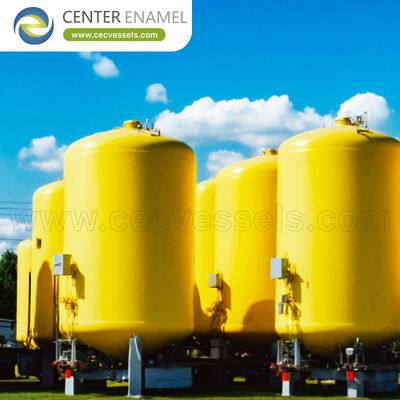
China Amine Separator Manufacturer Delivering Advanced Gas Purification Support and Structural Reliability for Global Processing Systems
| Place of Origin: | China |
| Brand Name: | Center Enamel |
| Certification: | ISO 9001,CE, NSF/ANSI 61, WRAS, ISO 28765, LFGB, BSCI, ISO 45001 |
| Minimum Order Quantity: | 1 Sets |
| Price: | 2000 |
| Delivery Time: | 2 months |
| Payment Terms: | L/C,T/T |
| Supply Ability: | 200 sets / days |
|
Detail Information |
|||
Product Description
An amine separator, in the gas-purification sense, is the contactor and its support vessels that remove acid gases (H2S, CO2) from hydrocarbon or industrial gas streams so the treated gas meets specification for global processing systems.
The practical answer is to treat structural reliability and code compliance as first-class requirements for export projects, select amine-compatible materials, and verify fabrication, testing and documentation. This article addresses purification and reliability, distinct from solvent-recovery duty.
Gas Purification ContextAcid-gas removal protects downstream pipelines, catalysts and personnel. The amine contactor is the primary vessel; support separation (inlet scrubber, overhead accumulator) keeps the loop stable. All must meet the export project's code and reliability expectation.
This is different from a recovery separator: here the core duty is acid-gas absorption and the supporting separation that keeps it stable, not solvent return alone.
Structural Reliability For Global ProjectsExport processing systems demand documented code compliance, traceability and inspection. ASME VIII Div.1 with ASME U-stamp discipline, plus ISO 9001 and CE/PED where required, establishes the reliability baseline buyers expect.
- Code compliance: ASME VIII Div.1 / GB/T 150 with the export code stated.
- Traceability: material heat numbers tied to certificates.
- Inspection: documented weld and pressure-test records, required for global acceptance.
Amine services can degrade and corrode; 316L is common for contacted surfaces, with carbon steel where the service is well defined. Corrosion allowance and verified mill certificates reduce long-term risk.
Specify the amine type and the expected heat-stable-salt level, because those drive the material and allowance decision.
Support Separation DutiesAn inlet scrubber protects the contactor from liquids and solids; an overhead accumulator separates the regeneration vent stream. These support vessels are part of a reliable purification package and should be specified together.
Treating them as afterthoughts causes contactor upsets that the purification duty then cannot absorb.
Sizing Inputs To ProvideGive gas rate and composition, acid-gas target, pressure, temperature, amine type and circulation, and the export code. The absorption basis, not just the gas rate, governs the contactor.
Provide the upset condition, because purification packages are judged when inlet acid gas or rate swings, not at the steady design point.
Acceptance And VerificationVerify code stamps where required, material traceability, weld and pressure-test records, and internal configuration. For sour service, confirm NACE documentation.
A practical check is to require the vendor to state the absorption basis and the amine compatibility basis used for material selection.
Purification Versus Recovery SeparatorAspect |
Gas Purification (this) |
Solvent Recovery |
Core duty |
Acid-gas absorption and support |
Return entrained amine |
Primary vessel |
Contactor |
Downstream recovery vessel |
Reliability focus |
Code, traceability, inspection |
Demister rating |
Material driver |
Amine compatibility |
Entrainment basis |
Parameter |
Typical Basis |
Note |
Design code |
ASME VIII Div.1 / GB/T 150 |
CE/PED on request |
Material |
316L / carbon steel |
Per amine service review |
Reliability |
Traceability + inspection |
ISO 9001 system |
MOQ |
1 unit |
Package acceptable |
Lead time |
About 2 months |
Confirm at order |
An amine separator for gas purification removes acid gas and stabilizes the solvent loop, and for global systems its structural reliability and code compliance are as important as the separation itself. Select amine-compatible materials, specify support vessels together, and verify code, traceability and test records before acceptance.
About the ManufacturerCenter Enamel (Shijiazhuang Zhengzhong Technology Co., Ltd.) designs and fabricates pressure vessels, separators and heat exchangers in China for chemical, energy, water and gas-processing applications.
Manufacturing is governed by ASME VIII Div.1 and GB/T 150, with supplementary CE/PED and ISO 9001 quality systems. Material programs cover stainless steel (304/316L), carbon steel and clad constructions, with NACE MR0175 / ISO 15156 control applied for sour or hydrogen service.
Minimum order quantity is 1 unit, typical lead time is about 2 months, and commercial terms are L/C or T/T, supported by full material traceability, pressure testing and export documentation.
Frequently Asked Questions (FAQ)Minimum order quantity is one unit and typical lead time is about two months, with L/C or T/T commercial terms and full export documentation. State the packing, lifting and transport requirements up front so the delivered unit arrives inspection-ready and the commissioning sequence is not delayed by missing certificates.
Confirm the quality system (ISO 9001) and, where relevant, the export certification and painting or coating specification, because coating and preservation drive field life as much as the metallurgy. Require the inspection hold points and any third-party survey at the purchase stage rather than at delivery.
For sour or hydrogen service, confirm NACE MR0175 / ISO 15156 control and the stated corrosion allowance; for stainless duties, confirm the grade (304 or 316L) and any cladding specification. A practical acceptance step is to require the vendor to state the rated duty, the design margin and the test basis in writing, so the operating window is unambiguous at handover.
Before accepting any pressure vessel, separator or heat exchanger in this family, verify the documentation package: the design code (ASME VIII Div.1 and GB/T 150 as a baseline, with CE/PED where the project requires it), material test certificates with heat-number traceability, the weld procedure and inspection records, and the hydrostatic or pneumatic pressure-test report.
Procurement Acceptance And DocumentationHow is a purification separator different from recovery?
Purification centers on acid-gas absorption and the support vessels; recovery only returns entrained amine downstream.
Why is structural reliability emphasized for global projects?
Export systems require documented code compliance, traceability and inspection that buyers verify before acceptance.
Which code applies?
ASME VIII Div.1 and GB/T 150, with CE/PED and ISO 9001 where the project requires them.
Which material is used for amine?
316L is common for contacted surfaces; carbon steel is used only where the amine service is well defined and monitored.
What support vessels are needed?
An inlet scrubber and an overhead accumulator keep the contactor stable and should be specified as a package.
What data should I provide?
Gas rate and composition, acid-gas target, pressure, temperature, amine type and circulation, and the export code.
Why specify the amine type?
The amine and its heat-stable-salt level drive the material and corrosion-allowance decision.
What design code applies to export?
ASME VIII Div.1 / GB/T 150 with the required export code stated; NACE where sour.
What acceptance records matter?
Code stamps where required, material traceability, weld and pressure-test records, plus NACE docs for sour service.
What is a typical lead time?
About 2 months with a minimum order quantity of one unit, confirmed at order.
Can a package be supplied?
Yes, the contactor and support vessels can be delivered as a coordinated package.
What commercial terms are common?
L/C or T/T, with full material traceability and export documentation at shipment.
What is the main procurement risk?
Treating support separation as an afterthought, causing contactor upsets during inlet swings.
How do I verify the basis?
Require the vendor to state the absorption basis and the amine compatibility basis used for material selection.
Does NACE apply?
NACE MR0175 / ISO 15156 is applied where the service is sour or hydrogen-associated.