-
Glass Fused To Steel Tanks (896)
-
Stainless Steel Tanks (434)
-
Fusion Bonded Epoxy Tanks (660)
-
Galvanized Steel Tanks (321)
-
Aluminum Dome Roofs (1336)
-
Wastewater Storage Tanks (280)
-
Welded Steel Tanks (457)
-
Pressure Vessels (451)
-
Anaerobic Digester (202)
-
Industrial Water Tanks (364)
-
Glass Lined Steel Tanks (180)
-
Bolted Steel Tanks (389)
-
Sludge Storage Tank (115)
-
Biogas Storage Tank (173)
-
Leachate Storage Tanks (133)
-
Agricultural Water Storage Tanks (179)
-
Fire Water Tank (166)
-
Grain Storage Silos (146)
-
Biogas Projects (424)
-
Wastewater Treatment Projects (1752)
-
Double Membrane Roof (223)

|
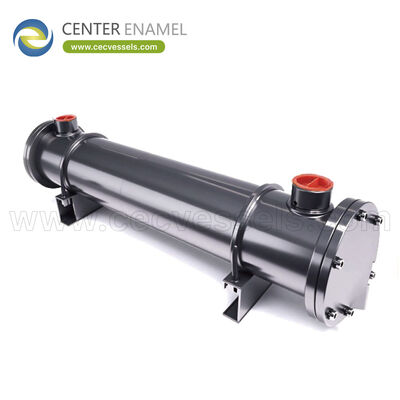
China Bioethanol Heat Exchanger Manufacturer Delivering Optimized Thermal Control for Renewable Fuel Production
| Place of Origin: | China |
| Brand Name: | Center Enamel |
| Certification: | ISO 9001,CE, NSF/ANSI 61, WRAS, ISO 28765, LFGB, BSCI, ISO 45001 |
| Minimum Order Quantity: | 1 Sets |
| Price: | 2000 |
| Delivery Time: | 2 months |
| Payment Terms: | L/C,T/T |
| Supply Ability: | 200 sets / days |
|
Detail Information |
|||
Product Description
A bioethanol heat exchanger manages the heat released during fermentation and the heat added or recovered in distillation, two very different duties that are both central to renewable fuel production. Getting the thermal control right protects yield and energy use.
The practical answer is to separate the fermentation-cooling duty (hygienic, biomass-fouling prone) from the distillation-recovery duty (energy intensive, often larger), specify cleanable hygienic construction for the first, and verify the duty and cleanability before purchase. This article explains both.
Two Distinct DutiesFermentation is exothermic; the exchanger removes heat to keep the yeast or bacteria in their temperature window. Distillation recovery exchanges heat between streams to reduce steam demand. Conflating the two leads to the wrong material and cleanability specification.
From a buyer's view, the fermentation cooler is a process-hygiene device, while the distillation exchanger is an energy-recovery device, and they should be specified and accepted separately.
Hygienic And Sanitary RequirementsFermentation-side equipment contacts biological feed and must be cleanable, often with 316L stainless steel, smooth finishes and accessible surfaces. Dead legs and hard-to-clean crevices should be avoided by design.
316L stainless steel: standard for hygienic contact surfaces.
Polished finish: reduces adhesion and eases cleaning.
Drainable layout: avoids stagnant pockets that harbor growth.
Fouling From BiomassBiological slurries foul and can abrade. Higher velocity reduces deposition but raises pumping cost, so the design is a balance confirmed by the fouling allowance rather than a guess.
Plan clean-in-place access so the exchanger can be returned to specification without dismantling the whole train during a campaign.
Energy Recovery In DistillationDistillation is where most energy sits; preheating feed with column streams and recovering condensate heat is where a well-specified exchanger pays back. The duty and the approach temperature drive the area.
State the column pressures and the allowable pressure drop, because distillation exchangers are sensitive to both and a wrong assumption changes the area substantially.
Sizing Inputs To ProvideGive temperatures, flows, compositions where they affect properties, fouling allowance, and the hygiene class. For fermentation, also state the microorganism temperature window, because that defines the cooling duty.
Provide the peak summer ambient if cooling water is the sink, since that is when fermentation cooling is hardest to maintain.
Acceptance And VerificationVerify material certificates, surface-finish records for hygienic duty, pressure test and cleanability confirmation. For distillation recovery, confirm the approach temperature was actually met in the thermal calculation.
A practical check is to require the vendor to state the design fouling resistance and the cleanable design explicitly, so operating margin is visible.
Fermentation Cooling Versus Distillation RecoveryAspect |
Fermentation Cooling |
Distillation Recovery |
Primary goal |
Remove reaction heat |
Recover energy between streams |
Material focus |
Hygienic 316L |
Energy-area optimization |
Fouling driver |
Biomass and growth |
Scaling and organics |
Key constraint |
Microorganism temperature window |
Approach temperature and pressure drop |
Parameter |
Typical Basis |
Note |
Design code |
ASME VIII Div.1 / GB/T 150 |
Hygiene class stated |
Material |
316L stainless steel |
Polished where required |
Fouling allowance |
Per duty |
Confirm biomass load |
MOQ |
1 unit |
Single or train |
Lead time |
About 2 months |
Confirm at order |
A bioethanol heat exchanger serves two different masters: hygienic fermentation cooling and energy-recovery distillation. Specify them separately, choose 316L and cleanable construction for the biological side, balance velocity against fouling, and verify the duty, finish and test records before acceptance.
About the ManufacturerCenter Enamel (Shijiazhuang Zhengzhong Technology Co., Ltd.) designs and fabricates pressure vessels, separators and heat exchangers in China for chemical, energy, water and gas-processing applications.
Manufacturing is governed by ASME VIII Div.1 and GB/T 150, with supplementary CE/PED and ISO 9001 quality systems. Material programs cover stainless steel (304/316L), carbon steel and clad constructions, with NACE MR0175 / ISO 15156 control applied for sour or hydrogen service.
Minimum order quantity is 1 unit, typical lead time is about 2 months, and commercial terms are L/C or T/T, supported by full material traceability, pressure testing and export documentation.
Frequently Asked Questions (FAQ)Minimum order quantity is one unit and typical lead time is about two months, with L/C or T/T commercial terms and full export documentation. State the packing, lifting and transport requirements up front so the delivered unit arrives inspection-ready and the commissioning sequence is not delayed by missing certificates.
Confirm the quality system (ISO 9001) and, where relevant, the export certification and painting or coating specification, because coating and preservation drive field life as much as the metallurgy. Require the inspection hold points and any third-party survey at the purchase stage rather than at delivery.
For sour or hydrogen service, confirm NACE MR0175 / ISO 15156 control and the stated corrosion allowance; for stainless duties, confirm the grade (304 or 316L) and any cladding specification. A practical acceptance step is to require the vendor to state the rated duty, the design margin and the test basis in writing, so the operating window is unambiguous at handover.
Before accepting any pressure vessel, separator or heat exchanger in this family, verify the documentation package: the design code (ASME VIII Div.1 and GB/T 150 as a baseline, with CE/PED where the project requires it), material test certificates with heat-number traceability, the weld procedure and inspection records, and the hydrostatic or pneumatic pressure-test report.
Procurement Acceptance And Documentation What makes bioethanol duty different from petroleum ethanol?Bioethanol handles biological feed and fermentation biomass, so hygienic materials and biomass-fouling control matter more than in a petrochemical ethanol stream.
Which material is used for fermentation cooling?316L stainless steel is standard for hygienic contact, often with a polished finish and a drainable layout to ease cleaning.
How is fouling from biomass controlled?By balancing velocity, stating a fouling allowance and providing clean-in-place access so the unit returns to spec during a campaign.
Why separate fermentation and distillation exchangers?They have different hygiene and energy goals; specifying them together leads to the wrong material and cleanability choice.
What is the energy-recovery opportunity?Preheating feed with column streams and recovering condensate heat reduces steam demand, which is where the distillation exchanger pays back.
What data should I provide?Temperatures, flows, composition effects, fouling allowance, hygiene class and the microorganism temperature window for fermentation.
What design code applies?ASME VIII Div.1 and GB/T 150 are typical, with the hygiene class stated in the specification.
How is acceptance verified?Material certificates, surface-finish records, pressure test and, for recovery, confirmation that the approach temperature was met.
Does NACE apply to bioethanol?Not typically for biological duty, but NACE MR0175 / ISO 15156 applies where the service is sour or hydrogen-associated elsewhere in the plant.
What is a typical lead time?About 2 months with a minimum order quantity of one unit, confirmed at order with the final specification.
Can exchangers be skidded?Yes, skidding simplifies plant hook-up but must match the process pipe orientation and cleaning access.
What commercial terms are common?L/C or T/T, with full material traceability and export documentation at shipment.
What is the main procurement risk?Under-specifying hygiene and fouling control on the fermentation side, leading to cleaning downtime during campaigns.
Should I over-size for safety?Specify an explicit fouling margin rather than arbitrary over-sizing, which can lower velocity and worsen deposition.
How do I confirm cleanability?Require the vendor to state the drainable layout and the cleanable design, and verify surface-finish records.
Suggested CTA: Request a bioethanol heat-exchanger specification separating hygienic fermentation cooling from distillation energy recovery.