-
Glass Fused To Steel Tanks (596)
-
Stainless Steel Tanks (434)
-
Fusion Bonded Epoxy Tanks (592)
-
Galvanized Steel Tanks (321)
-
Aluminum Dome Roofs (1336)
-
Wastewater Storage Tanks (232)
-
Welded Steel Tanks (457)
-
Pressure Vessels (295)
-
Anaerobic Digester (202)
-
Industrial Water Tanks (349)
-
Glass Lined Steel Tanks (180)
-
Bolted Steel Tanks (389)
-
Sludge Storage Tank (115)
-
Biogas Storage Tank (173)
-
Leachate Storage Tanks (133)
-
Agricultural Water Storage Tanks (179)
-
Fire Water Tank (166)
-
Grain Storage Silos (146)
-
Biogas Projects (424)
-
Wastewater Treatment Projects (1118)
-
Double Membrane Roof (223)
|
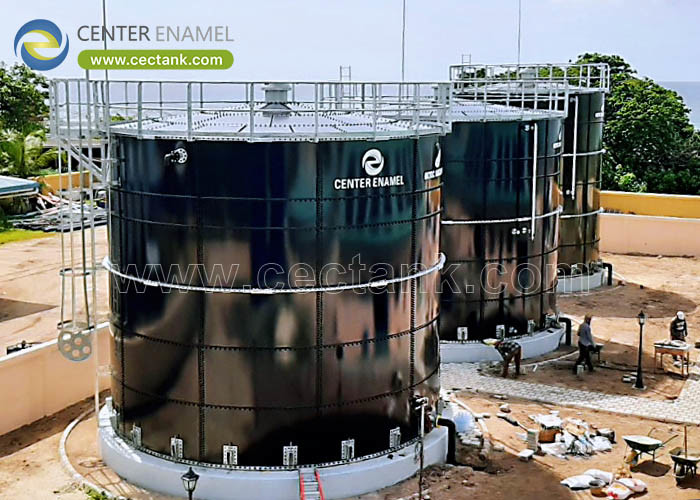
Glass-Lined Water Storage Tanks: The Ultimate Low-Maintenance Solution for Reliable Water Storage
| Place of Origin: | China |
| Brand Name: | CEC TANKS |
| Certification: | ISO 9001:2008, AWWA D103 , OSHA , BSCI |
| Model Number: | W20150504004 |
| Minimum Order Quantity: | 1set |
| Price: | $5000~$20000 one set |
| Packaging Details: | PE poly-foam between each two steel plates ; wooden pallet and wooden box |
| Delivery Time: | 0-60 days after deposit received |
| Payment Terms: | L/C,T/T |
| Supply Ability: | 60 sets per month |
|
Detail Information |
|||
Product Description
A glass-lined water storage tank—globally recognized as a Glass-Fused-to-Steel (GFS) tank—represents the gold standard in advanced liquid containment, engineered specifically to provide decades of hygienic, corrosion-free service for municipal potable water, fire protection reserves, and industrial process water. As water authorities and industrial operators face mounting pressure to reduce lifecycle maintenance expenditures and guarantee absolute water purity, traditional painted steel and concrete reservoirs are increasingly being replaced by engineered glass-lined systems. By fusing inorganic glass enamel onto high-strength structural steel plates at temperatures between 820°C and 930°C, Center Enamel delivers water storage tanks that combine the structural strength of steel with the inert, ultra-smooth hygienic properties of glass.
Operating and maintaining large-scale water storage facilities involves overcoming severe physical and biological hurdles:
-
Aggressive Internal Corrosion and Pitting: Stored water—whether treated municipal supply or raw industrial intake—contains dissolved minerals and disinfectants that rapidly corrode unprotected carbon steel tanks, leading to red water issues and structural failure.
-
Biofilm Accumulation and Bacterial Growth: Rough interior surfaces and microscopic crevices in concrete or poorly coated steel reservoirs trap organic matter, encouraging stubborn biofilm and microbial growth that compromise water hygiene.
-
High Ongoing Maintenance Burdens: Traditional painted steel tanks require periodic draining, abrasive blasting, and hazardous repainting every few years, resulting in high labor costs and service disruptions.
Center Enamel’s glass-lined water tanks feature a non-porous, glass-hard interior surface (Ra < 0.8 µm) that prevents mineral scaling and biofilm attachment. The inert glass barrier completely eliminates rust formation and ensures that stored potable water remains pristine and odorless.
Because the glass enamel is thermally fused to the steel substrate at high temperatures, it forms an inseparable molecular bond that resists UV degradation, scratching, and chemical wear. This eliminates the need for interior recoating over a design lifespan exceeding 30 to 50 years.
Arriving as pre-engineered modular bolted kits, these tanks are assembled on-site using specialized structural bolting and NSF-compliant elastomeric sealants. This modular approach eliminates the curing delays of concrete and allows straightforward capacity expansions as municipal water demands grow.
| Performance Metric | Center Enamel Glass-Lined (GFS) Tank | Traditional Welded Painted Steel Tank | Cast-in-Place Concrete Reservoir |
|---|---|---|---|
| Maintenance Requirements | Extremely Low (Zero interior recoating or rust maintenance required) | Very High (Requires periodic draining and repainting) | Moderate (Requires joint sealing and crack injection) |
| Hygienic Purity & Biofilm Defense | Superior (Inert, non-porous glass surface prevents microbial buildup) | Low (Porous coatings can degrade and harbor bacteria) | Moderate (Prone to micro-cracking and water absorption) |
| Installation Speed | Fast (Prefabricated modular bolted kit, rapid erection) | Slow (Extended field welding and coating inspection) | Very Slow (Months of formwork and concrete curing) |
| Design Lifespan | 30–50+ Years | 15–20 Years | 25–30 Years |
To guarantee absolute safety for drinking water networks and satisfy elite municipal authorities worldwide, Center Enamel manufactures all glass-lined water storage tanks in strict compliance with premier international certifications:
-
NSF/ANSI 61: Certified safe for direct contact with drinking water and municipal water supplies.
-
WRAS (Water Regulations Advisory Scheme): Validating compliance with stringent UK and international water safety standards.
-
AWWA D103-09: The definitive global standard for bolted steel tank structural calculations.
-
ISO 9001: Guaranteeing strict factory quality management and precision manufacturing workflows.
A: A glass-lined water storage tank (also known as a Glass-Fused-to-Steel or GFS tank) is an advanced containment vessel constructed by fusing molten glass enamel onto high-strength steel plates at high temperatures, creating a durable, corrosion-resistant, and hygienic storage structure.
A: The inert, glass-hard surface of a glass-lined tank completely resists rust, chemical attack, and mineral scaling. Unlike painted steel tanks that require frequent repainting, glass-lined tanks require virtually zero interior maintenance over their multi-decade lifespan.
A: Yes. Center Enamel water storage tanks are fully certified under major international public health standards, including NSF/ANSI 61 and WRAS, ensuring safe and hygienic potable water containment.
A: Because all steel panels are pre-engineered and precision-manufactured in our factory, on-site assembly of a bolted glass-lined tank is completed in a fraction of the time required to build concrete or welded steel reservoirs.
At Center Enamel, we combine advanced manufacturing capabilities with deep environmental engineering expertise to deliver robust, high-performance, and low-maintenance liquid storage solutions for municipal and industrial water projects worldwide.
Are you planning a municipal water supply or storage tank construction project? Contact our engineering team today for a technical consultation, capacity sizing, and a customized proposal.