-
Glass Fused To Steel Tanks (596)
-
Stainless Steel Tanks (434)
-
Fusion Bonded Epoxy Tanks (592)
-
Galvanized Steel Tanks (321)
-
Aluminum Dome Roofs (1336)
-
Wastewater Storage Tanks (232)
-
Welded Steel Tanks (457)
-
Pressure Vessels (295)
-
Anaerobic Digester (201)
-
Industrial Water Tanks (349)
-
Glass Lined Steel Tanks (180)
-
Bolted Steel Tanks (389)
-
Sludge Storage Tank (115)
-
Biogas Storage Tank (173)
-
Leachate Storage Tanks (133)
-
Agricultural Water Storage Tanks (179)
-
Fire Water Tank (166)
-
Grain Storage Silos (146)
-
Biogas Projects (425)
-
Wastewater Treatment Projects (1028)
-
Double Membrane Roof (223)

|
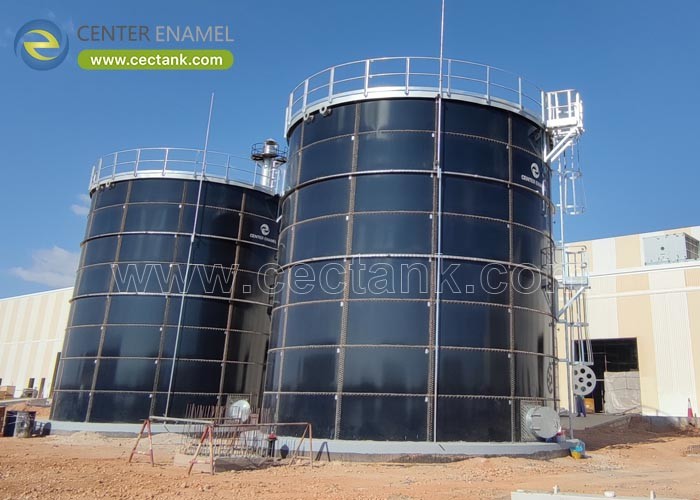
Glass Lined Steel Leachate Storage Tanks for Landfill Leachate Treatment Plants
| Place of Origin: | CHINA |
| Brand Name: | CEC TANKS |
| Certification: | ISO 9001:2008, AWWA D103 , OSHA , BSCI |
| Model Number: | W20180508003 |
| Minimum Order Quantity: | 1 SET |
| Price: | $5000~$20000 one set |
| Packaging Details: | PE poly-foam between each two steel plates;wooden pallets and wooden box |
| Delivery Time: | 10-30 days after deposit received |
| Payment Terms: | L/C,T/T |
| Supply Ability: | 60 sets per month |
|
Detail Information |
|||
| Place of Origin | CHINA | Brand Name | CEC TANKS |
|---|---|---|---|
| Certification | ISO 9001:2008, AWWA D103 , OSHA , BSCI | Model Number | W20180508003 |
| Coating Color: | Dark Green, Or Customizing Colors | Coating Thickness: | 0.25~0.40mm, Double Coating |
| Acid And Alkalinity Proof: | Standard Coating Suits For PH3 - PH11, Special Coating Suits For PH1 - PH14 | Adhesion: | 3,450N/cm |
| Hardness: | 6.0 Mohs | Holiday Test: | >1500V |
| Installation: | By Jacking Machine Or Steel Pole, Fast In Installation | Permeability: | Gas / Liquid Impermeable |
| Foundation: | Concrete Or Glass Fused Steel | Steel Grade: | ART 310 |
| Applications: | Water , Waste Water, Digester , Reactor , Grain , Sludge , Chemicals | Highlight: | 6.0Mohs Glass Lined Steel Storage Tanks,Leachate Treatment Steel Storage Tanks,3450N/cm Steel Storage Tanks |
Product Description
Glass Lined Steel Leachate Storage Tanks for Landfill Leachate Treatment Plant
The Challenge: Landfill leachate is an extremely aggressive, highly corrosive effluent packed with heavy metals, organic acids, high chemical oxygen demand (COD), and ammonia nitrogen.
The Solution: Glass Lined Steel (GLS) tanks—also known as Glass-Fused-to-Steel (GFS) tanks—fuse high-performance glass with structural steel at temperatures of 820°C to 930°C to create an inert, impermeable barrier.
Key Metrics: Lifespan exceeding 30 years, standard pH tolerance of 3–11 (specialized configurations handle pH 1–14), holiday test verification up to 1500V, and compliance with AWWA D103-09 and ISO 28765 standards.
Core Advantage: Bolted modular construction allows for deployment in less than a week with minimal on-site labor and zero field welding.
Why is Landfill Leachate a Highly Corrosive Risk for Treatment Plants?
Landfill leachate is the highly contaminated liquid that percolates through municipal or industrial solid waste. As rainwater filters through decomposing organic materials, it extracts a toxic cocktail of chemicals, metals, and biological matter.
Storage and containment systems at Landfill Leachate Treatment Plants (LLTPs) must withstand a continuous barrage of aggressive chemical reactions:
-
High Chemical Oxygen Demand (COD) & BOD: Promotes aggressive microbial-induced corrosion (MIC) from anaerobic activity.
-
Extreme pH Fluctuations: Early-stage "acetogenic" leachate is highly acidic (often with a pH less than 5), while mature "methanogenic" leachate leans alkaline.
-
High Concentrations of Chlorides and Sulfides: These ions attack traditional welded carbon steel, eating through protective epoxy coatings and causing rapid structural pitting.
-
Heavy Metals and Ammonia Nitrogen: Corrosive compounds that quickly degrade unshielded structural materials.
Traditional concrete and carbon steel welded tanks frequently fail under these conditions. Concrete is porous, absorbing acidic leachate and leading to rebar rot, while field-welded steel suffers from localized heat-affected zone (HAZ) corrosion.
How Does Glass-Fused-to-Steel (GFS) Protect Leachate Storage?
To solve the limitations of concrete and carbon steel, environmental engineers turn to Glass Lined Steel (GLS) technology.
This manufacturing process combines the physical strength and flexibility of structural carbon steel with the outstanding chemical inertness of porcelain glass:
-
Shot Blasting & Pretreatment: Steel plates are chemically and physically prepared to ensure a pristine, oxide-free surface.
-
Double-Sided Electrostatic Coating: Inorganic glass minerals (enamel frit) are electrostatically sprayed onto both the inner and outer surfaces of the panels.
-
High-Temperature Fusion: The coated plates are fired in a specialized tunnel furnace at temperatures ranging from 820°C to 930°C. The molten glass chemically bonds with the steel, creating an inseparable, co-diffused physical matrix.
-
Holiday Testing: Every panel undergoes high-voltage "holiday testing" (typically at 1500V) to guarantee 100% defect-free surface continuity and zero micro-porosity.
The resulting protective shield is smooth, non-porous, and completely impervious to liquids and gases, preventing chemical absorption or biological adhesion.
Performance Comparison: GLS vs. Concrete vs. Welded Carbon Steel
| Evaluation Metric | Glass Lined Steel (GLS) Tanks | Monolithic Concrete Tanks | Welded Carbon Steel |
| Corrosion Resistance | Excellent (pH 1–14 inert glass barrier) | Poor (porous concrete absorbs acids) | Moderate (weld seams are highly prone to rust) |
| Operational Lifespan | 35+ Years | 15–20 Years (requires continuous liners) | 10–15 Years (requires regular recoating) |
| Construction Time | Very Fast (days, modular bolted assembly) | Slow (weeks/months for concrete curing) | Slow (field-welding and coating drying time) |
| Maintenance Cost | Extremely Low (smooth, easy-to-clean glass) | High (crack sealing, structural patching) | High (re-blasting and painting needed) |
| Weather Dependency | Minimal (bolts compile in rain/snow) | High (cannot pour in rain or sub-zero temps) | High (welding and field-coating require dry air) |
| Scalability | Excellent (easily expanded by adding panel rings) | Non-existent (permanent static structures) | Difficult (requires cutting, hot work, and re-welding) |
Core Advantages of Bolted Glass Lined Steel Tanks for Leachate Treatment
LLTP developers face tight regulatory timelines, strict environmental budgets, and challenging soil conditions. Bolted GLS tanks directly address these project pain points:
-
Superior pH Versatility: Standard double-sided glass configurations comfortably withstand pH levels from 3 to 11. For ultra-aggressive early-stage leachate, customized multi-layer enamels extend this window from pH 1 to 14.
-
Modular "No-Weld" Assembly: Panels are shipped in compact crates and bolted together on-site using heavy-duty self-locking bolts and high-durability elastomeric sealants. A massive 5,000 m³ tank can be fully erected in less than 7 days using basic lifting jacks—slashing local labor expenses.
-
Minimal Environmental Footprint: Traditional tank manufacturing creates massive dust, weld fumes, and chemical overspray on-site. GFS tanks are manufactured, coated, and checked in a controlled factory setting. No on-site finishing or painting is required.
-
Adaptable Structural Integrity: The modular design means the tank footprint is not locked in forever. If a landfill's leachate output increases over time, the tank can be expanded vertically by adding more rings of GFS plates.
Global Engineering Standards and Design Metrics
To guarantee safety, structural compliance, and regulatory approval, premier GLS tanks are designed, analyzed, and manufactured to meet strict international standards:
-
AWWA D103-09: American Water Works Association standard for bolted steel water and wastewater storage tanks.
-
ISO 28765: The gold-standard international benchmark for design and performance verification of glass-fused bolted steel tanks handling municipal/industrial effluent and sludges.
-
NSF/ANSI 61: Validates chemical leaching safety, confirming no toxic substances leach into nearby soils or groundwater.
-
Static and Dynamic Load Calculations: Advanced engineering models simulate severe local environmental stressors, including wind loads (up to hurricanes), heavy snow accumulation, and high-intensity seismic activities.
Accessories and Integration Capabilities for Leachate Treatment
Landfill leachate storage tanks are rarely standalone vessels; they act as the heart of a highly complex treatment process. GLS tanks seamlessly support key process equipment and custom accessories:
-
Roofing Configurations: Depending on odor control needs and gas collection, systems can be fitted with GFS conical roofs, aluminum geodesic dome structures, or double membrane gas storage roofs for biogas capture.
-
Mixers and Aerators: Heavy-duty nozzles, baffle plates, and custom support bridges accommodate specialized agitators and aeration grids used to strip ammonia or oxidize raw organic matter.
-
Thermal Insulation Systems: Externally applied polyurethane insulation boards, shielded by weather-resistant galvanized or painted steel cladding, maintain stable process temperatures in extreme winter climates.
-
Integrated Sludge Systems: High-performance GFS tanks can also serve as the primary sludge clarifier or anaerobic digester within the same facility footprint.
Frequently Asked Questions (FAQs)
What is the service life of a Glass Lined Steel tank storing aggressive leachate?
With proper design, installation, and regular inspection, premium GLS tanks have an engineered service life exceeding 30 to 35 years. The chemical inertness of the glass layer prevents the structural fatigue commonly caused by continuous acid attacks on standard steel.
Can GLS tanks handle highly acidic leachate from new landfills?
Yes. Standard GFS formulations readily handle acidic runoffs down to pH 3. For more severe acidic profiles (pH 1 to 3), specialty glass enamel compositions are applied during the firing process to resist high-concentration mineral and organic acids.
How do bolted GLS tanks prevent leaks at the joints?
The watertightness of a bolted GLS tank is achieved by utilizing heavy-duty, self-locking bolts alongside specialized elastomeric gaskets and high-performance sealing mastics. These sealants are specifically formulated to maintain chemical and physical flexibility while exposed to harsh landfill chemicals, preventing joint leakage.