
-
Glass Fused To Steel Tanks (596)
-
Stainless Steel Tanks (434)
-
Fusion Bonded Epoxy Tanks (592)
-
Galvanized Steel Tanks (321)
-
Aluminum Dome Roofs (1336)
-
Wastewater Storage Tanks (232)
-
Welded Steel Tanks (457)
-
Pressure Vessels (295)
-
Anaerobic Digester (201)
-
Industrial Water Tanks (349)
-
Glass Lined Steel Tanks (180)
-
Bolted Steel Tanks (389)
-
Sludge Storage Tank (115)
-
Biogas Storage Tank (173)
-
Leachate Storage Tanks (133)
-
Agricultural Water Storage Tanks (179)
-
Fire Water Tank (166)
-
Grain Storage Silos (146)
-
Biogas Projects (425)
-
Wastewater Treatment Projects (1008)
-
Double Membrane Roof (223)

|
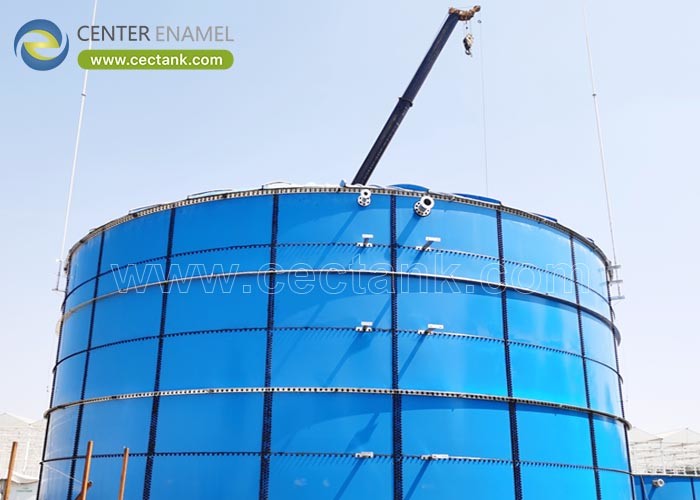
Epoxy-Coated Steel Water Tanks: Center Enamel Provides Durable and Safe Water Storage Solutions
| Place of Origin: | China |
| Brand Name: | CEC TANKS |
| Certification: | ISO 9001:2008, AWWA D103 , OSHA , BSCI |
| Model Number: | W |
| Minimum Order Quantity: | 1set |
| Price: | $5000~$20000 one set |
| Packaging Details: | PE poly-foam between each two steel plates ; wooden pallet and wooden |
| Delivery Time: | 10-30 days after deposit received |
| Payment Terms: | L/C,T/T |
| Supply Ability: | 60 sets per month |
|
Detail Information |
|||
| Place of Origin | China | Brand Name | CEC TANKS |
|---|---|---|---|
| Certification | ISO 9001:2008, AWWA D103 , OSHA , BSCI | Model Number | W |
| Coating Thickness: | 0.25mm~0.40mm , Two Layer Of Coating Internal And External | Steel Grade: | ART 310 |
| Size Of Panel: | 2.4M * 1.2M | Capactiy Available: | 20 M3 To 20,000 M3 |
| Easy To Clean: | Smooth, Glossy, Inert, Anti-adhesion | Easy To Cle: | Smooth, Glossy, Inert, Anti-adhesion |
| Warranty Period: | 2 Years Free Of Charge | FeatureEco-friendly: | Durability |
| Capactiy Availabl: | E20 M3 To 20,000 M3 | Impact: | ResistanceExcellent |
| Installation: | By Jacking Machine Or Steel Pole, Fast In Installation | Highlight: | ART 310 Steel Water Tanks,Epoxy Coated Water Tanks 20000 m3 |
Product Description
Direct Answer: Center Enamel’s Fusion Bonded Epoxy (FBE) steel water tanks represent a significant evolutionary step forward in industrial and municipal liquid containment technology. Traditional field-painted or galvanized water tanks often suffer from premature coating delamination, uneven film application, and localized rust formation along mechanical joints.
Center Enamel eliminates these risks by utilizing a tightly controlled, factory-applied electrostatic powder coating process. This specialized technique heat-fuses high-grade epoxy resin directly onto pre-treated carbon steel panels. The result is a highly uniform, mechanically tough, and chemically stable lining that prevents the leaching of structural impurities into potable water reservoirs, ensuring long-term liquid purity and excellent structural integrity.
The performance of an epoxy-coated storage tank depends directly on the molecular structure of its protective lining. Center Enamel’s partnership with AkzoNobel brings advanced chemical formulations into the manufacturing pipeline, delivering standard-setting internal and external defense layers.
The long-term durability of the internal lining depends on its ability to block moisture, dissolved oxygen, and corrosive ions from migrating toward the steel substrate. The rate of mass transfer through the cross-linked polymeric matrix is governed by Fick's first law of diffusion:
By maintaining a uniform, high-density dry film thickness ranging between 150 to 280 microns , Center Enamel effectively maximizes the variable $delta$. This reduces the overall diffusion flux (J) to near-zero levels. The thermal curing process cross-links the epoxy resins into a stable, three-dimensional polymer network, offering excellent impact resistance and preventing the structural blistering common in field-applied coatings.
To assist engineering teams in planning storage capacity and assessing material lifespans, the interactive module below calculates total tank capacity and evaluates coating performance indicators based on key design metrics.
Prior to running the calculation matrix, ensure your target dimension variables fall within normal civil engineering and manufacturing bounds.
Selecting the right containment material involves balancing mechanical durability against initial capital expenditures and long-term upkeep requirements.
| Performance Metric | Center Enamel Bolted FBE Tanks | Field-Painted Liquid Epoxy Tanks | Hot-Dip Galvanized Tanks |
|---|---|---|---|
| Coating Uniformity | Superior. Automated electrostatic deposition ensures zero thin spots. | Poor. Highly dependent on ambient weather and manual spray consistency. | Variable. Zinc layers can thin out unevenly along sharp panel edges. |
| Impact & Flexural Resistance | High. Passes 160 in-lbs direct and reverse impact tests without fracturing. | Moderate. Prone to cracking if structural flexing occurs. | High, but the zinc layer can flake under heavy mechanical impacts. |
| Operational pH Range | Wide Boundary. Confirmed stable across a broad pH 3-13 range. | Narrow. Vulnerable to structural breakdown outside pH5-9. | Narrow. Acidic or strongly basic environments accelerate zinc consumption. |
| Edge Protection | Excellent. CNC laser-cut panels receive full edge coverage prior to curing. | Weak. Capillary action pulls wet paint away from sharp metal borders. | Moderate. Punch holes and cut edges often require manual zinc touch-ups. |
| Initial Cost Efficiency | Highly Favorable. Combines robust durability with accessible manufacturing costs. | High initial labor cost due to complex field-curing requirements. | Low initial cost, but offset by shorter asset lifespans. |
Center Enamel follows a multi-stage production protocol to ensure each modular sheet delivers reliable corrosion protection.
-
1. Mechanical Pre-Treatment:Anchor Profile Creation.
Raw carbon steel panels undergo automated sandblasting and grit-blasting to an Sa 2.5 finish (SSPC-SP10). This process removes all surface oxides and creates a micro-rough surface profile that optimizes mechanical adhesion.
-
2. Powder Coating Application:Electrostatic Deposition.
Pre-treated sheets enter a clean-room spraying zone where premium AkzoNobel Resicoat® powder particles are charged electrostatically and sprayed uniformly across both panel faces.
-
3. Thermal Fusion & Curing:Polymer Cross-Linking.
The powder-coated sheets move into a continuous tunnel oven. The controlled heat melts, flows, and chemically cross-links the epoxy resin directly onto the steel substrate, creating a smooth, monolithic barrier.
-
4. High-Voltage Holiday Testing:Zero-Discontinuity Verification.
Every panel undergoes a rigorous quality check. The inner lining is scanned using a high-voltage spark tester (1100V to 1500V) to detect micro-pinholes or thin areas, ensuring complete coating coverage.
Center Enamel's bolted FBE tanks are designed, manufactured, and inspected in strict accordance with major international storage tank standards:
-
AWWA D103-09 / AWWA D103-19: Governs the structural calculation criteria, bolt patterns, wind-load ratings, and minimum coating thicknesses for modular bolted steel reservoirs.
-
NSF/ANSI 61 & WRAS: Certifies that the internal epoxy finish prevents the leaching of heavy metals or harmful chemical compounds, keeping the water safe for human consumption.
-
NFPA 22 Compliance: Meets all rigorous structural and volume reliability metrics required for dedicated commercial and industrial fire suppression water reserves.
Liquid epoxies rely on evaporating solvents to cure, which can leave behind microscopic paths or "pinholes" as they dry. FBE coatings utilize dry powder heat-fused above 180C. This elimination of solvents results in a denser, highly uniform, and continuous layer that adheres firmly to the steel surface.
The modular tank panels are securely packed to international shipping standards, protecting the epoxy finish during transport. On-site, crews utilize specialized jack-up systems to assemble the tank from the top ring downward. This eliminates the need for high-altitude scaffolding, speeds up construction, and minimizes the risk of installation scratches.
Yes. Although the FBE layer is highly resistant to impact and mechanical wear, any minor surface abrasions that occur during shipping or installation can be easily repaired on-site. Center Enamel provides specialized liquid touch-up kits that chemically bond with the factory finish, restoring full corrosion protection without compromising the tank's service life.


