-
Glass Fused To Steel Tanks (896)
-
Stainless Steel Tanks (434)
-
Fusion Bonded Epoxy Tanks (660)
-
Galvanized Steel Tanks (321)
-
Aluminum Dome Roofs (1336)
-
Wastewater Storage Tanks (280)
-
Welded Steel Tanks (457)
-
Pressure Vessels (475)
-
Anaerobic Digester (217)
-
Industrial Water Tanks (374)
-
Glass Lined Steel Tanks (180)
-
Bolted Steel Tanks (389)
-
Sludge Storage Tank (115)
-
Biogas Storage Tank (173)
-
Leachate Storage Tanks (133)
-
Agricultural Water Storage Tanks (179)
-
Fire Water Tank (166)
-
Grain Storage Silos (146)
-
Biogas Projects (424)
-
Wastewater Treatment Projects (1822)
-
Double Membrane Roof (223)
|
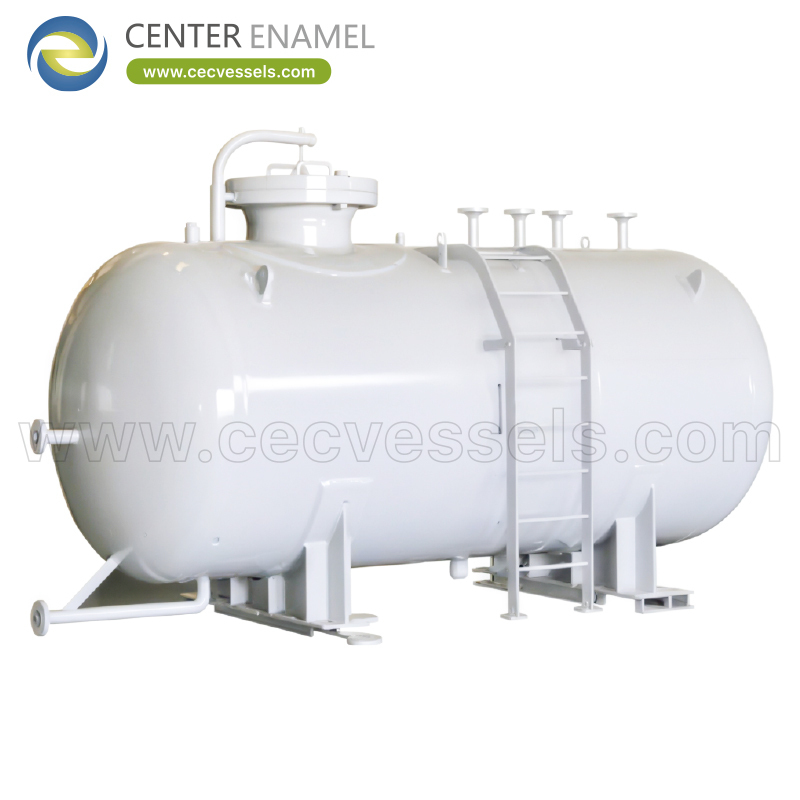
Pressure Vessel Supplier In China Trading Company Versus Factory And Red Flags
| Place of Origin: | China |
| Brand Name: | Center Enamel |
| Certification: | ISO 9001,CE, NSF/ANSI 61, WRAS, ISO 28765, LFGB, BSCI, ISO 45001 |
| Minimum Order Quantity: | 1 Sets |
| Price: | 2000 |
| Delivery Time: | 2 months |
| Payment Terms: | L/C,T/T |
| Supply Ability: | 200 sets / days |
|
Detail Information |
|||
Product Description
Pressure Vessel Supplier In China Trading Company Versus Factory And Red Flags
A pressure vessel supplier in China is often a trading company that sources from a factory rather than a manufacturer that builds the vessel itself - and for code equipment that distinction decides who is accountable for compliance.
The buyer's task is to know which Party actually holds the stamp, verify that builder, and watch for the red flags that signal a supplier cannot deliver a verifiable code vessel.
Trading Company Versus Factory
A trading company (or sourcing agent) consolidates, quotes and contracts commercially but the vessel is built by a separate factory that holds the ASME/GB authorization.
A factory supplier builds and stamps the vessel directly; code accountability sits with one entity rather than split across a trader and a hidden builder.
Who Holds The Stamp
Always name the building manufacturer and its stamp scope in the contract, because code responsibility traces to the builder, not the intermediary.
If the supplier cannot name the builder or show its certificate, you have no verifiable compliance path - a hard stop.
Accountability And Single Point Of Contact
A factory gives single-point technical accountability for fabrication, test and defects; a trader gives a commercial contact and may defer technical issues to the builder.
For high-risk or export-code duty, single-point accountability usually favors buying from the factory or a trader that subcontracts to a named, verified builder.
How To Verify The Builder
Request the builder's certificate and stamp scope, a sample data report, and references for similar export duty - obtained through the supplier if needed.
For distant buyers, a third-party inspector at the actual building factory confirms the unit is made where claimed.
Pricing And Hidden Costs
A trader's margin sits on top of the build; compare total landed cost and confirm whether inspection, packing and documents are included or billed separately.
Watch for quotes that exclude third-party inspection or export crating, which return as change orders after award.
Logistics And Consolidation Value
Traders add value when one order spans many equipment types or brands, consolidating freight and giving one commercial interface.
For a single critical vessel, that value is smaller and the extra hand-off may not justify the margin.
Red Flags To Avoid
Refusing to name the builder, no sample data report, vague stamp scope, no similar references, and pushback on third-party inspection are all stop signals.
Also beware prices far below market that imply omitted certification or inspection - the saving is illusory once acceptance fails.
Contract Safeguards
Name the responsible builder, tie payment to inspection hold points, and specify the required stamp, documents and packing in the purchase order.
These clauses convert a trader relationship into a verifiable supply chain rather than a black box.
Dispute And Quality Escalation
Agree an escalation path before award: who resolves a non-conformance, how a failed test is dispositioned, and what happens if the builder and trader disagree.
Naming the responsible builder in the contract removes the most common evasion - a trader pointing to the factory and the factory to the trader.
For export, specify that disputes over code compliance are judged against the contracted standard and data report, not against the lowest-price expectation.
Trading Company Versus Factory
Aspect |
Trading company |
Factory |
Builds vessel |
No (sources) |
Yes |
Holds stamp |
No (builder does) |
Yes |
Accountability |
Commercial |
Technical + commercial |
Best for |
Multi-SKU consolidation |
Single critical vessel |
Risk control |
Verify builder |
Direct |
Red Flags When Sourcing In China
Red flag |
Why it matters |
Won't name builder |
No compliance path |
No sample data report |
Documentation weak |
Vague stamp scope |
May not cover order |
No similar reference |
Unproven duty |
Blocks TPI |
Hides process |
Price far below market |
Omits cert/inspection |
Conclusion
A pressure vessel supplier in China may be a trading company or a factory; the difference decides who holds the stamp and the code accountability for your vessel.
Name the responsible builder and its scope in the contract, verify it, and treat refusal to disclose the builder or block third-party inspection as a hard stop.
About Center Enamel
Center Enamel is a pressure vessel and process equipment manufacturer based in China, producing stainless steel and carbon steel pressure vessels, separators, reactors, heat exchangers and storage tanks for chemical, oil and gas, power, food, pharmaceutical and water-treatment applications.
Manufacturing is carried out under ASME VIII Div.1, GB/T 150 and ISO 9001 with CE/PED and NACE MR0175 / ISO 15156 options for sour service. Each unit is supplied with material traceability, hydrostatic or pneumatic testing, NDT and export documentation.
- Material range: Stainless steel (304 / 316L), duplex, carbon steel with rubber or epoxy lining for corrosion duty.
- Standards: ASME VIII Div.1, GB/T 150, ISO 9001, CE/PED, NACE MR0175 / ISO 15156.
- Commercial terms: Minimum order quantity 1 unit, typical lead time about 2 months, L/C or T/T.
Frequently Asked Questions (FAQ)
What is a pressure vessel supplier in China?
Often a trading company or sourcing agent that contracts commercially and sources the vessel from a separate building factory.
Trading company or factory - which is better?
Factory gives single-point code accountability; trader adds consolidation value for multi-SKU orders.
Who holds the ASME stamp?
The building manufacturer, not the trader; always name that builder and its scope in the contract.
Why name the builder?
Code responsibility traces to the builder; without a named, verified builder there is no compliance path.
How do I verify the builder via a trader?
Request the builder's certificate, stamp scope, sample data report and references; use a third-party inspector at the factory.
What does a TPI do?
Third-party inspector witnesses key hold points at the actual building factory, confirming the unit is made where claimed.
Are traders more expensive?
Their margin adds cost, but compare total landed cost including inspection, packing and documents.
What consolidation value do traders add?
One commercial interface and freight consolidation across many equipment types or brands.
What are red flags?
Refusing to name the builder, no data report, vague scope, no references, blocking TPI, price far below market.
Why is a very low price risky?
It often implies omitted certification or inspection that fails at acceptance, costing more than the saving.
What contract clauses protect me?
Name builder, tie payment to inspection, specify stamp, documents and packing in the PO.
Is single-point accountability important?
Yes, especially for high-risk or export-code duty where technical and commercial responsibility should align.
Can a trader deliver code vessels?
Only if it sources from a named, authorized builder and provides that builder's documentation.
Should I always use a factory?
Not always; for multi-SKU consolidation a qualified trader can be more efficient if the builder is verified.
What if the supplier blocks inspection?
Treat it as a hard stop; you cannot verify compliance you are not allowed to witness.
Suggested CTA: Request a technical quotation with your duty, pressure, temperature and fluid data, or discuss your project with a Center Enamel engineer for a sized proposal.