-
Glass Fused To Steel Tanks (896)
-
Stainless Steel Tanks (434)
-
Fusion Bonded Epoxy Tanks (660)
-
Galvanized Steel Tanks (321)
-
Aluminum Dome Roofs (1336)
-
Wastewater Storage Tanks (280)
-
Welded Steel Tanks (457)
-
Pressure Vessels (475)
-
Anaerobic Digester (217)
-
Industrial Water Tanks (374)
-
Glass Lined Steel Tanks (180)
-
Bolted Steel Tanks (389)
-
Sludge Storage Tank (115)
-
Biogas Storage Tank (173)
-
Leachate Storage Tanks (133)
-
Agricultural Water Storage Tanks (179)
-
Fire Water Tank (166)
-
Grain Storage Silos (146)
-
Biogas Projects (424)
-
Wastewater Treatment Projects (1822)
-
Double Membrane Roof (223)
|
Pressure Tank Manufacturer How To Source Low Pressure Accumulation And Surge Tanks
| Place of Origin: | China |
| Brand Name: | Center Enamel |
| Certification: | ISO 9001,CE, NSF/ANSI 61, WRAS, ISO 28765, LFGB, BSCI, ISO 45001 |
| Minimum Order Quantity: | 1 Sets |
| Price: | 2000 |
| Delivery Time: | 2 months |
| Payment Terms: | L/C,T/T |
| Supply Ability: | 200 sets / days |
|
Detail Information |
|||
Product Description
Pressure Tank Manufacturer How To Source Low Pressure Accumulation And Surge Tanks
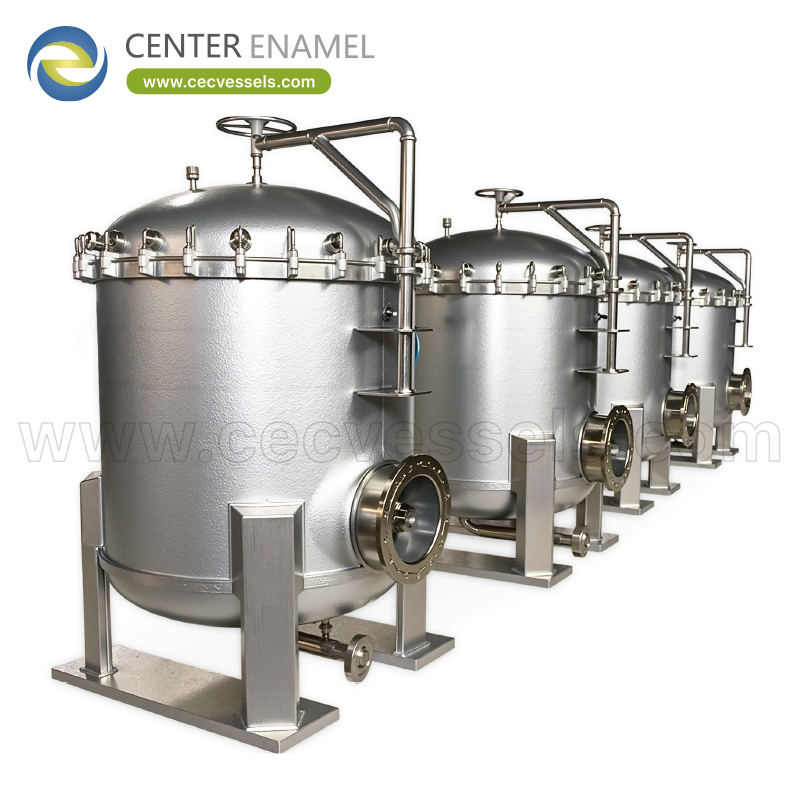
A pressure tank is a code-governed container that holds fluid above atmospheric pressure but typically below the high-pressure envelope of a process vessel - think air receivers, surge drums, RO pressure vessels and low-pressure accumulators.
To source one well, the buyer's first job is to pin down the maximum operating pressure and decide whether the item is a regulated pressure vessel or a low-pressure tank, because that decision drives the code, the stamp and the documents the manufacturer must deliver.
Define The Duty Before You Ask For Quotes
Start from the fluid, the maximum pressure including any blanket or thermal-relief peak, the temperature and the required hold-up volume. A receiver sized only for steady-state pressure will fail the moment a relief event pushes it over the code threshold.
Write these on the enquiry so every manufacturer quotes the same object; ambiguous duty is the most common cause of mismatched offers and rejected acceptances.
Code Boundary: Pressure Vessel Or Low-Pressure Tank
Under ASME VIII Div.1 the regulated threshold is about 0.1 MPa (15 psi). Above it the item is a pressure vessel with mandatory design calc, qualified welding, NDT and a data report; below it many stores follow atmospheric or low-pressure tank standards.
For a pressure tank the answer is rarely 'atmospheric' - most receivers and surge drums sit just above the threshold, so confirm the governing standard with the manufacturer before design begins.
Materials For Pressure Tank Service
Carbon steel covers the bulk of air and water surge duty; stainless 304/316L is used where the fluid is corrosive or food/pharma purity applies.
For potable or RO service, material certification and internal finish matter more than wall thickness, so specify the grade and any lining explicitly rather than leaving it to the shop.
What The Manufacturer Must Deliver
Even for a modest pressure tank, expect material certificates, welding procedure qualification, NDT on critical seams and a pressure-test certificate; export units add stamping and packing for transit.
A disciplined manufacturer issues a data book so you can verify conformity on arrival without re-inspecting every weld, which is the real difference between a cheap shell and a deliverable asset.
Inspection And Test Plan
Ask for the inspection and test plan (ITP) up front, not after fabrication. The ITP defines which seams are radiographed, the test pressure and who witnesses it.
For pressure tanks the hydrostatic test is typically about 1.3 times MAWP using water; confirm the value and the acceptance criterion in the purchase order.
Sizing And Orientation
Vertical receivers suit limited footprint and gas-liquid separation; horizontal units suit liquid hold-up and transport-friendly layouts.
Orientation follows the duty, so specify the plot constraint and the service (accumulation versus surge damping) before the manufacturer selects supports.
Common Sourcing Mistakes
The frequent error is calling a pressurized receiver a 'tank' in the requisition, which drops the stamp and NDT and fails acceptance later.
The opposite error is over-specifying full code-vessel treatment for a genuinely atmospheric store, inflating cost and lead time with no safety gain.
Procurement Checklist
Send duty, max pressure (with peaks), temperature, fluid, volume, orientation and any code or marking requirement; request the ITP and a sample data report during bid evaluation.
Confirm the exact stamp or marking needed for the destination market so approvals stay proportionate to risk.
Pressure Tank Types For Sourcing
|
Type |
Typical duty |
Pressure regime |
|
Air receiver |
Compressed-air storage |
Just above 0.1 MPa |
|
Surge drum |
Liquid pulsation damping |
Low to medium |
|
RO pressure vessel |
Membrane housings |
Code vessel |
|
Low-pressure accumulator |
Hydraulic/pump buffer |
Low to medium |
Buyer Specification Inputs For A Pressure Tank
|
Input |
Why it matters |
|
Max pressure incl. peaks |
Sets code boundary and stamp |
|
Fluid and corrosivity |
Drives material and lining |
|
Hold-up volume |
Sets size and orientation |
|
Temperature |
Affects grade and relief |
|
Code / marking |
Defines approvals path |
Conclusion
Sourcing a pressure tank starts with the duty and the code boundary, not with a price request; above the ASME threshold the item is a regulated pressure vessel and must be stamped and documented as such.
Give the manufacturer a complete data sheet, request the inspection and test plan early, and confirm the required marking so the unit is deliverable rather than merely cheap.
About Center Enamel
Center Enamel is a pressure vessel and process equipment manufacturer based in China, producing stainless steel and carbon steel pressure vessels, separators, reactors, heat exchangers and storage tanks for chemical, oil and gas, power, food, pharmaceutical and water-treatment applications.
Manufacturing is carried out under ASME VIII Div.1, GB/T 150 and ISO 9001 with CE/PED and NACE MR0175 / ISO 15156 options for sour service. Each unit is supplied with material traceability, hydrostatic or pneumatic testing, NDT and export documentation.
- Material range: Stainless steel (304 / 316L), duplex, carbon steel with rubber or epoxy lining for corrosion duty.
- Standards: ASME VIII Div.1, GB/T 150, ISO 9001, CE/PED, NACE MR0175 / ISO 15156.
- Commercial terms: Minimum order quantity 1 unit, typical lead time about 2 months, L/C or T/T.
Frequently Asked Questions (FAQ)
What is a pressure tank?
A code-governed container holding fluid above atmospheric pressure but typically below high-pressure process duty, such as receivers, surge drums and RO housings.
At what pressure is a tank a pressure vessel?
Under ASME VIII Div.1 about 0.1 MPa (15 psi); above that it is a regulated pressure vessel needing design calc, welding qualification, NDT and a data report.
Is an air receiver a pressure vessel?
Yes; despite the 'receiver' or 'tank' name it is pressurized and therefore a code vessel.
What documents should a pressure tank come with?
Material certificates, WPS/PQR, NDT reports, hydrostatic-test certificate and, where required, a stamp and data report.
Which material for a water surge tank?
Carbon steel for general duty; stainless 304/316L where corrosion or potable/RO purity applies.
What is an ITP?
An inspection and test plan stating which seams are examined, the test pressure and who witnesses it.
What pressure is the hydrostatic test?
Typically about 1.3 times MAWP using water, with the value and acceptance stated in the purchase order.
Vertical or horizontal pressure tank?
Vertical for limited footprint and separation; horizontal for liquid hold-up and easier transport.
Do RO pressure vessels need stamping?
They operate above the threshold and are code vessels, though the housing standard differs from a process shell.
What is a common sourcing mistake?
Labelling a pressurized receiver a 'tank' drops the stamp and NDT and fails acceptance later.
How long does a pressure tank take?
About 2 months from a China manufacturer for an engineered unit, shorter for standard receivers.
Can pressure tanks be skid-mounted?
Yes; many are supplied on skids with piping and frame for faster site installation.
What should the enquiry state?
Duty, max pressure incl. peaks, temperature, fluid, volume, orientation and required code or marking.
Do I need CE/PED for Europe?
Yes for the EU market; otherwise ASME U-stamp or local certification per destination.
Why confirm the code boundary early?
Because it changes design, welding, inspection and stamping, and the approvals path diverges at the threshold.
Suggested CTA: Request a technical quotation with your duty, pressure, temperature and fluid data, or discuss your project with a Center Enamel engineer for a sized proposal.