-
Glass Fused To Steel Tanks (896)
-
Stainless Steel Tanks (434)
-
Fusion Bonded Epoxy Tanks (660)
-
Galvanized Steel Tanks (321)
-
Aluminum Dome Roofs (1336)
-
Wastewater Storage Tanks (280)
-
Welded Steel Tanks (457)
-
Pressure Vessels (461)
-
Anaerobic Digester (202)
-
Industrial Water Tanks (364)
-
Glass Lined Steel Tanks (180)
-
Bolted Steel Tanks (389)
-
Sludge Storage Tank (115)
-
Biogas Storage Tank (173)
-
Leachate Storage Tanks (133)
-
Agricultural Water Storage Tanks (179)
-
Fire Water Tank (166)
-
Grain Storage Silos (146)
-
Biogas Projects (424)
-
Wastewater Treatment Projects (1792)
-
Double Membrane Roof (223)

|
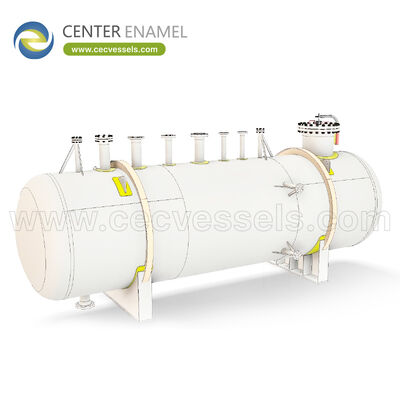
China Well Testing Separator Manufacturer Delivering Advanced Production Evaluation And Structural Reliability For Global Upstream Applications
| Place of Origin: | China |
| Brand Name: | Center Enamel |
| Certification: | ISO 9001,CE, NSF/ANSI 61, WRAS, ISO 28765, LFGB, BSCI, ISO 45001 |
| Minimum Order Quantity: | 1 Sets |
| Price: | 2000 |
| Delivery Time: | 2 months |
| Payment Terms: | L/C,T/T |
| Supply Ability: | 200 sets / days |
|
Detail Information |
|||
Product Description
China Well Testing Separator Manufacturer Delivering Advanced Production Evaluation And Structural Reliability For Global Upstream Applications
A well testing separator is the vessel used during early production evaluation to split the wellstream into oil, gas and water at controlled pressure so engineers can measure flow rates, pressure and fluid ratios before a field is tied into permanent processing.
For upstream operators the value is simple: a properly sized, structurally reliable test separator turns an uncontrolled flow test into quantifiable reservoir data. This article explains what the equipment does, how it is configured, and what to specify when sourcing from a manufacturer.
What A Well Testing Separator Does
The separator receives the untreated wellstream from the choke and divides it into its phase components using gravity settling plus internal mist-extraction devices. Gas leaves the top, oil the middle, and water the bottom, each metered separately.
Because the objective is measurement rather than bulk treating, the vessel is built for stable, repeatable separation across a wide range of gas-oil ratios and water cuts rather than for maximum throughput alone.
Why Production Evaluation Needs A Dedicated Test Separator
Permanent production separators are tuned to a known plateau rate. A new or work-over well rarely matches that envelope, so a dedicated test separator protects the permanent train and gives clean data.
Operators use the test separator to confirm reserves, set choke positions, and verify artificial-lift performance. Inability to separate accurately directly corrupts every downstream calculation.
Key Design Parameters For Upstream Service
Design pressure and temperature must cover the most severe anticipated wellhead condition, not the average. Design pressure commonly spans 1.0 to 10 MPa for test units, with higher ratings available.
Retention time, vessel diameter and the chosen mist extractor set the separation efficiency at a given gas rate. Undersizing causes liquid carry-over into the gas meter; oversizing wastes skid weight and cost.
- Pressure rating: match or exceed maximum shut-in wellhead pressure with margin.
- Retention time: 1-3 minutes typical for test duty to stabilise level control.
- Gas handling: demister pad or vane pack sized for peak GOR.
Structural Reliability In Harsh Well-Site Conditions
Well testing skids are moved between locations and subjected to vibration, thermal cycling and abrasive solids. The shell, saddles and nozzle reinforcement must tolerate repeated transport and set-down.
Center Enamel applies full penetration welds, post-weld heat treatment where specified, and skid frames analysed for lift and transport loads so the package arrives service-ready.
Single, Two And Three Phase Configurations
A two-phase unit separates gas from liquid only and is used when water cut is negligible. A three-phase test separator splits oil, water and gas and is the default for reservoir evaluation because it reports water cut directly.
Some programmes add a second stage to improve light-ends recovery, but for standard well tests a single three-phase vessel with good instrumentation is usually sufficient.
Sizing And Throughput Considerations
Sizing starts from expected oil rate, GOR and water cut. High GOR demands a larger diameter for gas disengagement; high water cut demands more liquid retention volume.
A practical approach is to size for 120-150 percent of forecast peak rate so the unit remains stable if the well outperforms the model.
Instrumentation And Data Acquisition
The separator is only as good as its meters. Typical packages pair the vessel with a gas orifice or turbine meter, a liquid turbine or Coriolis meter, and pressure/temperature transmitters feeding a test header.
Modern separators integrate the metering into a single skid so the well test produces a ready-to-log data set rather than raw gauge readings.
Material Selection For Sour And Sandy Wells
Sour wells require NACE MR0175 / ISO 15156 compliant materials and often cladding or solid corrosion-resistant alloy in the wetted zone. Abrasive sand demands erosion allowances and sometimes hardened internals.
Confirming the H2S and CO2 partial pressures up front avoids a vessel that passes hydrotest but fails in service.
Manufacturing And Quality Assurance
Reputable manufacturing means documented material certificates, controlled welding procedures, radiographic or ultrasonic examination of critical seams, and a pressure test witnessed or certified by a third party.
For export, ASME U-stamp or CE/PED marking plus full NDT reports should travel with the unit.
Procurement Checklist For Buyers
Provide the manufacturer with maximum wellhead pressure, expected rates, GOR, water cut, fluid properties, and site conditions. A clear data sheet prevents both undersizing and over-specification.
Ask specifically for the test separator's calibrated metering range, not just the vessel rating, because the meters define usable accuracy.
Comparing Well Test Separator Configurations
Configuration |
Phases separated |
Typical use |
Metering output |
Two-phase |
Gas + liquid |
Dry-gas or negligible-water wells |
Gas rate, total liquid |
Three-phase |
Oil + water + gas |
Reservoir evaluation with water cut |
Oil, water and gas rates |
Two-stage |
Primary + flash recovery |
Light-ends / high GOR wells |
Improved gas accuracy |
Typical Design Range For Test Separators
Parameter |
Common range |
Basis |
Design pressure |
1.0 - 10 MPa |
Max shut-in wellhead + margin |
Design temperature |
-20 to 120 C |
Wellstream and ambient |
Vessel diameter |
0.6 - 1.8 m |
Gas disengagement at peak GOR |
Phases |
2 or 3 |
Water cut expectation |
Standards |
ASME VIII / GB150 |
With NACE for sour service |
Conclusion
A well testing separator is the measurement instrument at the front of reservoir evaluation: it must separate cleanly, meter accurately and survive repeated mobilization.
Specify from the worst-case well condition, choose three-phase separation for any well with water, and verify the metering range - not only the vessel rating - before placing an order.
About Center Enamel
Center Enamel is a pressure vessel and process equipment manufacturer based in China, producing stainless steel and carbon steel separators, heat exchangers, reactors and storage vessels for chemical, food, energy and water-treatment applications.
Manufacturing is carried out under ASME VIII Div.1, GB/T 150 and ISO 9001 with CE/PED and NACE MR0175 / ISO 15156 options for sour service. Each unit is supplied with material traceability, hydrostatic or pneumatic testing, NDT and export documentation.
- Material range: Stainless steel (304/316L), duplex, carbon steel with rubber or epoxy lining for corrosion duty.
- Standards: ASME VIII Div.1, GB/T 150, ISO 9001, CE/PED, NACE MR0175 / ISO 15156.
- Commercial terms: Minimum order quantity 1 unit, typical lead time about 2 months, L/C or T/T.
Frequently Asked Questions (FAQ)
What is a well testing separator used for?
It separates the wellstream into oil, gas and water at the wellhead so engineers can measure flow rates and fluid ratios during early production evaluation.
Why not use the permanent production separator for testing?
Permanent separators are tuned to a known plateau rate; a new well rarely matches that envelope, and using them corrupts both the test data and the production train.
What pressure rating should a test separator have?
It should match or exceed the maximum shut-in wellhead pressure with margin, commonly 1.0 to 10 MPa for test units.
Is a three-phase separator necessary?
For any well with measurable water cut, yes - only a three-phase vessel reports oil, water and gas rates separately and gives true water cut.
How does gas-oil ratio affect sizing?
High GOR needs a larger diameter for gas disengagement; the demister and vessel diameter are set by peak gas rate.
What materials are used for sour wells?
NACE MR0175 / ISO 15156 compliant steels, often with cladding or solid corrosion-resistant alloy in the wetted zone.
How are sandy wells handled?
With erosion allowances, sometimes hardened internals, and a design that tolerates abrasive solids in the wellstream.
What instrumentation is typical?
A gas orifice or turbine meter, a liquid Coriolis or turbine meter, and pressure/temperature transmitters feeding a test header.
Does the separator need ASME certification?
Export units commonly carry ASME U-stamp or CE/PED marking with full NDT reports; always confirm the required marking for the destination.
What data should I send a manufacturer?
Max wellhead pressure, expected oil/gas/water rates, GOR, water cut, fluid properties and site conditions.
Why is retention time important?
1-3 minutes of retention stabilises level control and prevents liquid carry-over into the gas meter.
Can test separators be skid-mounted?
Yes, they are normally supplied as integrated skids with vessel, meters and frame for easy mobilization between wells.
What is the typical lead time?
Around 2 months from a China manufacturer for a single engineered unit, depending on certification and materials.
How is structural reliability ensured for transport?
Full-penetration welds, analysed skid frames and reinforcement sized for lift and transport loads.
What should I verify before accepting delivery?
Calibrated metering range, NDT reports, pressure-test certificate and conformity to the agreed standard.
Suggested CTA: Request a technical quotation with your duty, pressure, temperature and fluid data, or discuss your project with a Center Enamel engineer for a sized proposal.