-
Glass Fused To Steel Tanks (596)
-
Stainless Steel Tanks (434)
-
Fusion Bonded Epoxy Tanks (592)
-
Galvanized Steel Tanks (321)
-
Aluminum Dome Roofs (1336)
-
Wastewater Storage Tanks (232)
-
Welded Steel Tanks (457)
-
Pressure Vessels (295)
-
Anaerobic Digester (202)
-
Industrial Water Tanks (349)
-
Glass Lined Steel Tanks (180)
-
Bolted Steel Tanks (389)
-
Sludge Storage Tank (115)
-
Biogas Storage Tank (173)
-
Leachate Storage Tanks (133)
-
Agricultural Water Storage Tanks (179)
-
Fire Water Tank (166)
-
Grain Storage Silos (146)
-
Biogas Projects (424)
-
Wastewater Treatment Projects (1268)
-
Double Membrane Roof (223)


|
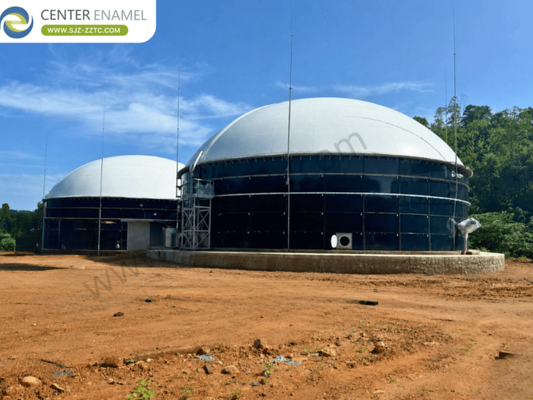
Biogas Plant Design with CSTR Process Turns Vietnam’s Pennisetum Purpureum into Renewable Energy
| Place of Origin: | China |
| Brand Name: | CEC TANKS |
| Certification: | ISO 9001:2008, AWWA D103 , OSHA , BSCI |
| Model Number: | W |
| Minimum Order Quantity: | 1set |
| Price: | $5000~$20000 one set |
| Packaging Details: | PE poly-foam between each two steel plates ; wooden pallet and wooden |
| Delivery Time: | 10-30 days after deposit received |
| Payment Terms: | L/C,T/T |
| Supply Ability: | 60 sets per month |
|
Detail Information |
|||
| Place of Origin | China | Brand Name | CEC TANKS |
|---|---|---|---|
| Certification | ISO 9001:2008, AWWA D103 , OSHA , BSCI | Model Number | W |
| Tank Body Color: | Dark Green / Can Be Customized | Corrosion Integrity: | Excellent |
| Steel Plates Thickness: | 3mm To 12mm , Depends On The Tank Structure | Chemical Resistance: | Excellent |
| Size Of Panel: | 2.4M * 1.2M | Easy To Clean: | Smooth, Glossy, Inert, Anti-adhesion |
| Highlight: | Biogas plant CSTR process design,Pennisetum Purpureum renewable energy,Wastewater treatment biogas plant |
||
Product Description
Biogas Plant Design with CSTR Process Turns Vietnam’s Pennisetum Purpureum into Renewable Energy
Vietnam, with its tropical climate and abundant agricultural resources, is ideally positioned to become a leader in renewable bioenergy. The cultivation of Pennisetum Purpureum, commonly known as Napier grass, is expanding rapidly across the country, driven by its potential as a high-value feedstock for biogas production. This article examines the technical and operational aspects of converting this fast-growing grass into renewable energy, showcasing how advanced Biogas Plant Design and CSTR Process technologies can transform agricultural by-products into a reliable power source for Vietnam's growing energy needs.
Pennisetum Purpureum: A High-Yield Energy Crop
Pennisetum Purpureum is a fast-growing perennial tropical grass that thrives in Vietnam's diverse ecological zones. Research indicates that improved varieties such as Green Elephant grass (GE) and VA06 have demonstrated robust growth and impressive biomass yields of 35–48 tons per hectare during the rainy season. In the dry season, GE and Mulato II maintain significant biomass production, ensuring year-round feedstock availability. With low maintenance requirements and high tolerance to diverse soil conditions, this crop serves as an ideal substrate for large-scale anaerobic digestion projects. Beyond its traditional use as animal fodder, its massive lignocellulosic content makes it an exceptional candidate for biogas production, offering a balanced carbon-to-nitrogen ratio that promotes stable microbial activity.
The Anaerobic Digestion Process for Pennisetum Purpureum
Converting Pennisetum Purpureum into biogas follows a well-established anaerobic digestion pathway consisting of four biological stages. The process begins with feedstock preparation, where freshly harvested Napier grass is chopped and shredded to increase the surface area for microbial activity. In the hydrolysis stage, extracellular enzymes secreted by bacteria break down the complex lignocellulosic fibers and polysaccharides into simpler soluble sugars and amino acids. During acidogenesis, acidogenic bacteria convert these soluble compounds into volatile fatty acids, alcohols, hydrogen, and carbon dioxide. The acetogenesis stage follows, where acetogenic bacteria further convert these intermediate products into acetic acid, hydrogen, and carbon dioxide. Finally, in methanogenesis, methanogenic archaea consume these substrates to produce methane-rich biogas. This complete biological cascade ensures efficient conversion of the grass's organic matter into renewable energy, with the digestate remaining as a nutrient-rich fertilizer for agricultural reuse.
The CSTR Process: The Engine of Biogas Production
At the core of high-efficiency biogas facilities in Vietnam is the CSTR (Continuous Stirred-Tank Reactor) process. This advanced anaerobic treatment technology serves as the core processing unit that converts organic waste like Pennisetum Purpureum into biogas and digestate. The CSTR Process involves feeding the prepared organic feedstock continuously or semi-continuously into a sealed reactor. What sets this technology apart is its mechanical stirring device, which ensures that fermentation raw materials and anaerobic microorganisms are in a state of complete and thorough mixing. This constant agitation is crucial for maintaining a uniform temperature—typically in the mesophilic range—and preventing the settling of solids. This allows for the efficient degradation of high-concentration organic matter, resulting in stable and high biogas yields. Research from Thailand has shown that CSTRs operated under mesophilic conditions can achieve methane yields suitable for commercial-scale power generation from Napier grass.
GFS Tanks and Double Membrane Roof: A Superior Storage Solution
For the demanding environment of anaerobic digestion, storage infrastructure must offer exceptional durability and corrosion resistance. Glass-Fused-to-Steel (GFS) tanks are the premium choice, created by firing glass onto steel at high temperatures (820°C-930°C) to form an inert, durable bond. This technology provides the strength and flexibility of steel combined with the outstanding corrosion resistance of glass, making GFS tanks ideal for withstanding the corrosive organic acids and hydrogen sulfide (H₂S) produced during digestion. When paired with a Double Membrane Roof, the system achieves optimal airtightness for biogas collection and odor control. This combination of structural strength and membrane flexibility is a cost-effective solution that significantly reduces construction costs while maximizing site space efficiency. In Vietnam's tropical climate, this robust infrastructure ensures long-term operational stability and reliability.
Versatile Storage Tank and Cover Solutions
- Aluminum Geodesic Dome Roof: Offers advanced corrosion resistance, expansive clear span capability, and cost-effective construction with minimal maintenance.
- Glass-Fused-to-Steel Roof: Provides excellent air-tightness for pressurized structures and demanding applications requiring odor control.
- Single Membrane Roof: A viable option for anaerobic digestion and biogas applications, offering airtightness for biogas collection.
- Aluminum Alloy Trough Deck Roof: An economical option for water and wastewater storage without requiring extreme airtightness.
- Stainless Steel Roof: Delivers super anti-corrosion performance and a long service life for harsh environments.
- FRP Roof: A lightweight, versatile choice suitable for applications where extreme airtightness is not required.
Comprehensive Ancillary Equipment
A fully functional biogas plant requires reliable auxiliary equipment beyond the digester and storage tank. Essential components include:
- Gas Holder: Provides safe, flexible storage for the produced biogas.
- Solid-Liquid Separator: Divides digestate into solid waste and liquid fertilizer, creating valuable agricultural by-products.
- Dehydration and Desulfurization Tank: Purifies raw biogas by removing moisture and corrosive hydrogen sulfide to protect downstream equipment.
- Lifting Pump: Ensures reliable transfer of slurry between different processing units.
- Screw Sludge Dewatering Machine: Reduces the volume of final sludge, lowering disposal costs.
Center Enamel: A One-Stop Biogas Solution Provider
For Vietnam's biogas projects, partnering with a professional EPC contractor like Center Enamel offers a distinct advantage. Their turnkey service provides:
- Tailored Anaerobic Solutions: Expertise in selecting the right technology (CSTR, UASB, IC) for specific waste characteristics and local conditions.
- Local Experience: Deep understanding of Vietnam's tropical climate, environmental regulations, and construction norms, including heavy monsoon rains and high humidity.
- High-Quality Manufacturing: Asia's largest GFS tank production base with over 200 patented enamel formulas, ensuring premium product quality.
- International Quality Standards: Compliance with ISO 28765, AWWA D103, NSF/ANSI 61, CE, and OSHA standards, ensuring bankable project quality.
- Rapid Installation: Bolted tank designs for fast on-site assembly, reducing construction time and accelerating return on investment.
- Complete After-Sales Support: Dedicated teams for maintenance, technical guidance, and operational optimization.
Conclusion
Vietnam's journey towards renewable energy independence is significantly bolstered by the conversion of Pennisetum Purpureum into biogas. By utilizing advanced anaerobic technologies like the CSTR Process and robust storage solutions such as GFS Tanks, the country can efficiently manage agricultural waste and generate clean power. With the support of a leading biogas solutions provider, Vietnam can successfully implement large-scale projects that not only meet energy demands but also promote environmental sustainability and agricultural resilience across the nation. This approach optimizes rural energy structures, reduces reliance on fossil fuels, and aligns with Vietnam's green energy and carbon neutrality policies.
FAQ: Pennisetum Purpureum to Biogas
1. Why is Pennisetum Purpureum a suitable feedstock for biogas in Vietnam?
Its rapid growth, high biomass yield, and adaptability to tropical climates make it an ideal and sustainable feedstock, offering consistent year-round supply for biogas plants.
2. What is the CSTR Process and why is it used for Pennisetum Purpureum?
The CSTR (Continuous Stirred-Tank Reactor) process uses continuous mixing to handle high-solid feedstocks effectively, preventing settling and ensuring thorough contact between the substrate and microorganisms for maximum biogas production.
3. What role do GFS Tanks play in the biogas process?
Glass-Fused-to-Steel tanks provide a corrosion-resistant, durable, and long-lasting storage solution, essential for the harsh acidic conditions of anaerobic digestion, ensuring the integrity and longevity of the biogas plant's infrastructure.