-
Glass Fused To Steel Tanks (596)
-
Stainless Steel Tanks (434)
-
Fusion Bonded Epoxy Tanks (592)
-
Galvanized Steel Tanks (321)
-
Aluminum Dome Roofs (1336)
-
Wastewater Storage Tanks (232)
-
Welded Steel Tanks (457)
-
Pressure Vessels (295)
-
Anaerobic Digester (202)
-
Industrial Water Tanks (349)
-
Glass Lined Steel Tanks (180)
-
Bolted Steel Tanks (389)
-
Sludge Storage Tank (115)
-
Biogas Storage Tank (173)
-
Leachate Storage Tanks (133)
-
Agricultural Water Storage Tanks (179)
-
Fire Water Tank (166)
-
Grain Storage Silos (146)
-
Biogas Projects (424)
-
Wastewater Treatment Projects (1278)
-
Double Membrane Roof (223)

|
Australia's Silage Straw into Biogas: GFS Tanks and EPC Contractor Solutions
| Place of Origin: | China |
| Brand Name: | CEC TANKS |
| Certification: | ISO 9001:2008, AWWA D103 , OSHA , BSCI |
| Model Number: | W |
| Minimum Order Quantity: | 1set |
| Price: | $5000~$20000 one set |
| Packaging Details: | PE poly-foam between each two steel plates ; wooden pallet and wooden |
| Delivery Time: | 10-30 days after deposit received |
| Payment Terms: | L/C,T/T |
| Supply Ability: | 60 sets per month |
|
Detail Information |
|||
| Place of Origin | China | Brand Name | CEC TANKS |
|---|---|---|---|
| Certification | ISO 9001:2008, AWWA D103 , OSHA , BSCI | Model Number | W |
| Tank Body Color: | Dark Green / Can Be Customized | Corrosion Integrity: | Excellent |
| Steel Plates Thickness: | 3mm To 12mm , Depends On The Tank Structure | Chemical Resistance: | Excellent |
| Size Of Panel: | 2.4M * 1.2M | Easy To Clean: | Smooth, Glossy, Inert, Anti-adhesion |
| Highlight: | silage straw biogas GFS tanks,biogas EPC contractor wastewater solutions,Australia silage straw wastewater treatment |
||
Product Description
Australia's Silage Straw into Biogas: GFS Tanks and EPC Contractor Solutions
This article explores how advanced anaerobic digestion technology, anchored by GFS Tanks and delivered by professional EPC Contractors, transforms Australia's abundant silage straw into renewable biogas, addressing agricultural waste management and clean energy production challenges.
The Untapped Potential of Silage Straw in Australia's Agricultural Landscape
Australia's vast agricultural sector generates millions of tons of crop residues annually, with silage straw emerging as a particularly valuable biomass resource. Across New South Wales, Victoria, Queensland, and Western Australia, wheat, barley, oats, sorghum, and corn production creates substantial straw volumes that have traditionally been managed through field retention, animal feed, or open stacking. However, these conventional disposal methods present significant challenges. Open-air decomposition releases methane and contributes to seasonal rural fire hazards, while soil degradation from continuous residue removal threatens long-term agricultural sustainability. The agricultural industry's recognition of these challenges has catalyzed a shift toward advanced biomass utilization strategies, positioning silage straw as a prime candidate for commercial-scale bioenergy production.
The Biological Transformation: How Silage Straw Becomes Biogas
The conversion of silage straw into methane-rich biogas follows a sophisticated four-stage biological pathway known as anaerobic digestion. Unlike dry straw, silage straw is preserved through controlled anaerobic fermentation (ensiling), which retains soluble sugars and organic matter, making it exceptionally suitable for bioenergy conversion. The process begins with hydrolysis, where complex cellulose fibers and robust lignocellulosic structures are enzymatically broken down into simple sugars. Acid-producing microorganisms then ferment these compounds into volatile fatty acids and alcohols during the acidogenesis stage. Specialized acetogenic bacteria subsequently convert these intermediates into acetic acid, hydrogen, and carbon dioxide. The final methanogenesis stage sees methanogenic archaea metabolize these precursors, producing biogas typically containing 55-70% methane, ready for power generation, heating, or biomethane grid injection. This biological sequence delivers multiple benefits for Australian agriculture, including mitigation of fire risks through controlled collection, decentralized power generation for rural grid resilience, and production of nutrient-rich organic fertilizer that replaces synthetic chemicals.
CSTR Technology: The Core Processing Unit for Silage Straw Biogas Projects
The Continuous Stirred-Tank Reactor (CSTR) represents the optimal anaerobic process for managing the high-solid fractions typical of chopped silage straw. This technology ensures complete mixing of fermentation raw materials and microorganisms within a closed tank equipped with mechanical stirring devices. By feeding continuously or semi-continuously at a constant temperature, the CSTR system maintains a uniform biological environment that effectively suppresses surface scum formation and ensures consistent high-rate organic conversion. Scientific research confirms that CSTR systems achieve over 75% volatile solids removal with biogas production reaching up to 613 mL per gram of volatile solids when processing silage straw. The CSTR process is particularly effective for Australia's silage straw due to its powerful mixing systems that manage fluctuating organic loads and prevent sedimentation—critical capabilities for agricultural biomass streams with high suspended solids.
GFS Tanks and Double Membrane Roof: Premium Containment Solutions
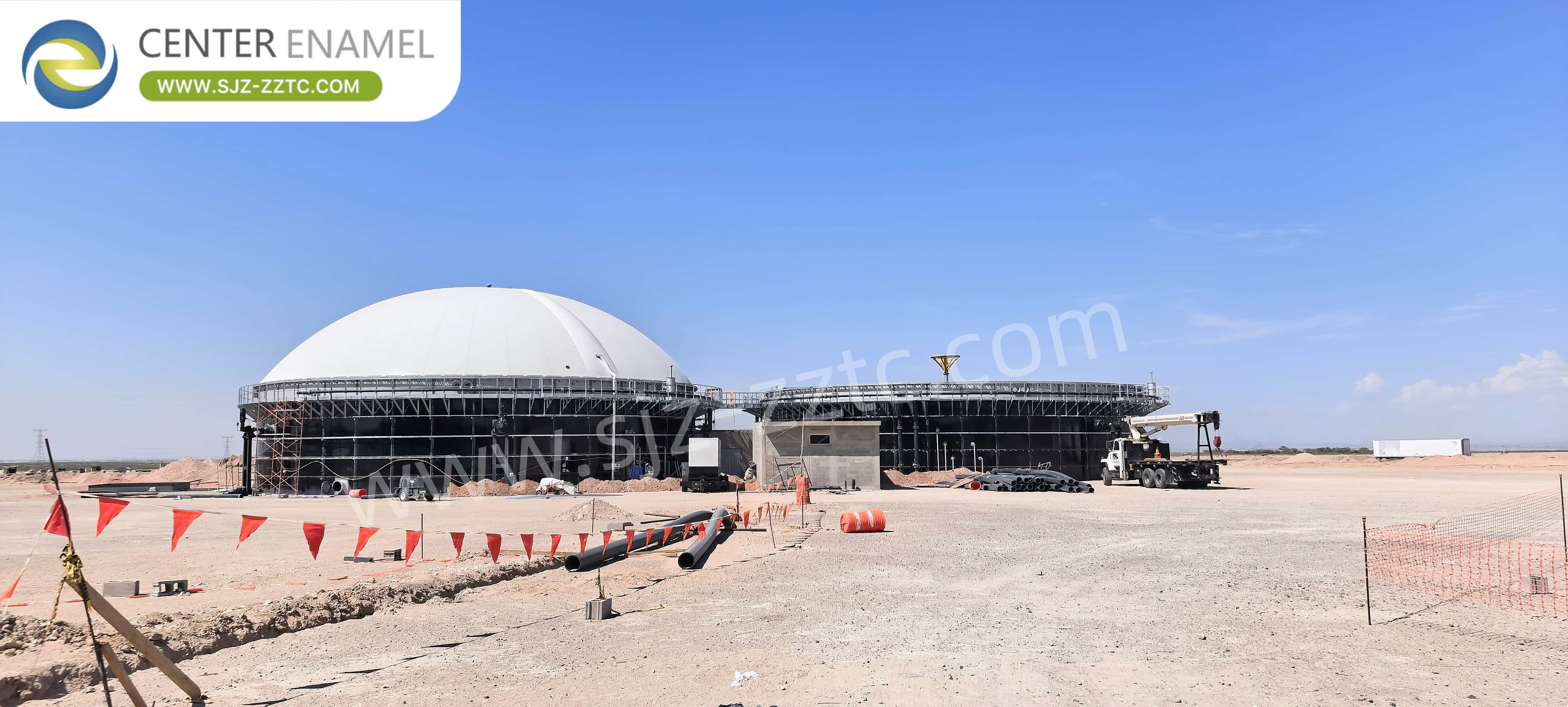
Glass-Fused-to-Steel (GFS) tanks provide unparalleled containment performance for Australian silage straw biogas projects. The technology fuses high-strength steel plates with a protective glass coating at approximately 820°C-930°C, creating an inert and inorganic bond that combines steel's structural strength with glass's outstanding corrosion resistance. This double coating layer structure (2C2F) forms an impenetrable barrier against the harsh organic acids and corrosive hydrogen sulfide generated during anaerobic degradation, outperforming traditional storage solutions. GFS tanks demonstrate exceptional adaptability to Australia's intense UV radiation, scorching summer heat, and arid conditions—their modular bolted construction provides structural flexibility that allows vessels to withstand physical weathering, localized shifting, and thermal expansion without developing cracks. The double membrane roof system represents the preferred covering solution for these tanks, offering cost optimization by directly reducing roof costs and space efficiency compared to traditional structures, significantly reducing floor area and saving foundation construction costs.
Comprehensive Tank and Roof Solutions
Center Enamel offers a full range of tank and cover configurations to suit diverse project needs:
Tank Types:
- Galvanized Steel Tanks: Provide a tough, wear-resistant coating for superior corrosion resistance.
- Fusion Bonded Epoxy Tanks: Developed with AkzoNobel for high-performance coating in demanding applications.
- Stainless Steel Tanks: Available in AISI 304/316 grades for high-purity or harsh environment storage.
Cover Solutions:
- Aluminum Geodesic Dome Roofs: Offer excellent corrosion resistance and clear span capability.
- Glass-Fused-to-Steel Roofs: Ensure airtightness for pressurized structures and odor control.
- Single/Double Membrane Roofs: Optimized for anaerobic digestion and biogas collection.
- Aluminum Alloy Trough Deck Roofs: An economical option for water and wastewater storage.
- Stainless Steel Roofs: Deliver superior anti-corrosion performance and long service life.
- FRP Roofs: Suitable for applications without airtightness requirements, such as drinking water or firewater storage.
Essential Biogas Project Equipment
A complete biogas system requires a suite of auxiliary equipment to ensure efficient operation:
- Gas Holders: For secure biogas storage and pressure maintenance.
- Black Membranes: Used as secondary containment or lagoon covers for additional gas collection.
- Solid-Liquid Separators: Process digestate into liquid fertilizer and solid fractions.
- Torch Systems: Ensure safe combustion of excess biogas during maintenance or emergencies.
- Lifting Pumps: Manage feedstock transfer and digestate recirculation.
- Dehydration & Desulfurization Tanks: Remove moisture and hydrogen sulfide to protect downstream equipment.
- Screw Sludge Dewatering Machines: Efficiently reduce digestate volume for easier handling.
Center Enamel: Your Comprehensive EPC Contractor Partner
Center Enamel delivers complete turnkey solutions for Australian silage straw biogas projects as a professional EPC Contractor. The company's comprehensive service scope encompasses full EPC services, process packages, and equipment supply—eliminating the need for multiple contractors and ensuring seamless project execution. Key advantages include:
- A 150,000㎡ R&D and production base with manufacturing capacity of 250,000 tank sheets annually.
- Over 500 employees supporting 100+ countries worldwide.
- Full certification compliance including CE/EN1090, ISO9001, NSF61, WRAS, and EN28765.
- Design standards meeting AWWA D103, OSHA, EN28765, and EuroCode requirements.
- As the leading GFS tank manufacturer in Asia, Center Enamel offers unmatched technical expertise in anaerobic solutions for agricultural residues, proven through successful deployments across diverse global environments.
Conclusion: Powering Australia's Renewable Energy Future
The transformation of silage straw into renewable biogas represents a significant opportunity for Australia to enhance agricultural sustainability, reduce greenhouse gas emissions, and strengthen rural energy security. With advanced GFS tanks providing superior corrosion protection and double membrane roofs optimizing costs and space efficiency, modern biogas projects can deliver reliable performance in Australia's challenging environmental conditions. As a professional EPC Contractor, Center Enamel provides the comprehensive expertise and premium equipment required to convert agricultural residues into clean energy, contributing to Australia's carbon reduction goals while creating economic value for farming communities.
FAQs
How does silage straw differ from dry straw in biogas production?
Silage straw contains 65-75% moisture and undergoes natural pre-decomposition during ensiling, making its cellulose, hemicellulose, and carbohydrates more readily accessible to microorganisms compared to dry straw.
What is the typical biogas yield from silage straw?
CSTR systems processing silage straw achieve biogas production up to 613 mL per gram of volatile solids, with methane content typically ranging from 55-70%.
Why are GFS tanks preferred for biogas projects?
Glass-Fused-to-Steel tanks provide superior corrosion resistance against the aggressive organic acids and hydrogen sulfide produced during anaerobic digestion, combined with rapid modular installation and adaptability to extreme climatic conditions.