-
Glass Fused To Steel Tanks (596)
-
Stainless Steel Tanks (434)
-
Fusion Bonded Epoxy Tanks (592)
-
Galvanized Steel Tanks (321)
-
Aluminum Dome Roofs (1336)
-
Wastewater Storage Tanks (232)
-
Welded Steel Tanks (457)
-
Pressure Vessels (295)
-
Anaerobic Digester (202)
-
Industrial Water Tanks (349)
-
Glass Lined Steel Tanks (180)
-
Bolted Steel Tanks (389)
-
Sludge Storage Tank (115)
-
Biogas Storage Tank (173)
-
Leachate Storage Tanks (133)
-
Agricultural Water Storage Tanks (179)
-
Fire Water Tank (166)
-
Grain Storage Silos (146)
-
Biogas Projects (424)
-
Wastewater Treatment Projects (1278)
-
Double Membrane Roof (223)

|
Indonesia's Silage Straw into Biogas: GFS Tanks and EPC Contractor Solutions
| Place of Origin: | China |
| Brand Name: | CEC TANKS |
| Certification: | ISO 9001:2008, AWWA D103 , OSHA , BSCI |
| Model Number: | W |
| Minimum Order Quantity: | 1set |
| Price: | $5000~$20000 one set |
| Packaging Details: | PE poly-foam between each two steel plates ; wooden pallet and wooden |
| Delivery Time: | 10-30 days after deposit received |
| Payment Terms: | L/C,T/T |
| Supply Ability: | 60 sets per month |
|
Detail Information |
|||
| Place of Origin | China | Brand Name | CEC TANKS |
|---|---|---|---|
| Certification | ISO 9001:2008, AWWA D103 , OSHA , BSCI | Model Number | W |
| Tank Body Color: | Dark Green / Can Be Customized | Corrosion Integrity: | Excellent |
| Steel Plates Thickness: | 3mm To 12mm , Depends On The Tank Structure | Chemical Resistance: | Excellent |
| Size Of Panel: | 2.4M * 1.2M | Easy To Clean: | Smooth, Glossy, Inert, Anti-adhesion |
| Highlight: | silage straw biogas GFS tanks,biogas EPC contractor wastewater treatment,Indonesia silage straw biogas solutions |
||
Product Description
Indonesia's tropical climate and abundant agricultural resources create exceptional opportunities for silage straw biogas production. This article examines how advanced anaerobic technologies, featuring GFS Tanks and delivered by professional EPC Contractors, are transforming agricultural residues into renewable energy across the archipelago.
Indonesia's tropical rainforest climate, with year-round temperatures of 25℃-30℃, abundant rainfall, and fertile volcanic soil, creates ideal conditions for large-scale silage straw cultivation. Major planting areas span Java, Sumatra, Sulawesi, and Kalimantan, with Java primarily growing rice and corn straw for silage while Sumatra and Kalimantan focus on high-yield, adaptable napier grass. Government policies supporting standardized planting and energy-oriented utilization have accelerated adoption across both smallholder farms and commercial bases, creating a stable raw material supply for biogas development. Traditionally, silage straw has served as high-quality forage for livestock, but its rich lignocellulosic content and reliable seasonal availability now position it as an ideal feedstock for decentralized waste-to-energy power plants, empowering Indonesian agricultural regions to transform routine farming byproducts into profitable clean bioenergy. The country's hot and humid climate further accelerates microbial activity, ensuring year-round stable and high biogas output—a distinct advantage over temperate regions.
Silage straw's rich composition of starch, carbohydrates, crude fiber, and organic protein with a balanced carbon-nitrogen ratio meets the anaerobic fermentation requirements perfectly. The biogas generation process follows four complete anaerobic digestion stages. Hydrolysis sees macromolecular organic matter such as cellulose and protein decomposed into small-molecule sugars and amino acids by hydrolytic bacteria. Acidification follows as acid-producing bacteria convert these small-molecule organics into volatile fatty acids, hydrogen, and carbon dioxide. During acetogenesis, volatile fatty acids are decomposed into acetic acid—the core precursor substance for methane synthesis. The final methanogenesis stage sees methanogenic bacteria utilize acetic acid, hydrogen, and carbon dioxide to produce biogas containing 55-70% methane and 30-45% carbon dioxide, suitable for direct power generation, cooking, and industrial heating after purification. This biological sequence offers substantial benefits for Indonesia, including optimization of rural energy structures, reduction of operational costs through biogas replacing traditional electricity and firewood, improved ecological environments through agricultural waste utilization, and compliance with Indonesia's renewable energy and circular economy policies.
The Continuous Stirred-Tank Reactor represents the optimal anaerobic process for managing Indonesia's high-solid silage straw raw materials. The CSTR system is equipped with mechanical stirring devices that prevent scum crusting and sedimentation inside the tank, ensuring balanced fermentation of raw materials and maintaining stable high biogas yield. This technology has proven particularly effective for silage straw due to its pre-fermented structure, which eliminates the degradation difficulties and crusting problems associated with dry straw, enabling faster microbial reaction and higher biogas production efficiency. The CSTR's constant temperature operation aligns perfectly with Indonesia's tropical climate, maintaining optimal mesophilic conditions (30-38℃) that maximize microbial activity and biogas output. This makes CSTR the preferred choice for large- and medium-scale centralized biogas projects across Indonesia's agricultural heartlands.
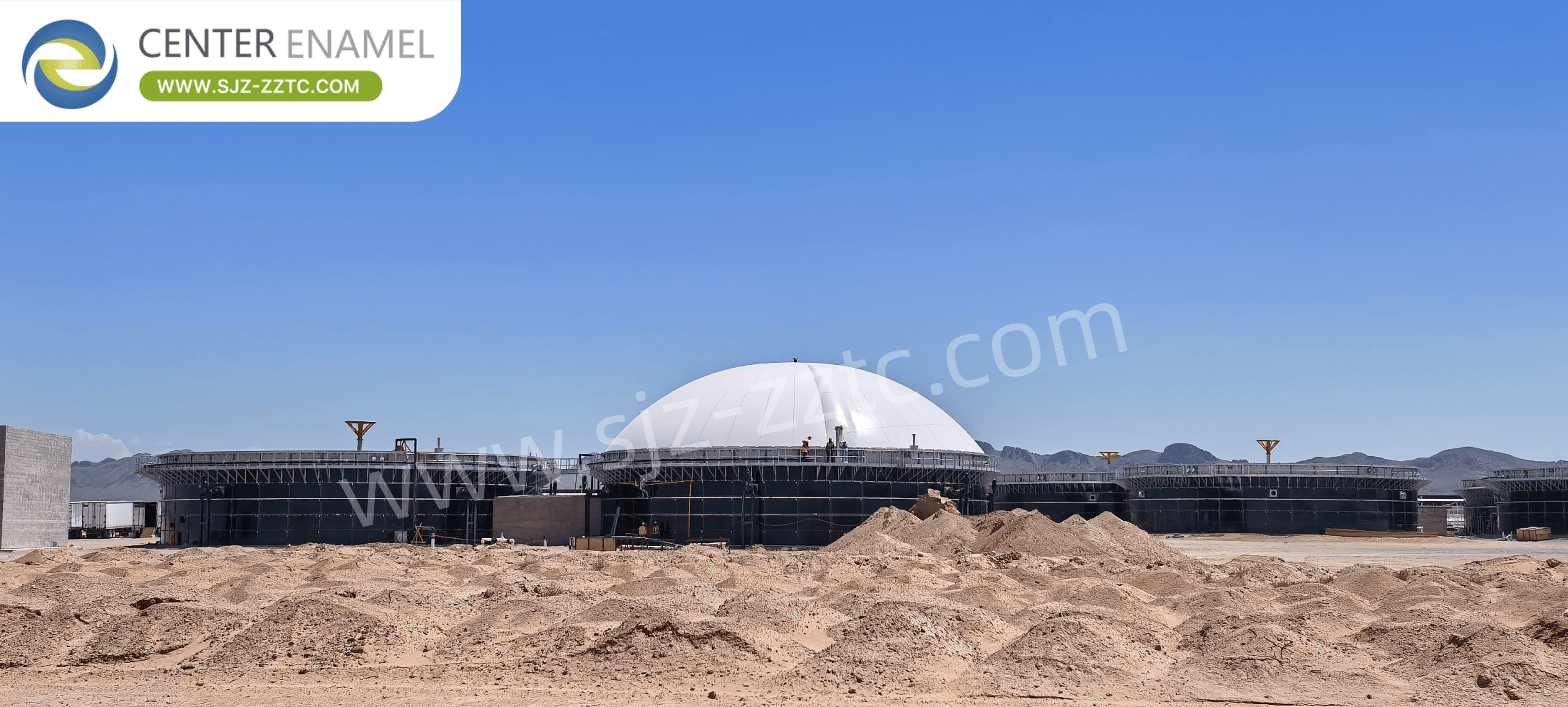
Glass-Fused-to-Steel tanks provide critical containment infrastructure for Indonesia's silage straw biogas projects, delivering exceptional corrosion resistance essential for tropical operations. The technology fuses high-strength steel plates with a protective glass coating at approximately 820°C-930°C, creating an inert and inorganic bond that protects against the harsh organic acids and hydrogen sulfide generated during anaerobic degradation. Real project experience in Indonesia has confirmed that GFS tanks offer clear advantages in price, durability, and installation time compared to concrete or zinc-aluminum coated alternatives. The double coating layer structure (2C2F) provides an impenetrable barrier that withstands Indonesia's year-round humidity and tropical conditions. The double membrane roof system represents the preferred covering solution, offering cost optimization through direct roof cost reduction and space efficiency that significantly reduces floor area while saving foundation construction costs. These integrated solutions have been successfully deployed across multiple Indonesian wastewater treatment and biogas projects, demonstrating GFS tanks' adaptability to the nation's diverse environmental conditions.
Center Enamel offers a full range of tank and cover configurations to suit diverse project needs:
Tank Types:
- Galvanized Steel Tanks: Provide a tough, wear-resistant coating for superior corrosion resistance.
- Fusion Bonded Epoxy Tanks: Developed with AkzoNobel for high-performance coating in demanding applications.
- Stainless Steel Tanks: Available in AISI 304/316 grades for high-purity or harsh environment storage.
Cover Solutions:
- Aluminum Geodesic Dome Roofs: Offer excellent corrosion resistance and clear span capability.
- Glass-Fused-to-Steel Roofs: Ensure airtightness for pressurized structures and odor control.
- Single/Double Membrane Roofs: Optimized for anaerobic digestion and biogas collection.
- Aluminum Alloy Trough Deck Roofs: An economical option for water and wastewater storage.
- Stainless Steel Roofs: Deliver superior anti-corrosion performance and long service life.
- FRP Roofs: Suitable for applications without airtightness requirements, such as drinking water or firewater storage.
A complete biogas system requires a suite of auxiliary equipment to ensure efficient operation:
- Gas Holders: For secure biogas storage and pressure maintenance.
- Black Membranes: Used as secondary containment or lagoon covers for additional gas collection.
- Solid-Liquid Separators: Process digestate into liquid fertilizer and solid fractions.
- Torch Systems: Ensure safe combustion of excess biogas during maintenance or emergencies.
- Lifting Pumps: Manage feedstock transfer and digestate recirculation.
- Dehydration & Desulfurization Tanks: Remove moisture and hydrogen sulfide to protect downstream equipment.
- Screw Sludge Dewatering Machines: Efficiently reduce digestate volume for easier handling.
Center Enamel delivers comprehensive turnkey solutions for Indonesian silage straw biogas projects, providing four mature anaerobic processes for different project scales: CSTR for high-solid raw materials; UASB for medium-sized processing factories with low-solids wastewater; USR for simple, low-maintenance operations; and IC for high-capacity industrial facilities. The company's comprehensive service scope encompasses full EPC services, process packages, and equipment supply with full certification compliance including CE/EN1090, ISO9001, NSF61, WRAS, and EN28765. Key advantages include:
- A 150,000㎡ R&D and production base with manufacturing capacity of 250,000 tank sheets annually.
- Over 500 employees supporting 100+ countries worldwide.
- As the leading GFS tank manufacturer in Asia, Center Enamel offers unmatched technical expertise in anaerobic solutions for tropical agricultural residues, proven through successful deployments across diverse global environments.
The transformation of silage straw into renewable biogas represents a transformative opportunity for Indonesia to achieve energy independence, reduce agricultural emissions, and drive rural economic development. With advanced GFS tanks providing exceptional corrosion resistance in tropical conditions and double membrane roofs optimizing costs and space efficiency, modern biogas projects can deliver reliable performance across Indonesia's diverse environments. As a professional EPC Contractor, Center Enamel provides the comprehensive expertise and premium equipment required to convert agricultural residues into clean energy, supporting Indonesia's renewable energy and circular economy policies while creating sustainable value for farming communities.
Why is silage straw particularly suitable for biogas production in Indonesia?
Indonesia's tropical climate (25℃-30℃ year-round) maintains optimal mesophilic conditions for anaerobic digestion, while the country's abundant agricultural production provides consistent silage straw supply. The material's pre-fermented structure enables faster microbial reaction than dry straw.
What is the typical methane content of biogas from silage straw?
Biogas from silage straw typically contains 55-70% methane and 30-45% carbon dioxide, suitable for power generation, cooking, and industrial heating after purification.
What experience exists with GFS tanks in Indonesian biogas projects?
Successful installations in Indonesia include multiple GFS tanks with capacities ranging from 150 m³ to 600 m³, demonstrating clear advantages in price, durability, and installation time compared to concrete or zinc-aluminum alternatives.