-
Glass Fused To Steel Tanks (596)
-
Stainless Steel Tanks (434)
-
Fusion Bonded Epoxy Tanks (592)
-
Galvanized Steel Tanks (321)
-
Aluminum Dome Roofs (1336)
-
Wastewater Storage Tanks (232)
-
Welded Steel Tanks (457)
-
Pressure Vessels (295)
-
Anaerobic Digester (202)
-
Industrial Water Tanks (349)
-
Glass Lined Steel Tanks (180)
-
Bolted Steel Tanks (389)
-
Sludge Storage Tank (115)
-
Biogas Storage Tank (173)
-
Leachate Storage Tanks (133)
-
Agricultural Water Storage Tanks (179)
-
Fire Water Tank (166)
-
Grain Storage Silos (146)
-
Biogas Projects (424)
-
Wastewater Treatment Projects (1278)
-
Double Membrane Roof (223)

|
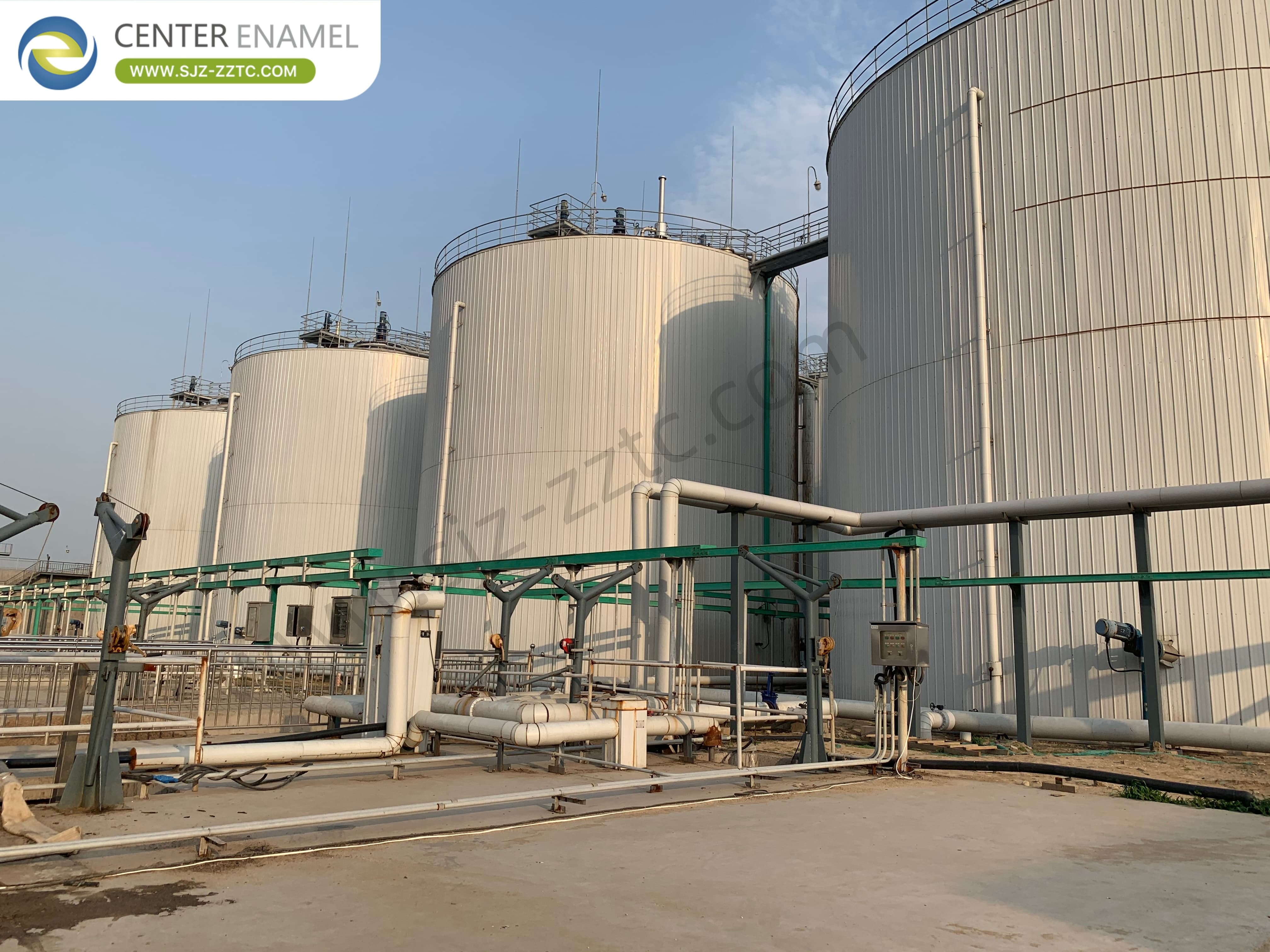
Nigeria Silage Straw into Biogas: Leading GFS Tanks and Biogas Solution Provider
| Place of Origin: | China |
| Brand Name: | CEC TANKS |
| Certification: | ISO 9001:2008, AWWA D103 , OSHA , BSCI |
| Model Number: | W |
| Minimum Order Quantity: | 1set |
| Price: | $5000~$20000 one set |
| Packaging Details: | PE poly-foam between each two steel plates ; wooden pallet and wooden |
| Delivery Time: | 10-30 days after deposit received |
| Payment Terms: | L/C,T/T |
| Supply Ability: | 60 sets per month |
|
Detail Information |
|||
| Place of Origin | China | Brand Name | CEC TANKS |
|---|---|---|---|
| Certification | ISO 9001:2008, AWWA D103 , OSHA , BSCI | Model Number | W |
| Tank Body Color: | Dark Green / Can Be Customized | Corrosion Integrity: | Excellent |
| Steel Plates Thickness: | 3mm To 12mm , Depends On The Tank Structure | Chemical Resistance: | Excellent |
| Size Of Panel: | 2.4M * 1.2M | Easy To Clean: | Smooth, Glossy, Inert, Anti-adhesion |
| Highlight: | Nigeria silage straw biogas solution,GFS tanks for biogas production,wastewater treatment biogas project |
||
Product Description
Nigeria's agricultural sector produces substantial crop residues, presenting both environmental challenges and renewable energy opportunities. This article examines how advanced anaerobic digestion technologies, featuring Glass-Fused-to-Steel (GFS) tanks and professional Biogas Solution Provider services, can transform silage straw into clean energy across Nigeria, supporting the nation's energy independence and green transition goals.
Nigeria's diverse agricultural landscape produces millions of tons of crop residues annually, with silage straw emerging as a crucial biomass resource for renewable energy production. Research confirms that Nigeria has significant biogas potential from agricultural waste, including maize, sorghum, and rice straw residues. As local farming enterprises expand to meet Nigeria's growing demand for agricultural products, traditional waste management techniques are increasingly failing to address the scale of waste production. These outdated methods cause severe risks, including the leaching of harmful nitrates into soil and groundwater, the uncontrolled spread of pathogens, and the significant release of greenhouse gases. The growing recognition of these challenges has catalyzed a shift toward advanced biomass utilization strategies, positioning silage straw as a prime candidate for commercial-scale bioenergy production. For Nigerian farm operators, shifting toward modern, structured organic waste management is no longer just a regulatory expectation but a vital necessity for ensuring long-term ecological stability.
The conversion of silage straw into methane-rich biogas occurs through anaerobic digestion, a sequential biological process where specialized bacterial cultures break down complex organic matter in an oxygen-free environment. The process proceeds through four stages: hydrolysis, where complex cellulose fibers are broken into simple sugars; acidogenesis, where these sugars are fermented into volatile fatty acids; acetogenesis, which converts these acids into acetic acid, hydrogen, and carbon dioxide; and methanogenesis, where methanogenic archaea produce methane-rich biogas. Silage straw's rich composition of cellulose, hemicellulose, and lignin meets anaerobic fermentation requirements effectively. This biological sequence is the foundation of any modern, efficient silage straw biogas project. By implementing controlled anaerobic digestion, waste products that were once regarded as problematic environmental liabilities are systematically repurposed into high-value renewable energy, significantly reducing the overall volume of waste while mitigating negative environmental impacts.
The Continuous Stirred-Tank Reactor represents the optimal anaerobic process for managing Nigeria's high-solid silage straw raw materials. The CSTR system is equipped with mechanical stirring devices that prevent scum crusting and sedimentation inside the tank, ensuring balanced fermentation of raw materials and maintaining stable high biogas yield. By feeding continuously or semi-continuously at a constant temperature, the CSTR maintains a uniform biological environment that effectively suppresses surface scum formation. Research has demonstrated that CSTR systems are particularly effective for processing agricultural waste, achieving optimal biogas production rates and efficient organic degradation. The CSTR's constant temperature operation aligns perfectly with Nigeria's tropical climate, maintaining optimal mesophilic conditions that maximize microbial activity and biogas output. This makes CSTR the preferred choice for large- and medium-scale centralized biogas projects across Nigeria's agricultural heartlands.
Glass-Fused-to-Steel (GFS) tanks provide critical containment infrastructure for Nigeria's silage straw biogas projects. The technology fuses high-strength steel plates with a protective glass coating at approximately 820°C-930°C, creating an inert and inorganic bond that delivers exceptional corrosion resistance essential for biogas applications. The double coating layer structure provides an impenetrable barrier against the harsh organic acids and hydrogen sulfide generated during anaerobic degradation while withstanding Nigeria's humid tropical conditions. The double membrane roof system represents the preferred covering solution for these tanks, offering cost optimization and space efficiency. This system provides superior air-tightness for biogas collection and odour control, achieving 99.9% methane containment with 15-20+ year service life. These integrated solutions have been successfully deployed across multiple Nigerian biogas projects.
Center Enamel offers a full range of tank and cover configurations to suit diverse project needs:
- Tank Types:
- Galvanized Steel Tanks: Provide a tough, wear-resistant coating for superior corrosion resistance.
- Fusion Bonded Epoxy Tanks: Developed with AkzoNobel for high-performance coating in demanding applications.
- Stainless Steel Tanks: Available in AISI 304/316 grades for high-purity or harsh environment storage.
- Cover Solutions:
- Aluminum Geodesic Dome Roofs: Offer excellent corrosion resistance and clear span capability.
- Glass-Fused-to-Steel Roofs: Ensure airtightness for pressurized structures and odor control.
- Single/Double Membrane Roofs: Optimized for anaerobic digestion and biogas collection.
- Aluminum Alloy Trough Deck Roofs: An economical option for water and wastewater storage.
- Stainless Steel Roofs: Deliver superior anti-corrosion performance and long service life.
- FRP Roofs: Suitable for applications without airtightness requirements.
A complete biogas system requires comprehensive auxiliary equipment to ensure efficient operation:
- Gas Holders: Provide secure biogas storage and pressure maintenance for consistent utilization.
- Black Membranes: Serve as secondary containment or lagoon covers for additional biogas collection.
- Solid-Liquid Separators: Process digestate into liquid fertilizer and solid fractions suitable for composting.
- Torch Systems: Ensure safe combustion of excess biogas during maintenance or system upsets.
- Lifting Pumps: Manage feedstock transfer and digestate recirculation throughout the system.
- Dehydration & Desulfurization Tanks: Remove moisture and hydrogen sulfide to protect downstream equipment and ensure biogas quality.
- Screw Sludge Dewatering Machines: Efficiently reduce digestate volume for easier handling and transport.
Center Enamel delivers comprehensive turnkey solutions for Nigerian silage straw biogas projects as a professional Biogas Solution Provider. The company's comprehensive service scope encompasses full EPC services, process packages, and equipment supply. Key advantages include:
- A 150,000㎡ R&D and production base with manufacturing capacity of 250,000 tank sheets annually.
- Over 500 employees supporting 100+ countries worldwide.
- Full certification compliance including CE/EN1090, ISO9001, NSF61, WRAS, and EN28765.
- Design standards meeting AWWA D103, OSHA, EN28765, and EuroCode requirements.
- Multiple mature anaerobic processes: CSTR for high-solid raw materials; UASB for liquid-phase treatment; USR for high-suspended-solids waste; and IC for high-capacity industrial facilities.
- As Asia's leading GFS tank manufacturer, Center Enamel offers unmatched technical expertise in anaerobic solutions for Nigerian agricultural residues.
The transformation of silage straw into renewable biogas represents a strategic opportunity for Nigeria to address agricultural waste challenges, reduce emissions, and drive rural economic development. With advanced GFS tanks providing exceptional corrosion resistance and double membrane roofs optimizing costs and space efficiency, modern biogas projects can deliver reliable performance across Nigeria's diverse environments. As a professional Biogas Solution Provider, Center Enamel offers the expertise and premium equipment required to convert agricultural residues into clean energy, supporting Nigeria's renewable energy goals and creating sustainable value for farming communities.
What feedstocks are suitable for biogas production in Nigeria?
Nigeria has significant potential from agricultural crop residues including maize straw, sorghum residues, rice straw, and silage straw. Livestock waste from Nigeria's expanding pig farming sector also presents major biogas opportunities.
What is the typical methane content of biogas from agricultural waste?
Biogas from agricultural waste typically contains 55-70% methane, suitable for power generation, heating, or direct use in farm operations. Research confirms that co-digesting silage straw with other organic wastes improves biogas yields and methane content.
Why are GFS tanks preferred for Nigerian biogas projects?
GFS tanks provide superior corrosion resistance against aggressive organic acids and hydrogen sulfide produced during anaerobic digestion, combined with service life exceeding 30 years with minimal maintenance. Their modular, bolted design allows rapid installation across Nigeria's diverse geography from coastal regions to the interior.